How to grow precious Cymbidium goeringii (Spring Orchid) well
How to grow precious Cymbidium goeringii well
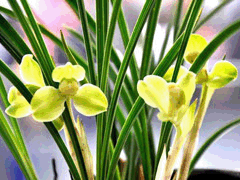 So-called high-gradeCymbidium goeringii (Spring Orchid), refers to cultivars or natural variants whose leaves,flowers,shape, size, color, fragrance and so on differ from ordinaryCymbidium goeringii.cultivatedFor example, different flower types include plum petal, lotus petal, narcissus petal, and odd petal; different flower colors include plain heart (green-white), red, yellow-green, purple, golden yellow, and so on; different leaf colors and leaf markings include golden edge, golden thread, silver tip, claw, rim, stripe, crown, crane art, and so on; different leaf shapes include twisted leaf, wrinkled leaf, curled leaf, and so on.
Generally, the suitable growing temperature for Cymbidium goeringii is 15°C to 25°C, of which March to October is 18°C to 25°C, and October to the following March is 10°C to 18°C. In winter, it can even bloom normally at 0°C for a short time, and can tolerate a low temperature of -5°C to -8°C, but it is best to keep the room temperature at 3°C to 8°C, or keep the potting soil from freezing, and place it in a sunny spot near a south-facing window. Under household cultivation conditions in winter, it should not be fertilized, including organic fertilizer, otherwise it is easy to damage its root system and flower buds. Under normal circumstances, after the temperature drops below 15°C in late autumn and early winter, fertilization should be stopped. It likes a relatively cool environment and avoids high temperature and severe heat; in summer, after the temperature exceeds 30°C, fertilization should be stopped, otherwise it is easy to cause fertilizer damage and root injury under high temperature conditions.
Pottedorchids especially avoid raw fertilizer, concentrated fertilizer, and heavy fertilizer, especially high-concentration chemical fertilizer, which can easily cause dehydration and necrosis of the fleshy roots; use diluted organic fertilizer that has been composted as much as possible, or useorchidspecial fertilizer, and truly apply thin fertilizer frequently. Watering Cymbidium goeringii should be treated differently according to different growing seasons, different growth and development stages, and different maintenance environments. In winter, the plant is in a dormant state, so watering should be moderated, generally once every 5 to 7 days, just to keep the potting soil somewhat moist; if the potting soil has indeed dried out, then around noon on a clear day, spray it with lukewarm water close to room temperature, and never irrigate with a large amount of water. In summer, the temperature is high and the light is strong, so a sufficient water supply must be ensured; the potting soil can be watered once before 10 a.m. or after 4 p.m., and water should also be sprayed on the leaves and the surrounding environment, which can increase humidity and lower temperature.
The plum rain season is exactly the period of vigorous growth of Cymbidium goeringii; avoid water accumulation in the potting soil, and do not let mud splash into the leaf tubes or onto the leaf surfaces, to prevent rotting of the heart or leaf diseases. The water used for irrigation should be slightly acidic to neutral, with a pH value preferably between 5.6 and 6.8; rainwater, snow water, and cooled boiled water are best, followed by spring water, river water, and pond water; avoid alkaline water, cold well water, sewage, and tap water that has not been exposed to sunlight. Watering should be poured in from the edge of the pot so that it gradually moistens the orchid roots until the potting soil is moist from top to bottom. For ordinary household potted Cymbidium goeringii, water around noon in spring and winter, and in the morning or evening in summer and autumn, avoiding watering and spraying at noon in summer.