What are the year-round care essentials for Cymbidium goeringii? Explained clearly in one article
Year-round care essentials for Cymbidium goeringii
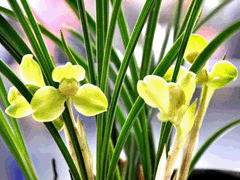 Cymbidium goeringii, also known as caolan, is one of China's main traditional famous flowers and a symbol of nobility and elegance. Its fragrance ranks first among all flowers and is hailed as "the finest fragrance under heaven."Cymbidium goeringiiis a semi-shade plant, and how well it grows depends entirely on care and management.CultivationThe site requires good ventilation, shade facilities, and controlled light. Shade nets and film are commonly used for rain protection and shading. In spring and summer, fairly good shading is required; in autumn and winter, give sufficient sunlight, which benefits root and leaf growth and flowering. Never expose it to direct sunlight or scorching sun.
Watering is the key to growing Cymbidium goeringii well. The amount of water depends on temperature, light intensity, and the plant's growth condition. In winter, when temperatures are low and humidity is high, water less; in summer, when the plant grows vigorously and temperatures are high, water more. But in summer, never let it be pelted by sudden rain showers; film must be used to keep rain off. Watering in the early morning is best. Being rained on in autumn makes it prone to black spot disease. In winter, watering at noon on sunny days is best. If conditions permit, it is best to install automatic misting equipment to increase air humidity, which is even more beneficial to the growth and development of Cymbidium goeringii.OrchidsFor water, rainwater and river water are best; tap water must be stored in a pool for a day before use.
Spring and summer-autumn are the vigorous growth periods of Cymbidium goeringii, so more fertilizer can be applied. From late March to late September, fertilize once a week at a dilute concentration. In autumn and winter, growth is slow, so fertilize less, once every half month. After fertilizing, spray a small amount of clear water to prevent the fertilizer solution from soiling the leaves. Fertilizing must be done in the evening on a sunny day; fertilizing on cloudy days risks root rot. Generally, in winter orchids are dormant and do not need fertilizer. During the growing period, granular compound fertilizer or special potted-flower fertilizer can also be used.