Occurrence and Control Techniques of Spring Orchid Diseases in Solar Greenhouses
Study on the Occurrence and Control of Spring Orchid Diseases in Solar Greenhouses
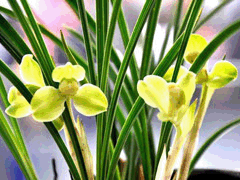 Guizhou is one of China'sorchidresource hotspots, with 71 genera and 206 species of orchids across the province, mainly distributed in the southwest and south; Qianxinan Prefecture alone has more than 180 species of orchids. Many orchid species have important ornamental and medicinal value. However, due to indiscriminate harvesting and digging, wild resources have been severely damaged, and there is an urgent need for selection and breeding of superior varieties and industrialized production to meet market demand and protect wild resources. But in the transition from wild to artificialcultivation, due to changes in the growing environment, diseases occur severely in large-scalecultivation, especially heart rot, leaf spot and other diseases, seriously affecting the development and utilization oforchidresources. The occurrence of heart rot and leaf spot inSpring Orchid (Cymbidium goeringii)cultivated in solar greenhousescultivationand chemical control measures were studied, to provide a scientific basis for localorchidartificial cultivation and industrialized production.
1 Materials and Methods
1.1 Test materials The orchid variety tested was Spring Orchid (Cymbidium goering-ii); the pesticides tested were chlorothalonil: produced by Shanghai Zhongzheng Chemical Co., Ltd., 75% WP, 80 g/package. Premium thiophanate-methyl: produced by Shanghai Zhongxing Chemical Co., Ltd., FH 70% WP, 200 g/package. Dexon: produced by Liaoning Dandong Pesticide General Factory, 45% fenaminosulf sodium wettable powder, 350 g/package; the substrate tested was lichen (Li-chenes).
1.2 Test scheme The test was conducted in a solar greenhouse, using potted field plot trials with a randomized block design, 50 pots per plot. Water control followed the growth requirements of Spring Orchid, with manual spraying when water was needed. The chemical control test set up 7 treatments: treatment A: spraying 800-fold chlorothalonil solution; treatment B: 500-fold chlorothalonil solution; treatment C: 800-fold premium thiophanate-methyl solution; treatment D: 500-fold premium thiophanate-methyl solution; treatment E: 500-fold Dexon solution; treatment F: 400-fold Dexon solution; control (CK): no spraying. Each treatment had 3 replicates, totaling 21 plots, arranged in randomized blocks.
1.3 Test items and methods Number of heart rot seedlings: counted on the basis that the heart leaf rotted to death, taking the average of 3 replicates. Number of leaf spot leaves: counted on the basis that 1/3 of the leaf was diseased and dead, taking the average of 3 replicates. Number of seedlings per pot: 30 pots were randomly sampled and counted to take the average. Number of leaves per seedling: 30 seedlings were randomly sampled and counted to take the average.
1.4 Test time and location The test was carried out from May 1 to October 20, 2005 at the Xiatun Horticultural Farm of Qianxinan Prefecture Lvyuan Animal and Plant Technology Development Co., Ltd.
2 Results and Analysis
2.1 Leaf spot Since the percentage of leaf spot diseased leaves in all treatments was less than 30% (i.e. P<0.3),因此需进行反正弦变换 再进行统计分析。对各处理的叶斑病病叶百分率数据作反正弦变换后进行方差分析,结果表明区组间无显著性差异(F=0.800.05),处理间差异达极显著(F=594.6>F0.01). Further Duncan's new multiple range test among treatments showed that the differences between all treatments and the control reached an extremely significant level, among which treatment D had the lowest incidence rate at 1.93%, followed by treatment A at 2.1%, and the control treatment had the highest incidence rate at 8.45%; in addition, the differences between treatment D and treatments B, C, E and F all reached an extremely significant level, while the difference with treatment A did not reach a significant level.
2.2 Heart rot After arcsine transformation of the percentage of heart rot seedlings in each treatment, analysis of variance showed no significant difference among blocks (F=0.750.05), while the difference among treatments was extremely significant (F=86.00>F0.01). To further analyze the differences among treatments, Duncan's new multiple range method was used for multiple comparison, and the results are listed in the table. As seen from the table, the incidence rates of heart rot in treatments E, D and B were all lower than that of the control treatment, and their differences from the control all reached an extremely significant level, among which treatment B had the best control effect, with an incidence rate of only 0.49%, followed by treatment D at 0.59%; the incidence rates of treatments A, C and F were all higher than that of the control, among which the differences between treatments A and C and the control reached an extremely significant level, while treatment F showed no significant difference from the control.
3 Summary and Discussion
3.1 The cultivation results of Spring Orchid in the solar greenhouse showed that under different agents and different dosage treatments, Spring Orchid was infected with leaf spot and heart rot, with average incidence rates of 3.61% and 0.93% respectively.
3.2 The incidence rates of leaf spot in all treatments reached an extremely significant difference from the control. In chemical control, spraying 500-fold premium thiophanate-methyl solution had the best control effect, followed by spraying 800-fold chlorothalonil solution. This indicates that the several agents used and their concentrations all had good control effects on leaf spot and could control the occurrence of leaf spot to a certain extent. During the test, the leaf spot rate of the control treatment of Spring Orchid cultivated in the shade shed during the same period was 7.1%, while the infection rate in the solar greenhouse was 8.4%; however, among the various treatments using chemical control, the average infection rate in the solar greenhouse was 2.81%, and in the shade shed it was 3.22%, indicating that the effect of chemical control in the solar greenhouse was better than that in the shade shed.
3.3 For Spring Orchid cultivated in the solar greenhouse, the incidence rate of heart rot was relatively low, and among chemical control treatments, spraying 500-fold chlorothalonil solution had the best effect. However, for Spring Orchid cultivated in the shade shed during the same period, due to the high frequency of natural rainfall, the average incidence rate was 2.99%, 3.2 times higher than that of Spring Orchid cultivated in the solar greenhouse, indicating that the frequency of water spraying (rainfall) played an important promoting role in the occurrence of heart rot. For Spring Orchid without pesticide spraying in the solar greenhouse, the incidence rate of heart rot was 1.1%, and the average incidence rate among the various treatments using chemical control was 0.91%; while in the shade shed cultivation in the same-period test, the incidence rate of the no-spray treatment was 2.8%, and the average incidence rate among the various treatments using chemical control was 3.02%, 3.3 times higher than that in the solar greenhouse, indicating that the incidence rate of heart rot in Spring Orchid cultivated in the solar greenhouse was lower than that in the shade shed.