What are the control methods for orchid anthracnose?
How to control orchid anthracnose
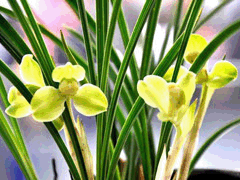 OrchidThe symptoms of damage, pathogen, disease characteristics and control methods of anthracnose are described below:
1. Symptoms The symptoms of orchid anthracnose are relatively complex and can be broadly divided into 3 types: round spots, circular patches and leaf drying and death; when damaging orchid plants, according to the size of the orchid seedlings, it is mainly divided into two categories: one infects young seedling leaves, mostly starting from the leaf base to form small brown round dots, which after expansion form concentric-ringed spots, and in severe cases the heart leaves rot; the other infects the leaves of old seedlings, forming round and elliptical lesions on the leaf surface, and when the disease occurs at the leaf edge, semi-circular lesions form in the early stage; in the early stage of the disease the lesions form reddish-brown patches, and in the late stage they become brown to grayish-white, with dark brown edges and a chlorotic halo around them, and the diameter of the lesions is mostly 0.1-0.5 cm, and in severe cases the lesions connect with each other into a strip-shaped patch, and if the disease is not effectively controlled, the leaves eventually wither and die gradually from top to bottom; in the late stage of the disease, the diseased part produces concentric rings of small black dot-like acervuli, and when air humidity is high, the diseased part produces concentric rings of small black dots and pink gelatinous material, namely the source of spread for reinfection by the pathogen - the conidial mass.
2. Pathogen The pathogen of this disease is a fungus, whose sexual state is Glomerella cingulata of the class Ascomycetes, and whose asexual state is Colletotrichum gloeosporioides of the class Deuteromycetes. Generally, the asexual state is theorchidmain pathogen.
3. Transmission route and disease pattern This disease mainly overwinters in Dali City as mycelium and conidia on diseased plant residues and infected plants. In Dali City, a placefour seasonscan develop the disease; conidia are mainly spread through wind, rain (indoors mainly through watering and spraying) and insects, such as Lycoriella fungus gnats, etc. When there are water droplets on the leaf surface, conidia are prone to germinate, producing penetration hyphae, directly invading from the cuticle on the orchid leaf surface, and can also invade from wounds and stomata. At a temperature of around 20°C, symptoms can appear in about 15 days. Because the disease can spread through air circulation, orchids in the same orchid garden are easily infected by each other.
4. Disease characteristics
4.1 The occurrence of this disease is related tocultivationmanagement This disease can occur all year round in Dali City, among which it is more severe in spring and autumn, and the severity of occurrence in summer is mainly related tocultivationmanagement. Summer in Dali City (June-August) is the rainy season, when air humidity is relatively high. If water is continuously sprayed on orchid leaves in the orchid garden, the disease tends to worsen in summer; on the contrary, under natural air humidity conditions, if ventilation is strengthened and the amount of spraying is reduced, the occurrence of the disease is not very severe. In addition, surveys show that the disease is more severe in orchid gardens with poorcultivationmanagement such as fine potting soil, compacted soil, excessive watering, poor orchid root systems, excessive application of nitrogen fertilizer and poor ventilation conditions.
4.2 Related to changes in cultivation sites Orchid seedlings grown in greenhouses, without hardening treatment, directly sold to natural growers on balconies with moisture-retaining conditions, are not only prone to leaf dehydration and drying, but also prone to orchid anthracnose, with the typical symptom being orchid leaves slowly withering and dying from top to bottom.
4.3 Related to the vigor or weakness of orchid plants Generally, orchid plants that grow vigorously, have good root systems, and have sufficient and balanced nutrition are not prone to disease, while poor orchid seedlings, due to weak disease resistance, are prone to disease. Conversely, orchid seedlings with poor root systems and poor growth, due to weak disease resistance, are prone to disease.
4.4 Related to the length of introduction and domestication time The orchids planted in Dali City are mainlyLianbanorchids, and after wildLianbanorchids are cultivated at home, in the first few years the seedling production rate is high, the growth is strong, and disease resistance is strong, but after many years of cultivation, the wild nature degenerates, disease resistance weakens, and the disease tends to worsen. The most typical example is the famous Yunnan orchid variety Xiaosu, which has been cultivated at home for several hundred years and is most prone to orchid anthracnose.
4.5 Related to the type of orchid Generally, orchid types with thick and hard leaf texture and types with relatively upright orchid leaves have strong disease resistance, such as Cymbidium hookerianum, and Tiegusu amongCymbidium ensifolium, etc., have milder disease occurrence; while the Lianban orchids mainly planted in Dali City, and Duoxiang and Lulan amongCymbidium goeringii, etc., are all relatively susceptible: famous varieties among Lianban orchids, due to excessive division of plants and weak growth, are even more susceptible to this disease.
5. Conditions for the occurrence of orchid anthracnose
Dali City is located on a low-latitude plateau, warm in winter and cool in summer, and is not prone to harsh conditions such as high temperature and scorching heat or ice and snow, making it a natural good place for growing orchids. However, after orchids are introduced indoors, due to different cultivation and management conditions, the disease resistance of orchids weakens, while the pathogenicity of the pathogen is relatively strong. Therefore, the disease is relatively common in Dali City. According to observations, when the following conditions are met: average temperature of 20°C-25°C, air humidity above 80%, potting soil humidity often above 90%,orchid growingsite with poor ventilation conditions, insufficient light, excessive application of nitrogen fertilizer, and frequent spraying of water on the leaf surface, etc., the disease is prone to occur.
6. Control measures
Orchid anthracnose is the most common disease on orchids, but its harm to orchids is not as severe assoft rotand stem rot. The biggest difference between them is that the former mainly damages leaves and will not cause orchid plant death in a short time; while the latter mainly damages pseudobulbs and can cause orchid plant death within 3-7 days. Therefore, to control orchid anthracnose, as long as prevention and treatment measures are carried out well, the disease can be controlled.
6.1 Strengthen cultivation management In view of the conditions for the occurrence of this disease, the core of preventive measures is that the orchid site should be ventilated and let light through, the orchid planting medium should be air-permeable and water-permeable, appropriate light should be maintained, and the potting soil medium should be moist rather than wet, preferably grown on the dry side: in fertilization, appropriately apply more phosphorus and potassium fertilizer and less nitrogen fertilizer, and apply the three in combination; orchid pots should not be placed too densely, so as to reduce opportunities for leaves to rub against each other and reduce wounds: the fundamental cause of orchid disease, in addition to the presence of pathogens and weak disease resistance of orchid plants, is generally caused by high temperature, high humidity and poor ventilation. In orchid cultivation, it is necessary to closely focus on the above aspects to improve the environmental conditions for orchid growing.
6.2 Pruning diseased leaves and promptly destroying them can effectively reduce the harm of this disease to orchid plants, reduce the amount of pathogen sources in the orchid growing site, and reduce the chance of disease for orchid plants that have not yet developed the disease. Because this disease can spread through the air, orchid growers cannot control it. Reducing or eliminating pathogen sources is the best protection for orchids in the orchid garden.
6.3 Strictly prohibit spraying water on the leaf surface of diseased orchid plants This point is generally not particularly emphasized in ordinary orchid books, but from the author's practice, this point is very important for controlling orchid diseases. This is because under conditions of high leaf surface humidity, this disease is conducive to further expansion of the lesions, while producing large numbers of conidia, and the conidia are prone to germination and are easily transmitted to healthy orchids through air, water droplets, insects, etc., causing other orchid plants to develop the disease. In orchid growing practice, during the peak period of disease occurrence, for orchids that have already developed the disease, after one spraying of water, the lesions enlarge somewhat after a few days or the diseased part at the leaf tip extends further downward. Many orchid growers will have this experience.
6.4 Chemical control For chemical control of this disease, mainly start from two aspects, namely doing well in routine prevention and treatment in the early stage of disease occurrence. The following chemicals can be selected: 40% Baikedao wettable powder 1500 times solution: 10% Shigao granule 2000 times solution: 50% carbendazim powder 500 times solution; 70% thiophanate-methyl powder 600 times solution; 50% Tanjuling 1500 times solution.
Usage method: each time select one of the above chemicals and use them alternately. For routine prevention, control can be done once a month: after orchid plants are found to have the disease, diseased plants should be treated promptly, once every 7-10 days, for 3 consecutive times, and then according to the condition, targeted control measures should be carried out. Among the above chemicals, the one with special efficacy against orchid anthracnose is 50% Tanjuling powder, once every 7-10 days, applied 3 consecutive times, with a control efficacy above 90%, and generally it can effectively control the harm of this disease; when growing many orchids, it can be diluted with water and sprayed for control; when growing few orchids, or when particularly precious orchids develop the disease, 50 times solution of 50% Tanjuling powder can be selected (1 gram of chemical diluted in 50 grams of water), and a brush can be dipped into the solution and applied directly to the lesions, coating both sides, once every 7 days, applied 3 times, with special efficacy against anthracnose, which can control the lesions from further expanding and kill the pathogen in the diseased part.
In short, in one sentence, orchid anthracnose can be prevented and treated, unlike soft rot and stem rot, which are difficult to control.