How to fertilize orchids scientifically? A detailed guide to the methods
Scientific fertilization methods for orchids
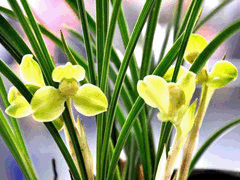 Any orchid that grows vigorously and is free of diseaseOrchidscan be fertilized; those that grow poorly should not be fertilized, or only lightly. Newly dug from the mountainsOrchidsmust never be fertilized before new roots have developed; they need 1-2 years of cultivation, and only when the new roots are vigorous can fertilizer be applied, otherwise they are prone to withering and dying.
Generally speaking, in June-July, when the orchid's leaf buds have extended to about 1.5 cm, 1-2 applications of dilute decomposed liquid fertilizer may be given (chemical fertilizer is not suitable), but fertilization is not advisable in the hot season. In August-September, apply 1-2 more applications of decomposed dilute liquid fertilizer. For pure-colored orchid varieties, 1-2 applications of wood ash extract can be given, with very good results. The best time to fertilize is in the evening, then water once with clear water the next morning.
A fairly simple way to tell whether an orchid needs fertilizer is to look at the depth of the leaf color. If the leaves look yellow and thin, it is deficient in fertilizer and should be top-dressed; if the leaves are dark with scorched tips, it has been over-fertilized and fertilization should be stopped.
For fertilizer, you can make your own using the various methods introduced above. When applying these fertilizers, they need to be diluted with 8-9 times their volume of water, and must never be too concentrated. When fertilizing, apply it to the root zone of the plant, and never apply it to the leaf surface.