A Complete Guide to Orchid Cultivation Techniques: Teaching You How to Grow Orchids Well
Orchid Cultivation Techniques
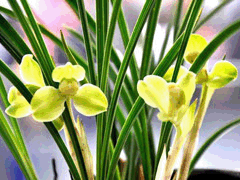 Orchids(Cymbidium spp.), also known as mountain orchid and secluded orchid, belong to the family Orchidaceae and the genus Cymbidium. They are one of China's traditional ten famous flowers, hailed as "the finest fragrance under heaven," regarded as a symbol of nobility and elegance, and ranked alongside plum, bamboo, and chrysanthemum, collectively known as the "Four Gentlemen," often used in poetry and painting with exceptional charm.
(I) Varieties and Variants
Orchids are a group of terrestrial or epiphytic perennial herbaceous plants, with great variation in morphology and structure. They have clustered fibrous roots that are thick and fleshy, with few branches, and symbiotic mycorrhizae. The stem has two forms: one is the rhizome, which is a swollen, multi-noded pseudobulb at the junction of roots and leaves. The other is the flower stem, also called the flower scape or peduncle, around which flowers and several layers of bracts grow. Leaves also have two forms: one is the normal leaf growing from the pseudobulb, strap-shaped or linear, leathery, with parallel veins, often clustered in tufts of 3 to 7 leaves each; the other is the modified leaf growing on the flower stem. Orchid flowers are solitary or borne on peduncles of roughly equal length in a raceme, with petals curling upward like a monk's cap, in colors of red, white, purple, orange-red, as well as red edges with white centers and deep red spots, and fragrant. The capsule is spherical, with seeds as tiny as powder, each capsule often containing tens of thousands to hundreds of thousands of seeds.
There are many types of orchids; traditionally cultivatedcultivatedorchids in China are broadly divided into the following four major categories:
1. Spring-flowering types includeSpring Orchid(C. goeringii), Spring Arrow (C. goeringii Var. longi-bracteatum), etc.
2. Summer-flowering types include Huilan (C. faberi), Tailan (C. floribundum Var. pumilum), etc.
3. Autumn-flowering types includeJianlan(C. ensifolium), Zhanglan (C. ensifolium f. flaccidior), etc.
4. Winter-flowering types includeMolan(C.sinense)、Hanlan(C. kanran), etc.
(II) Ecological Habits
Orchids originated in China. They prefer warmth and humidity, with warm winters and cool summers being most ideal, and should absolutely avoid high temperatures and dryness. In winter, it is best if the temperature does not freeze, with 3°C to 7°C being most suitable; in summer, 25°C to 28°C is appropriate. In their natural distribution, orchid habitats are near streams and gullies, receiving rain and dew year-round, with an annual rainfall requirement of over 1000 mm. They require deep, humus-rich, dark brown, loose and fertile, slightly acidic soil with good water permeability and retention, pH 5 to pH 6.5, and are intolerant of waterlogging.
Orchids prefer shade and require short daylight hours. Natural distribution shows that Spring Orchid requires tree canopy density of 0.7 to 0.95; Huilan requires 0.5 to 0.8, with slightly longer light exposure than Spring Orchid; Jianlan, Molan, and Hanlan also require high canopy density for shade.
Cymbidium plants have a dormant habit in their native regions, depending on the rainy and dry seasons. Usually, the dry season is in winter, which is the dormant period for orchids,orchids'dormant period, and the rainy season is in spring and summer, which is the growing period for orchids,orchids'growing period, during which they can continuously bud and bloom.
(III) Propagation Methods
Orchids are commonly propagated by division, sowing, and tissue culture.
1. Division can be done in both spring and autumn, generally once every three years. Any plant with robust growth and dense pseudobulbs can be divided; after division, each cluster must retain at least 5 connected pseudobulbs. Before division, reduce watering to make the potting soil relatively dry. When repotting after division, first cover the drainage hole at the bottom of the pot with broken tiles, then add coarse gravel to occupy 1/5 to 1/4 of the pot depth, then add coarse-grained soil and a small amount of fine soil, and finally plant in sandy loam rich in humus. The planting depth should just bury the pseudobulbs in the soil; leave a 2 cm rim at the pot edge, cover with Selaginella uncinata or fine gravel, and finally water thoroughly. Place in a shaded area for 10 to 15 days, keep the soil moist, gradually reduce watering, and carry out normal maintenance.
2. Seed propagation: Orchid seeds are extremely fine, containing only one incompletely developed embryo, with very low germination capacity. In addition, the seed coat does not easily absorb water, so sowing by conventional methods will not germinate. Therefore, orchid mycorrhizal fungi or artificial culture media are needed to supply nutrients for germination. For sowing, it is best to select unopened capsules, sterilize the surface with 75% alcohol, remove the seeds, soak in 10% sodium hypochlorite for 5 to 10 minutes, remove and rinse 3 times with sterile water, then sow in culture bottles containing medium, and place in a dark culture room at about 25°C. After germination, move to light to form protocorms. From sowing to transplanting takes six months to a year. Tissue culture has been successfully achieved, and this method can be used for propagation where conditions permit.
(IV) Cultivation Techniques
1. Site selection requires an open surrounding area with good ventilation, close to water, with humid air and no coal smoke pollution. On the southwest side of the site, evergreen broadleaf trees can be planted, with a canopy density of about 0.7, which can reduce afternoon sunlight exposure and regulate humidity and temperature.
2. Watering: Rainwater or spring water is preferable; water containing salt and alkali should not be used. If tap water is used, it should be left standing for several days before use. Watering should depend on temperature conditions. In spring, the amount of watering should be less; in summer, more. During the plum rain season, when orchids are sprouting leaf buds, the potting soil should be slightly dry. After autumn when the weather turns cool, reduce watering as appropriate, keeping it moist. In winter indoors, keep it dry, reduce watering frequency, and water at noon. Orchids can tolerate light rain, but continuous rain or heavy rain can easily cause heart rot and leaf rot, so attention must be paid to rain protection.
3. Fertilization: For growing orchids, cake fertilizer is suitable. Mix 4 parts plant ash, 10 parts soybean cake, and 10 parts bone meal evenly, place in a vat, add water several times until the soybean cake is soaked through, then cover and seal, let it decompose for one year, and then make into dry granules. When using, place on the pot surface. If using full manure, it should also be decomposed for one year, diluted with water, and the residue filtered before use. Generally, fertilization starts in May and stops at the Beginning of Autumn, with the principle of applying thin fertilizer frequently. Fertilization should be done in the evening, and the next morning water once with clear water.
4. Shading and cold protection: Except in early spring and winter, orchids should be placed under open-air sheds. The shade shed requires good ventilation. When orchids first come out of the room in March to April, they can get more sunlight, and afterwards the shading time gradually increases. In winter, orchids must be moved indoors for cold protection, with room temperature maintained at 1°C to 2°C. In addition, after orchids come out in spring and before they enter the room in autumn, attention should also be paid to frost protection.
5.Pests and DiseasesControl of the main pests and diseases of orchidsPests and Diseasesinclude:
(1) Southern blight: Mostly occurs during the plum rain season. Attention should be paid to ventilation and light transmission, and good drainage of potting soil for prevention. After onset, remove the infected potting soil and sprinkle with quintozene powder or lime.
(2) Anthracnose: Present year-round, more rampant in hot and rainy seasons. In addition to improving environmental conditions, during the onset period, spray with 50% thiophanate-methyl wettable powder at 800 to 1500 times dilution, once every 7 to 10 days, then supplement with 1% Bordeaux mixture of equal parts, once every half month.
(3) Scale insects: They reproduce fastest under high temperature and humidity with poor air circulation. Use conventional control methods.
In summary, to grow orchids well, one must master their natural growing environment conditions, take reasonable measures, and strengthen maintenance management. According to the "Orchid GrowingRhymes": "Do not take them out in spring, do not expose to sun in summer, do not keep dry in autumn, do not keep wet in winter." This is a summary of China'sorchid growingexperience.