Identification and Control Methods for Southern Blight in Orchids
How to Identify and Control Southern Blight in Orchids
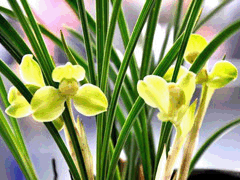 Southern blight is a worldwideorchiddisease, mainly affecting Cattleya, Oncidium, Phalaenopsis, Vanda, and others, and has also been found in Chinese orchids (Cymbidium). The pathogen is Sclerotium rolfsii. Because the white mycelium appears on the soil surface and at the base of the orchid stem, causing rot at the stem base, it is also called basal rot. The earliest sign of infection is the appearance of yellow to light brown oozing lesions at the stem base, followed by water-soaked ring-shaped eroded grooves and rot; the leaves and pseudobulbs also wither and rot, causing the death of the entire plant. In addition to cutting away the diseased stems, the control method is to soak the wholeorchidplant in a 1% copper sulfate solution for disinfection; the flower pot, growing medium, board racks, etc. must all be disinfected with a 2% formalin solution.