Diagnosis and Correction of Nutrient Deficiency in Orchids
How to Diagnose and Correct Nutrient Deficiency in Orchids
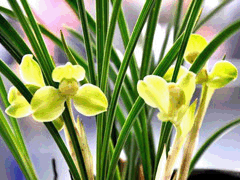 OrchidsWhen an orchid lacks a certain nutrient, it will show on the plant. Based on this manifestation, the nutrient deficiency can be diagnosed, and corresponding measures can be taken to correct it.
① Nitrogen deficiency. It shows as new leaves being shorter and narrower than old leaves with thin texture, and the leaf color is pale yellow, lacking luster. You can water the roots with a 500-fold dilution of potassium sulfate compound fertilizer or potassium nitrate compound fertilizer, and spray the leaf surfaces and undersides with a 0.2% urea solution in the evening. Once every three to five days, spraying 3 times in a row, and it can be corrected.
② Phosphorus deficiency. It shows as leaf buds growing slowly, roots being slow to emerge, and leaf margins curling slightly upward. You can water the roots with a 2% superphosphate extract, or a 3%-5% bone meal solution, or an 800-fold dilution of monopotassium phosphate, once every 10 days, watering 2 times in a row; and spray the leaf surfaces and undersides in the evening with a 600-fold dilution of monopotassium phosphate, or a 1000-fold dilution of Hyponex No. 3, once every three to five days, spraying 3 times in a row, and it can be corrected.
③ Magnesium deficiency. It shows as old leaves turning yellow; the leaf tips and leaf margins of middle-aged leaves turn yellow and curl toward the leaf surface (commonly known as "gong-edge"). You can spray the leaves with a 0.5% magnesium sulfate solution in the evening, once every three to five days, spraying three to five times in a row, and it can be corrected.
④ Potassium deficiency. It shows as leaf margins and leaf tips turning yellow (old leaves first, then new leaves), then turning into segmented discoloration; the main and lateral veins of the leaves becoming thinner; the leaf texture becoming soft and drooping easily; if exposed to strong light and low temperature, the new leaves show slight dehydration. You can first water the roots and spray the leaves with a 0.5% potassium sulfate solution, or you can broadcast wood ash.
⑤ Manganese deficiency. It shows as sunburn-like spots appearing even with proper shading, with spots within spots, flower buds not developing; leaves shriveling, losing green color, and lacking luster. Neutral, calcareous and sandy soils are more prone to manganese deficiency symptoms. Spraying the leaves with a 0.3% manganese sulfate solution 3 times can correct it.
⑥ Calcium deficiency. It shows as leaf tips being hook-shaped (except for cultivar characteristics). It is commonly seen in plants given acidic fertilizers. You can water the roots once with a 1.0% lime solution, or apply a 3% livestock calcium powder solution once, and it can be corrected.
⑦ Iron deficiency. It shows as the mesophyll of young leaves turning yellow to white, and the midribs, leaf margins and leaf tips of middle leaves showing scorched brown spot necrosis. You can spray a 0.5% ferrous sulfate solution on the leaves, once every 3 days, spraying two or three times in a row, and it can be corrected.
⑧ Zinc deficiency. It shows as pure rust-like spots appearing in the middle section of the bottom leaves and gradually spreading toward both ends of the leaf; the leaf stalk ring of new plants is noticeably lower than that of old leaves. You can spray a 0.1% zinc sulfate solution on the leaves, once every three to five days, spraying 3 times in a row, and it can be corrected.
⑨ Copper deficiency. It shows as leaf tips losing green color, gradually turning grayish white and spreading to the whole leaf, with growth stagnating. You can spray a 0.2% copper sulfate solution, once every 7 days, spraying 2 times in a row, and it can be corrected.
⑩ Boron deficiency. It shows as the base of young leaves being damaged, the leaf stalk ring being extremely brittle and breaking easily, the number of flowers per scape noticeably decreasing, flower buds opening slowly and looking listless when open, and the lasting period of flowers after blooming being noticeably shortened. You can spray a 0.3% borax or boric acid solution, once a week, spraying 3 times in a row, and it can be corrected.
⑪ Molybdenum deficiency. It shows as new plants becoming noticeably dwarfed even without applying chlormequat; old leaves losing green color, leading to yellowing, wilting and necrosis. You can spray a 0.1% ammonium molybdate solution, once every 3 days, spraying 3 times in a row, and it can be corrected.
If fertilizer can be supplemented according to what the orchid plant lacks, so that the nutrient elements of the plant body are relatively balanced, then the functions of each organ of the plant body can be fully brought into play and work in harmony, which has a very good effect on increasing yield and quality.