What are the basic points of orchid cultivation
Basic knowledge for cultivating orchids well
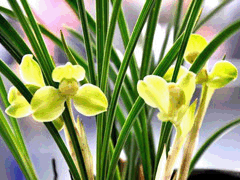 To help beginner orchid enthusiasts understandorchids,cultivationwellorchids, here is a brief introduction to some basic knowledge aboutcultivatingorchids:
(1) To cultivate orchids well, the first thing to solve is the environmental conditions of the orchid growing site. Orchid cultivation can be divided into courtyard cultivation and large-area field cultivation. Generally, for homeorchid growinga balcony or rooftop can be used, or a small shelter can be built on a windowsill. If conditions permit, a glass greenhouse can be built. But for the growing site, whether on a balcony, rooftop or windowsill, appropriate shade netting must be installed, good ventilation conditions must be present, and appropriate humidity must be maintained; this is the foundation for growingorchidswell. For those growing on a balcony, choose a balcony facing north-to-south, and fish netting or movable shade netting can be used to block wind and heat. If the roof uses corrugated iron sheeting, it is best to replace it with imported transparent plastic tiles to maintain sunlight. For growing orchids on a rooftop, water pipes can be used as supports, with 80% shade netting around and on top to block sunlight and wind heat. When it is too hot in summer, an additional layer of movable shade netting should be added on top of the shelter. Overall, environmental modification should suit local conditions and should be continuously explored and improved through practice. Only in this way can growing orchids well be guaranteed.
(2) Choose good growing media and pots for orchids; this is the basic condition for cultivating orchids. The orchid pot is the orchid's dwelling and has a relatively large impact on orchid growth. In the past, traditional orchid growing used large clay pots; now most high-grade orchids are grown in small flared pots. There are also ceramic pots and plastic pots, each with its own advantages and disadvantages. Which pot is good to use depends on individual habits and the cultivated varieties. However, within one orchid shed it is best to use the same type of orchid pot in different sizes, so as to facilitate unified management in the future. Growing media: orchid growing media (base material) used to be mostly pond mud; now for growing premium varieties, media such as pond stone, floating stone, weathered stone, water-absorbing stone and ceramic material are used. For field-grown domestic orchids, most use soft media such as sawdust, rice husks, medicinal residues, coal cinders, sea sand and peanut shells, with foam plastic used as a bottom layer, etc. Mixed use is relatively common. Using these media each has advantages and disadvantages. Which media are better to use also depends on individual habits, the cultivated varieties and the pots used (pots and media must work together).
(3) If you want to cultivate orchids well, you must continuously sum up experience in practice. Practice brings true knowledge. To improve your orchid-growing skill level, you must personally take part in orchid-growing practice. At the beginning, you should read more books, visit more places, ask more questions, ask if you do not understand, and continuously explore and sum up experience and lessons in practice; only then can you continuously improve your technical level in orchid cultivation.
(4) You must master the management of watering, fertilizing and preventing and controlling diseases and insect pests well; this is an important key to cultivating orchids well. Fertilizing generally should be chosen on sunny days, and the fertilizing principle is light application, frequent application, and no application during the dormant period.