How do orchids reproduce? A detailed introduction to the main propagation methods
Main propagation methods of orchids
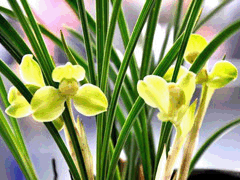 OrchidsFor propagation, the site should be open on all sides, well ventilated, close to water, with moist air and no coal smoke pollution. On the southwest side of the site, evergreen broadleaf trees can be planted, with a canopy density of about 0.7, which can reduce afternoon sunlight exposure and regulate humidity and temperature.
The commonly used propagation methods for orchids are sowing and division.
Sowing propagation: Orchid seeds are extremely fine, and each seed contains only one incompletely developed embryo, so their germination capacity is very low. In addition, the seed coat does not readily absorb water, so sowing by conventional methods will not cause germination. Therefore, orchid mycorrhizal fungi or artificial culture media are needed to supply nutrients before germination can occur. For sowing, it is best to select fruit that has not yet split open. After sterilizing the surface with 75% alcohol, remove the seeds, soak them in 10% sodium hypochlorite for 5 to 10 minutes, remove them, rinse 3 times with sterile water, and then sow them in a culture bottle containing culture medium. Then place them in a dark culture room, keeping the temperature at about 25°C. After they begin to sprout, move them into the light and they can form protocorms. From sowing to transplanting takes half a year to one year. Tissue culture has already been successfully achieved, and this method can be used for propagation where conditions permit.
Division: This can be done in both spring and autumn, generally once every three years. Plants that grow vigorously and have densely clustered pseudobulbs can all be divided. After division, each clump must retain at least 5 pseudobulbs connected together. Before division, watering should be reduced so that the potting soil is relatively dry. When repotting after division, first cover the drainage hole at the bottom of the pot with broken tile pieces, then spread a layer of coarse gravel to occupy 1/5 to 1/4 of the pot depth, then add coarse-grained soil and a small amount of fine soil, and then plant in sandy loam rich in humus. The planting depth should be such that the pseudobulbs are just buried in the soil, leaving a 2 cm rim at the edge of the pot, and top with Selaginella uncinata or fine gravel. Finally, water thoroughly, place in a shaded area for 10 to 15 days, keep the soil moist, gradually reduce watering, and carry out normal care.