Read the original text of Volume One of The First Fragrance Notes online
"The First Fragrance Notes", Volume One
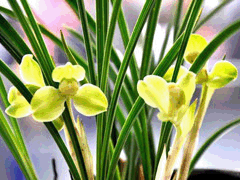 "The First Fragrance Notes", Volume One
Table of Contents of The First Fragrance Notes
Volume One: Flower Varieties and Natural Disposition; Volume Two: External Appearance and Cultivation
Volume Three: Protection and Miscellaneous Remarks; Volume Four: Citations and Appendix
The First Fragrance Notes, Volume One
Compiled and authored by Zhu Kerou (style name Yanyu) of Wu Commandery, Qing Dynasty
Flower Varieties
Orchid Varieties
Narcissus-type plain-heart first, lotus-petal plain-heart second, plum-petal plain-heart third
Narcissus petal fourth, green plum petal fifth, red plum petal sixth
Round petal plain-heart seventh, super petal plain-heart eighth
For all eight varieties above, level shoulders are considered superior
Reflected Cheek, Peach Cheek, Lotus Petal, Willow Leaf Plain, Triangular Narcissus
(small flower with hard central petal cluster) Butterfly Orchid (also called Double Orchid), Product-Character Orchid
Four Joys Orchid
Huilan Varieties
White Lotus, Narcissus, Plum Petal, Green Lotus, Round Petal Plain
Super Plain, Red Shell Lotus, Broad Super Round Petal, Willow Leaf Plain
Willow Leaf Narcissus (those with short central petal cluster forming a hood), Narrow Super, Line-Stripe Plain
Insect Orchid (those shaped like bees or butterflies)
The various varieties are listed separately below, arranged in order of current fashion.
Superior Orchid Varieties
Willow Plum (pure green), Wang's Plum (pure green), Xiaoshan Green Plum
Xiaoshan Lotus Plain, Changshu Green Plum, Changshu Red Plum
Superior Huilan Varieties
Wan's Plum Petal ("Wan" sometimes written as "Zi"), Large Zhu's Narcissus
Hong's Narcissus, Colorful Toad Plum Petal, Li's Plum Petal
You's Plum Petal, Feng's Narcissus, Huang's Narcissus
The above are all official-variety narcissus, with central petal clusters both soft and hard, and extremely large flower heads. There are also the former Fang's, latter Fang's, Small Zhu's, and Jin's, which, though fine varieties, belong to the secondary grade.
Superior Huilan Plain-Heart Varieties
Xiaoshan Large Lotus Plain, Changshu Large White, Crossing-the-River Plain (sometimes written as Red)
River-Side Large Lotus Snow Plain (flowers as large as a cup, tongue round like a lotus bud, truly a supreme variety.)
Lu's Large Super Plain, Zhang's Golden Lotus (color like gold), Jin's Large Lotus Petal
The above orchids and huilan number twenty varieties in total. Their forms and colors are difficult to describe in words. Here I first list their names, and in a supplementary edition I will add painted illustrations of the flowers with detailed annotations, so that readers may search for them by the pictures.
For any orchid, the two large petals on either side must be level like the character "." and "one", commonly called "one-character shoulders". Some open with level shoulders and gradually droop after being open for a long time, which is called "opening droop". Some open level like one-character shoulders and turn upward after being open for a long time, which is called "flying shoulders". Petal flowers with this are the most precious.
Narcissus petals must be thick and large, the petals clean without veins, the shoulders and tongue large and round, the central petal cluster like a silkworm moth or a bean pod, the flower foot slender and tall, the hooks and barbs complete, the sealed edge clear, and the white head prominent - only then is it a superior variety.
Orchids with iron-wire leaves mostly produce narcissus petals.
Lotus petals are thick and have a hood, the central petal cluster round, the base narrow - these are true lotus petals. Otherwise, even if the petals are very broad, they must not be confused with this name.
True super petals have thick petals and deep hoods, with a tightly narrow base, shaped like a spoon. ("Super" sometimes written as "spoon")
Plum petals are like plum blossoms, round petals are not pointed. For lotus petals, one must first consider the base; thick petals are valued. For narcissus, one looks exclusively at the central petal cluster and white head as the standard. Generally, those with large tongues will not deteriorate when they bloom again.
Purse tongue, Liu Hai tongue - when they bloom again they are better than when new.
Reflected Cheek varies: some have a line of yellow light at the tongue base, some have a line of pale red light, with the tongue color pure white, which can be mistaken for plain-heart.
Peach Cheek has some with pale red at the tongue base, some deep red, some purple, with the tongue also pure white. Bristle Plain has fine dots on the tongue like hair tips, either black or yellow or green, visible only on close inspection. The quality of huilan flowers depends entirely on the period after the flower stalk turns and before the petals open; those with no external merit may yet produce good flowers, truly beyond expectation.
Some flowers open narrow, with very narrow petals, then gradually widen, only reaching full size by the third day of opening, turning from the initial opening to two or three times the width - only lotus petals have this opening characteristic.
Some have buds as large as osmanthus flowers, already out of the large shell, that open within the small shell; as they open they gradually push through the shell and gradually enlarge - these are called Buddha's Hand Narcissus.
Huilan flowers with short central petal cluster and a hood, regardless of whether the outer three petals are broad or narrow, are called "narcissus". Those with small inner shell, petal tips all having inverted hooks, large petals with sealed edges, central petal cluster with white heads like Guanyin's hood, and outer petals short and broad like narcissus - these are true narcissus.
Superior orchid varieties often have ten to twenty flowers per pot, each facing the viewer as it opens, which is called "concentric". Those occurring naturally are best. If, when the flower is about to push through the shell, one covers it on three sides and leaves one side facing the sun, it can also face the viewer, but only if the flower foot is tall; this works like the turning of huilan stalks. Otherwise, human effort cannot achieve it.
For orchids that have entered the ranks of graded varieties, the flowers should be without fault, and the leaves should be worthy of praise. Short leaves below the flowers are superior, fine leaves are next. If the leaves are long and broad, then at the root they must be tightly narrow, only then having the beauty of swaying gracefully in the wind. "The beauty and the fragrant grass" - this speaks of their nature.
The flower foot should be long; those emerging five or six cun from the soil are superior, standing tall and elegant, suggesting the intent of not mingling with ordinary grasses.
"Bees gather a hundred flowers and place them all between their legs, but for the orchid they bow their backs and enter the chamber to present them to the king. Even creatures know the nobility of the orchid, and so it is." See "Qunfang Pu".
Yu Ruoying says: "Those with one flower per stem are called lan (orchid); they are especially abundant in the mountains of Yixing, and are also found in Nanjing and Hangzhou. Though not considered precious, their fragrance is naturally delightful, and they are suitable for planting in many pots. Today people greatly prizeJianlan, but it is only huilan. I have seen that the ancients painted orchids quite differently. Ge Sheng of Tiger Hill once planted one specimen, with sparse long leaves, slightly thicker than Xing orchids, producing several buds, blooming in early spring, especially larger than common orchids, with double the fragrance, not withering for a month, closely resembling the paintings of Ma Yuan. Ge Sheng said: 'I obtained it from another region; it is still alive now. When it blooms I should widely seek this variety to prepare forChunlanthe supreme variety. Generally, among orchids, those with purple stems and green flowers are superior, those with green stems and green flowers are next, and those with purple stems and purple flowers are again next; the rest do not enter the ranks.' See Huashi ZhiJianlanfor the discussion.
In Changshu there is Wan's Narcissus, first planted by someone surnamed Wan. The large petals are broad and slightly long, the central petal cluster like half a chicken-bean shell, the flower color tinged with yellow, with a white-green shell. This is a superior variety of Xing orchid.
Orchid varieties rank above huilan, yet people regard orchids as if casually, while for huilan they alone rush about fearing to be last. This is because fine varieties are not easily obtained; some boast of their eye for them, some cling to their own views, each measuring the other, debating merits and faults, but in the end empty words are of no use. Orchids that have entered the ranks of graded varieties are also not easily obtained. If cultivated properly, the flowers can be continuous, unlike huilan which is difficult to send up stalks. Therefore, cultivating huilan is not as good as propagating orchids. Choose orchids of graded or secondary varieties and cultivate them with all your heart. After five or six years of growing, make them flourish and beautiful, with each pot having ten or more flowers, or several tens of flowers, in gentle breezes filling the seat with fragrance - is this not also a joy to the heart? At the Chen family of Lu Tomb, I saw several plain-heart varieties, among them a pot of lotus plain-heart that sent up more than thirty stalks - truly a divine variety. Therefore I mention it.
Flowers have an opening crystal; the later the petals open, the more wonderful. If huilan flowers open in this manner, the flowers will certainly be good.
If the flower stalk is straight and upright, and at the time of bud arrangement the short hairpin extends horizontally, only turning upward after a day or two, this is also a wonderful variety.
The ancients discussed calligraphy and painting, dividing them into three grades: divine, wonderful, and competent. I privately think that the grades of orchids and huilan are not uniform, yet can also be summarized by this. As for butterfly orchids, three-petal orchids, ingot orchids, and huilan flowers with insect forms or gold and vermilion colors, they may all be called "untrammeled grade" or "extraordinary grade".
Previously, Yu Ruoying saw Ge Sheng's orchid, which is what is called in Jian flowers the "weak-foot". He said it opened at the start of the twelfth month, while this says it opens in early spring - these are the same time with only slight differences in sequence. This shows that the ancients were not consistent in their love and appreciation, causing current verification to lose accuracy, making later generations think there is something different from common orchids. I fear that even if one searched widely between Suzhou and Hangzhou, one could not obtain it.
Varieties such as double orchid, product-character, and four joys must have every stalk like this to be considered precious. If only an occasional stalk appears because of the abundant energy of the mountain, it cannot appear again.
Narcissus is selected for its hooks and barbs because narcissus petals have inverted hooks. Therefore, besides iron-wire leaves, those with leaves slightly round and not pointed (some have pointed and long) also produce narcissus, because their leaves resemble those of narcissus. The creation and nurturing of things - their principle cannot be understood. Perhaps it is due to the influence of qi transformation, and so they can resemble one another. Besides this, lotus petals and plum petals must have hoods, and only when thickness and completeness are both present can they enter the ranks of graded varieties.
Super petals, willow leaves, and line stripes are the lower grades of flowers; only plain-heart is selected from them, yet even these are divided into beautiful and ugly, with broad and thick ones being superior.
Someone asked why level shoulders are valued. I said: this is precisely the grade. If the shoulders droop, they press and lean askew; if the shoulders are level, they are well placed and arranged. ("" is pronounced "ao", meaning vigorous and sturdy in appearance)
Among huilan there is Golden Silk Narcissus, with yellow flower color and thick, ridged petals.
Some say that orchids and huilan are valued merely for their fragrance, so why needlessly establish names and categories, adding all this trouble? This is truly not worth discussing. Things are treasured for being rare, and valued for being hard to obtain. Consider: among people, if there is one who stands out from the crowd, can one not revere him as a sage or worthy?
What is now called lotus petal is nothing more than broad super petals and large round petals. People's feelings are drowned in what they love, and so they greatly praise them. Why must one distinguish deeply? As for grades, there is a fixed standard; those with discerning eyes will naturally not be misled.
Among huilan plain-heart, those with the outer three petals, central petal cluster, and tongue pure white like crystal are superior. Those with the outer three petals and central petal cluster white, and the tongue white but not bright, or with a green sandy base, are next. Those with the outer three petals and central petal cluster green, and the tongue white with sand, are again next. Those with the outer three petals and central petal cluster tinged with yellow, and the tongue with a green sandy base, are again next. Those with all five petals inner and outer plus the tongue tinged with yellow are of the lowest grade.
Among huilan flowers, official-variety narcissus is prized. The flower heads are extremely large and the shoulders level, utterly different from ordinary narcissus. Any with white central petal cluster bearing an oily gray surface and also a deep hood, with flowers as large as a cup, are official-variety narcissus. Plum petals and lotus petals also have official varieties, only with flowers especially larger than ordinary grades, thick petals, and shoulders that do not droop - this is why they are precious.
Huilan stems that are straight and upright, with buds like a spiral or a pagoda - large at the bottom and small at the top - facing the viewer on all four sides, are the most superior grade. Some open first from the top flower, which is called "collapsed opening", also written as "withered opening", and is also a fine variety. If they face away from the sun toward the light, they are not prized.
My friend Huang Huanu said: "Among narcissus and plum petals, those that emphasize the official variety may be compared to Yan, Liu, Jing, and Guan in calligraphy and painting - their qi is deep and their strength thick, possessing in themselves a kind of profound and powerful manner. As for ordinary narcissus and plum petals, called 'running petals', with small flowers and thin and timid appearance, they are like Wen, Dong, Tang, and Qiu - not that they are not worth looking at, but compared side by side they are outshone." He also said: "There is golden orchid like red gold, with a tongue like cinnabar - this is a precious grade among huilan, appearing only once in several decades by chance, seen by my own eyes alone. I record it here to await future verification."
Plum petals have petal tips drawn inward, only the outer petals cannot have deep hoods, so they do not rank above or below superior narcissus.
Narcissus sometimes has central petal cluster merged into one piece, commonly called "joined shoulders and back to back" - this is not a superior variety. Some have the tongue not extending out within the central petal cluster, called "hanging tongue". Some are offset to one side, called "crooked tongue". Some extend but do not curl, called "dragging tongue". Some have a notch at the tip of the tongue (center) dividing it into two, called "fire-character tongue". All are defects of the flower.
Huilan flowers whose tongue appears plain from a distance but on close inspection faintly shows pink are called "pale tongue".
Natural Disposition
Huilan by nature likes sunlight and needs three hours of morning sun. In cold weather, prolonged sunning is also acceptable. As for orchids, one or two hours of morning sun is sufficient. All must be placed in a well-ventilated spot. If the pot cannot be moved, then in the fierce sun of summer and autumn, one should use a wooden frame to build a shed and cover it with reed blinds, removing them once the sun has passed. If there is excessive rain, cover with a bamboo canopy and remove it once the rain has passed. In all cases, dryness and moisture must be kept appropriate, suited to the nature of the flower; then roots and leaves will naturally flourish, and flowers will be continuous. For planting huilan, the pot should be large, so that roots and leaves can spread out and it is easier to obtain soil energy.
One source says: when planting orchids and huilan, the pot must match the flower, because their nature likes moisture but not wetness. If the pot is large, rain may not drain away and it may be difficult to dry for several days. One must wait until roots and leaves have gradually grown more numerous, then change the pot year by year.
Newly planted flowers only obtain soil energy after one month. Yellow leaves can then turn green. When huilan flowers obtain energy, the old leaves shrink away completely and the new leaves gradually grow.
For all orchid and huilan new leaves, when they are just in the stage of clustering, they must not be repotted or divided, for fear of leaking energy. Where old roots emerge from the soil, if like a small garlic bulb, it is called the "dragon head". Only with a dragon head may one divide and plant. It is also called the "reed head".
Those newly collected from the mountains and first planted are "new flowers"; those long planted in pots are "accustomed flowers", also called "repeat flowers". Orchid repeat flowers are not as good as new ones; huilan accustomed flowers are better than new ones. For flowers from lean mountains, if cultivated properly, repeat flowers are better than new ones.
Generally, orchids like shade and huilan likes sun, but one must also investigate the flower's natural disposition. Some come from shady mountains and should not be suddenly sunned; some come from sunny mountains and should not be frequently rained on. Flowers from lean mountains deteriorate if suddenly given rich soil; flowers from rich mountains also deteriorate if kept lean for long. Going against their nature makes it hard to fulfill their life. A slight error leads to a great divergence. For planting huilan in the ground, a south-facing spot is suitable, or the west side of a courtyard, or a rockery, or a flower-shaded terrace - only then can it flourish. In severe cold, still cover with straw to protect the leaves. If there are no ants or mole crickets damaging the roots, after several decades it will flourish even more, and each plant can produce several tens of stalks. However, only red-shell super petals can do this. Too rich and it will not flower; too lean and it will not flower either.
Jian flowers fear cold and chill; in late winter and early spring they especially fear spring wind, and even more fear snow and wetness. When planting new flowers, after the roots have been soaked in water for a long time, they must not be suddenly placed in soil. One should cut away rotten and broken roots, pick out sand, stones, thatch, and bamboo roots, and place them on new tiles to let the water be fully absorbed before potting and planting.
Wherever orchids and huilan grow in a certain place, it is best to plant them with soil from that same place. Some say that the mud of Yushan Ziyou is close to the Fushan sea mouth, and one fears it may be blown by sea wind, making its nature cold and its taste salty, so it may not be entirely good.
Huainanzi says: "When a man plants orchids, they are beautiful but not fragrant." Commentators think orchids are akin to women, and so when a man plants them they are not fragrant. Thus the nature of plants and trees: orchids are suited to women. (Huashi)
When the flower opens, if there are many buds on the branch, keep the strong and large ones and remove the thin and small ones. If one lets them all open fully, it will rob next year's flowering. Their nature fears cold and heat, and especially fears dust. If there is dust on the leaves, it should be washed off immediately. (Qunfang Pu)
In the ninth month, water the dry places; if moist, no need to water. From the tenth month to the first month, it is fine not to water. They most fear frost and snow, and even more fear spring snow; if even a bit touches the leaves, a leaf will wither. Use a bamboo basket to shield them, and place them in a spot facing the morning sun, under the eaves of a south window. They must be rotated once every two or three days so that the sunlight is even, and then flowers will appear on all sides.
Huilan leaves are soft and fine, growing in secluded valleys and bamboo forests at the site of perennial roots. Transplanted into rich soil, they mostly do not survive; even if they survive, they cannot bloom much. Those with thick, plump stems and leaves, emerald and sturdy and delightful, generally come transplanted from Fujian and Guangdong, and are not comparable to grass orchids.
Liu Mengde's poem: "Radiance like a young attendant's pendant, softness like a beauty's heart." Su Zizhan's poem: "Spring orchids are like beauties; unpicked, they shyly offer themselves." These two poems not only reveal the grade of orchids, but also can discern the nature of orchids.
The orchid is the king's fragrance, the ancestor of fragrances; the huilan is like a gentleman, meaning one who has virtue and bestows kindness. Therefore scholars and officials mostly love them. As for market folk, whenever spring flowers and summer flowers come out of the mountains, they use them for profit; south of the village and north of the lane, they pile up by the hundreds and thousands; in remote valleys and deep mountains, peddlers and hired hands gather like rot, suddenly making the secluded fragrance brilliant, turning it into a place of chasing stench. This can be called a great sigh for all flowers. Yet if there were no such people to search and dig them out, how would they ever reach the presence of scholars and officials? Things gather according to what people love, or perhaps it is so by nature. Lovers of orchids who are not swayed by the favorites of the Li Tang and after may still fix their attention here - this can also be called worthy.
The flower's nature with respect to richness or leanness depends only on the prosperity or decline of the leaves. If too rich, it will rot; if too lean, it will be weak. Rather than err on the side of too rich and rotting, it is better to err on the side of lean and weak, for then one can still nourish it to restore its original state.
The Flower Mirror says: if one obtains their nature, there is no tree that will not grow and no flower that will not be brilliant. It lies only in distinguishing their dryness and moisture, height and lowness, cold and warmth, and the suitability of rich or lean soil. This refers to the general case. But one does not know that all flowers each have their own nature, and even a single flower has its own nature. What is called nature here must not go beyond the four words: dry, wet, rich, lean. New flowers fear wind; repeat flowers like wind. New flowers hate sun; repeat flowers suit sun. In this sequence, their natures are opposed. In summer and autumn they must not be dry; in spring and winter they must not be wet. In cold weather they should be exposed; in fierce sun they should be shaded. Within these four seasons, their natures are opposed. Some say: huilan likes to face the sun; the newly planted soil should be sunned long in the daytime, and only when extremely dry should it be potted. After entering the soil, its stalks can suddenly grow long. This is also one proof that it likes sun.
In the way of planting flowers, there is also the fault of going too far and losing the mean. I often see people take the saying that huilan likes dryness, and after the pot soil has become dry and fierce, still do not immediately water it, so that the leaves scorch and wither and the old leaves yellow and fall. By then the root fluid is already exhausted, and although dryness and moisture may afterward be kept appropriate, the flower has already suffered disease. Generally, plain-heart flowers do not like richness; if rich, they will not flower. People cannot recognize their nature and instead blame the flower for being hard to send up - is this not absurd?
Xu Bowuzhi says: tangerines and pomelos wither when moved north; pomegranates fail when moved east. Such is the nature of flowers and trees. How can orchid growers not know this?
When huilan buds are growing, if the flower head is bent like a bow, turn the bent place toward the sun (some say toward a corner) and with its back to the sunlight, then the stem will stretch straight. If it still leans outward, then as before rotate the pot. The flower tongue is the root and the petals are the branches; therefore those with large tongues will bloom well again, because when the root is correct, the branches will all be well ordered.
People regard Haiyu (that is, Changshu)orchid cultivationas skillful and vie to go there, but this is truly valuing hearsay without seeing for oneself. I once personally went to that place to investigate. In truth it is plain and unremarkable: they use native mountain soil, repot once each year - this has already been included in this book in the Cultivation section. Beyond this, they merely adjust dryness and moisture and are careful in covering and storing. There is no other mystery. Thus I know that nature is principle, and the principle is one and the same.