Orchid Disease Prevention and Control: Strictly Control Five Key Links
Strictly Control the "Five Gates" to Prevent Orchid Diseases
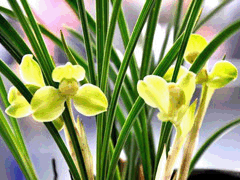 DafanOrchid growersall long for their "orchid babies" to grow strong and stay free from disease. Therefore, how to minimize and avoidorchiddiseases has become the eternal theme that orchid growers tirelessly pursue. Drawing on my ownorchid growingexperience, I believe that preventing orchid diseases requires strictly controlling the "five gates."
Strictly control the "entry" gate and introduce healthy seedlings. "A good beginning is half the success." Introducing orchid seedlings is the first
step in orchid growing; getting off to a good start and taking a solid first step is very important for growing orchids well. When introducing orchid seedlings, fellow growers must, on the premise of ensuring the goods are genuine, strictly control the quality of the seedlings and keep diseased seedlings out as much as possible; this is the foundation for reducing and avoiding orchid diseases. Practice has repeatedly proven that when introducing orchids, especially famous varieties, growers had best go in person to inspect the goods on site, and as far as possible introduce seedlings from an environment similar to their own orchid-growing environment; the best choice is to introduce robust orchids cultivated by well-known growers using traditional methods on a balcony.cultivatedSuch seedlings, though expensive, are genuine and most reliable. Never seek cheapness and introduce diseased seedlings from greenhouses. If the foundation is not solid, the earth shakes and the mountains sway. Introducing diseased seedlings is like a patient beyond cure; even a miracle-working doctor cannot bring them back. Growers should act with caution.
Strictly control the ventilation gate; the environment should be clean, tidy and well aired. Most orchids in nature grow in environments with free-flowing air and a suitable climate, and orchid diseases rarely occur. Therefore, the great masters of orchid growing have the old saying that "all-around ventilation is the first essential" in growing orchids, which is very scientifically sound. If the orchid-growing site is poorly ventilated, orchids suffer from stale, stuffy air and are prone to various diseases that are impossible to guard against. This requires orchid growers, whether growing orchids in a courtyard, on a balcony or indoors, to create an orchid-growing environment with the greatest possible air circulation. The orchid garden should be arranged neatly and orderly, and orchid pots should be placed on shelves open to ventilation on all sides. Especially in the hot, stuffy summer and the brightly sunny autumn, even more attention should be paid to timely ventilation and air exchange. It is better to have somewhat lower air humidity than to let orchids suffer from stale, stuffy air. This is one of the key measures for preventing orchid diseases and must never be taken lightly.
Strictly control the watering gate to ensure vigorous orchid roots. As the saying goes, "Orchid growing is easy to grasp, but watering takes three years of skill." This one phrase lays bare the importance of watering to orchid growing. Experience shows that a considerable portion oforchiddiseases of all kinds are caused by root rot resulting from improper watering. Watering orchids seems ordinary, but in fact it involves great knowledge. The overall principle is to water when dry and let dry between waterings, and when watering, water thoroughly. There is no fixed method for watering. One cannot mechanically and rigidly stipulate watering once every few days; it should be flexibly managed according to differences in season, pot, potting medium and environment. In the final analysis, watering is a matter of practice, and orchid growers need to explore and probe for themselves, adapting everything to time, place and conditions, and thereby find the watering method suited to their own orchid growing. Swallowing others' experience whole without analysis and taking a copy-and-paste approach is a great taboo in orchid growing, andorchids。
Strictly control the fertilizing gate; apply light fertilizer frequently and avoid fertilizer damage. Modern orchid growers mostly use granular potting medium to grow orchids, which is good for orchids to send out roots; its shortcoming is that it lacks nutrients and is nutritionally incomplete. If no fertilizer is applied, seedlings often grow weaker and weaker and are hard to develop into strong plants. Therefore, timely fertilization of orchids is very necessary. However, since orchids are plants that relatively prefer a light, mild regimen, fertilization must above all be light; strongly concentrated fertilizer must be avoided. Once fertilizer is applied in excess, in mild cases the orchid's roots are burned, causing scorched leaf tips, black heads and disease spots on the leaves; in severe cases the orchid dies. Fertilizing orchids cannot be done with a one-size-fits-all approach; it should be handled differently according to the potting medium and the strength or weakness of the seedlings. Generally speaking, orchids grown in humus soil need no fertilization in the same year, and weak seedlings should mainly be grown with a light regimen; robust seedlings cultivated in granular potting medium can be given light fertilizer frequently to promote their growth. Orchid growing is slow work; one cannot rush to success and try to "get fat in one bite" by heavy fertilizing. One should proceed step by step and apply light fertilizer frequently; otherwise, haste makes waste, leaving the orchid scorched and blackened and leading to failure.
Strictly control the prevention gate; repair the house before it rains and never relax. Growing orchids well takes years, but an orchid can fall ill in a single moment. In preventing and treating orchid diseases, treatment is passive, while prevention is active. One should actively respond on the principle of prevention first. Orchid growing requires perseverance and constant effort, and one must not harbor any thought of relying on luck. Daily management should put diligence first, keep the orchid garden clean and hygienic, and promptly sterilize and eliminate pests according to seasonal changes, nipping orchid diseases in the bud; only then will one get twice the result with half the effort. Otherwise, "if you do not burn incense in ordinary times, you will clasp Buddha's feet in a hurry." By the time the disease is beyond cure and one busies oneself with treatment, it is already too late for regret.