A Complete Guide to Appreciating Multi-Art Varieties of Orchids
Orchids - Appreciation of Multi-Art Varieties of Flowers and Leaves
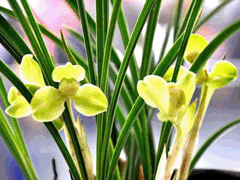
Chineseorchidsare an old yet ever-youthful topic. In the past twenty to thirty years, since reform and opening up in China, more and more people have taken up orchid growing, and waves of orchid enthusiasm have surged one after another. There is also more and more to say about Chineseorchids. As people's aesthetic appreciation oforchidsreaches ever higher levels, their aesthetic awareness grows day by day, and all kinds of orchid varieties are constantly being discovered, people's discussions about appreciatingorchidsalso keep bringing forth new ideas. The multi-art varieties of orchidflowersand leaves can be said to be one of the hottest topics in orchidgrowingtoday. It should be said that multi-art orchids were already recorded more than 580 years ago in the Ming Dynasty Yongle period in the "Nan Zhong You Fang Lu" (Record of Rare Fragrances of the South) written by Yang Andao of Dali, Yunnan (whether this book actually dates from the Ming Dynasty is still disputed). Among the 38 orchids introduced in that register, at least Hongmei Su (plum-petal type plus pure-color heart) and Huangjian Su (pure-color heart plus golden edge) belong to the multi-art category. The Sajin Su (tiger-spot or treasure art plus pure-color heart) recorded in "Linghai Lanyan" by Qu Jince of Lingnan in the late Qing Dynasty should also be a multi-art variety. At that time, such flowers were merely recorded as varieties and did not become a hot topic in orchid circles. As for leaf-art orchids, they had already been recorded from time to time in the Southern Song Dynasty's "Jinzhang Lanpu" and in various later orchid books. As for petal-type flowers, the Ming Dynasty Yunnan work "Nan Zhong You Fang Lu" already mentioned plum, lotus, narcissus, and bamboo-leaf petal types, but these too only became hot topics later on. Today people call this high-grade ornamental orchid "nature's art," and its rich and varied ornamental qualities are also called the various "arts" of orchids. Looking across the history of orchid appreciation by East Asians, with Chinese people as the main body, we can see that regarding the "arts" of orchids, there has been the following course of development. The oldest sayings are Confucius's "the orchid should be the fragrance of kings" and Qu Yuan's "the autumn orchid, so green, green leaves, purple stems," and what was appreciated was the orchid's fragrance and the character of its leaves. By the Ming and Qing dynasties, the fashion of appreciating pure-color-heart orchids appeared. By the early Qing Dynasty, Bao Weisheng of Jiangsu-Zhejiang wrote "Yilan Zaji" (Miscellaneous Notes on Cultivating Orchids), which introduced earlier people's experience in appreciating plum blossom, lotus, and narcissus petals into orchids, organized it, and systematically proposed the petal-type theory of orchid appreciation. Two hundred years ago, a Japanese blacksmith cultivated the first pot of the leaf-art orchid "Jiaye Wu" (Karajaku), which swept orchid circles at the time, and its influence led to the later formation of the leaf-appreciation art theory in Japan and China's Taiwan province. With the appreciation of Dalmo orchids and orchids with running-dragon leaves, the idea of appreciating the whole orchid plant also emerged. In the past half century, strange flowers and butterfly flowers among orchids have again become highly popular. There was also a wave of appreciating colored flowers represented by the red-floweredCymbidium sinense'Taoji' from Taiwan province, and a wave of appreciating crystal art in the mid-1990s. With the large-scale development of orchids in China's great southwest, there also came appreciation of crystal flowers with semi-transparent petals and of vermilion-gold flowers with exceptional flower colors, and so on. To this day, people's appreciation of orchids, besides appreciating their fragrance, has in visual appreciation already shown a rich and colorful trend, becoming ever more refined, and an era of multiple arts and multiple points of appreciation has appeared. The arts of orchids, to sum up, include flower art, leaf art, plant-form art, and so on. Flower art has very many points of appreciation. From the color of the flowers, there are those who appreciate white flowers, pure-color flowers, and pure-color-heart flowers, and those who appreciate colored flowers with exceptional colors. From the color and shape of the flowers, there are those who appreciate butterfly flowers (in which the sepals or petals take on the form and color of the lip). From the shape of the flowers, there are those who appreciate petal-type flowers and strange flowers (multiple petals, multiple lips, multiple columns, or fewer petals, abnormal petals). White flowers refer to those whose petals (including the lip) are purely white; if the lip has other colored markings, then it is called a white flower with colored heart. The heart is the lip. Pure-color flowers refer to those whose petals (including the lip) are of a single pure color, not necessarily pure white; pure red, pure yellow, pure other colors are all acceptable. For example, all-red pure means the whole flower is red, while green-ink pure means theCymbidium sinensewhole flower is tender green. Pure-color heart refers specifically to the lip being entirely of one color, without any other mixed color. For example, if the lip is entirely red, it is called red pure; if the lip has a large red lip marking but also other background color or edge color, it is called red lip and cannot be called red pure. Leaf art refers to the colored lines and colored markings on the leaves (generally yellow and white, but there are also green lines, green markings, and even black lines and black markings). Plant-form art includes dwarf types, semi-dwarf types, running-dragon leaves, curly-dragon leaves, and so on. Among appreciable orchids, the various points of appreciation (arts) in the above flower art, leaf art, and plant-form art generally appear in only one strongly and prominently expressed art in a single orchid plant. For example, inLianbanorchid 'Xiaoxue Su', originally there was only the one art of white flower with pure-color heart, but now several plants of Xiaoxue Su have been found to have mid-transparent leaf art, so these few plants of Xiaoxue Su have two arts. We call this kind of orchid, which has two or more strong and prominent points of appreciation (that is, arts) in a single plant, a multi-art orchid or a multi-art orchid variety. Generally speaking, the multi-art varieties of orchids have higher ornamental value. Multi-art varieties are mostly existing famous and precious varieties that have mutated to produce new arts and thus become multi-art, and there are also newly collected mountain orchids that show multi-art as soon as they appear. The more prominent points of appreciation an orchid has, the rarer it is seen to be, and the more welcomed it is by orchid circles. Therefore, multi-art orchid varieties have now become a new pursuit and a new hot spot in orchid circles.