The Correct Methods and Precautions for Fertilizing Orchids
A Brief Discussion of Orchid Fertilization
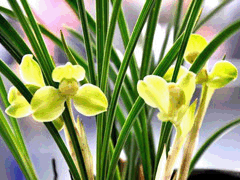 "For crops to bloom, fertilizer is the key" - this farming proverb appliesto orchidsjust as well.Orchidsare fertilizer-loving plants; the nutrients in the potting medium alone cannot meet their year-round growth needs.When orchidshave been grown in a pot for a long time, the nutrient content of the medium gradually decreases, so appropriate fertilization is needed. Fertilization is one of the important steps in orchidcultivationand is also one of the most difficult skills to master in orchid growing. It is well worth studying carefully, exploring carefully, practicing carefully, and summarizing carefully. 1. The main fertilizer components orchids need. 1. Nitrogen, which mainly promotes vigorous stem and leaf growth and deep green leaf color. When nitrogen is deficient, the leaves turn pale yellow and the plant grows slowly. Nitrogen fertilizer components are found in relatively large amounts in soybean cake, oilseed crops, and urea. 2. Phosphorus, which can promote a well-developed root system, a substantial plant, and the formation and development of flower buds and leaf buds. Phosphorus fertilizer components are found in relatively large amounts in bone meal, fish meal, and superphosphate. 3. Potassium, which can dissolve and transport nutrients to the cells, making the plant firm, the stem and leaf tissues substantial, and the growth upright, and enhancing the plant's resistance topests and diseases. Potassium-deficient plants become shorter, the leaves soften and droop and burn at the edges, and growth may even be inhibited. Potassium is mainly contained in plant ash and potassium inorganic fertilizers. The above three fertilizer components are the main fertilizer nutrients that promote orchid growth. What we usually call fertilization mainly refers to applying these three fertilizers: nitrogen, phosphorus, and potassium. In addition, during the growth process, orchids also need trace elements such as calcium, magnesium, sulfur, iron, manganese, copper, boron, and zinc. But under normal circumstances, these are not lacking in the growing medium, so they generally do not need to be added. If they are lacking, this can be solved by changing the growing medium, or by topdressing with a complete synthetic organic fertilizer. 2. The types of fertilizer orchids need. Fertilizers are mainly divided into two major categories: organic fertilizers and inorganic fertilizers. In addition, there are high-efficiency synthetic flower fertilizers and biological bacterial fertilizers. 1. Commonly used organic fertilizers: a. Human and livestock manure, used after urine and liquid are fermented and composted, called "golden juice" in ancient times, with nitrogen as the main component; after fermentation, the manure of cattle, sheep, pigs, and dogs can be used as dry fertilizer or made into fertilizer water and used after dilution. This kind of fertilizer has a complete range of nitrogen, phosphorus, and potassium components. b. Composted fertilizers. There are many kinds of traditionally used composted fertilizers, such as soybean cake, rapeseed cake, fishy water, chicken feathers, fish intestines, and so on, soaked and fermented, then diluted and used after 3-6 months of composting. The nitrogen, phosphorus, and potassium components in composted fertilizers are also relatively complete. c. Grass juice, made by composting tender grass grown in spring or early summer into a liquid, with nitrogen fertilizer as the main component. 2. Commonly used inorganic fertilizers: commonly used inorganic fertilizers include potassium sulfate, superphosphate, monopotassium phosphate, urea, and so on. These inorganic fertilizers have varying effects on orchids, and all contain certain inorganic salt components, so they must be used with caution. 3. High-efficiency synthetic organic liquid fertilizers and biological bacterial fertilizers: a. Lanjun Wang, a complete nutritional element, has the effects of promoting roots, stimulating buds, and strengthening seedlings. b. Zhiquan, a comprehensive mineral health factor, has the effects of promoting roots, stimulating buds, increasing vitality, and preventing viral infection. c. Xishuo, a natural algae fertilizer and soil amendment, contains various elements as well as natural plant hormones and viable bacteria, and can resist cold, drought, and moisture, and inhibit viral infection. d. Cugensheng, a comprehensive plant root nutritional supplement, makes the root system more vigorous, thereby making orchid plants grow rapidly, and can also inhibit viral infection. 4. Long-acting slow-release granular fertilizers, such as "Magic Fertilizer" and "Shike De" produced in the United States, and "Yiduo" produced in Taiwan, China, with several granules placed in the pot to slowly release fertilizer components year-round. 3. What fertilizers orchids need during the growing season. During the annual growing period, orchids need the following fertilizers: 1. Wake-up fertilizer, applied to break dormancy, promote early sprouting, and gain a longer growing period. It can be applied when the daytime temperature reaches above 15c and the nighttime temperature is not lower than 5c. Inorganic fertilizers such as urea and monopotassium phosphate and biological bacterial fertilizers are best applied as foliar sprays. 2. Bud-stimulating fertilizer, applied to promote early sprouting and more sprouts and to gain effective buds in early autumn. It can be applied 7-10 days after applying the wake-up fertilizer. 3. Root-promoting fertilizer, when the leaf buds extend about 3cm above the pot surface, there is a pause in growth. At this time, new roots gradually grow, and the plant enters the nutritional growth and reproductive growth stages. At this time, more nitrogen, phosphorus, and potassium elements are needed to promote rapid growth of new roots. 4. Growth-promoting fertilizer, applied to meet the needs of orchid plants as new buds develop quickly, grow quickly, and mature quickly, and can sprout a second time in late summer and early autumn, to gain early sprouting and early maturity of the second batch of buds. It is the type applied for the longest time and the greatest number of times in a year. It is best to alternate organic fertilizers, inorganic fertilizers, and biological bacterial fertilizers, and to alternate root application and foliar application. 5. Flower-promoting fertilizer, applied to promote the development and growth of flower buds and achieve the goals of more flowers, larger flowers, brighter colors, and fragrant scent. 6. Cold-resistance fertilizer. Stop applying nitrogen fertilizer 30 days before the orchid plants overwinter, and apply more phosphorus and potassium fertilizer to help them overwinter, because phosphorus can lower the freezing point of plant cells, and potassium can increase plant cellulose and make the stem and leaf cortex tough. Choose monopotassium phosphate for root watering or foliar application. According to Mr. Shen Yuanru: after potted orchids are brought out of the room in early spring, fertilize twice around Qingming, with a half-month interval each time; during the period when young buds and new roots sprout, more nutrients are needed, so strong-plant fertilizer should be applied; during the plum rain period, daughter plants grow very quickly, so choose a sunny day to fertilize 1-2 times; at Minor Heat, if the orchid plants are thin and weak, apply a light fertilizer once; from White Dew to Autumn Equinox, apply a light fertilizer for the last time; after Cold Dew, if there are autumn stems, apply a light fertilizer once more. 4. Basic methods of fertilizing orchids. The basic methods of fertilization include base fertilizer and topdressing. Fertilizer directly added and mixed into the growing medium is called base fertilizer. Because adding fertilizer to the growing medium is difficult to control and easily breedspests and diseases, and also easily burns the roots and harms the orchids, in recent yearsorchid growersgenerally no longer use it. Topdressing methods also include two kinds: root fertilization and foliar fertilization. 1. "Root fertilization" means pouring fertilizer into the growing medium so the roots can absorb it. Root fertilization methods include "pouring" and "soaking," among others. "Pouring" is the most commonly used method, which means pouring the fertilizer solution along the edge of the pot into the growing medium. "Soaking" means placing the orchid pot directly in the fertilizer solution to soak. Both of the above methods have advantages and disadvantages. Only when used properly and applied reasonably can they be beneficial without harm. The root fertilization method we commonly use refers to the first one. Root fertilization should pay attention to the following points: First, the concentration must not be too high. Fertilization should be little, dilute, and frequent. Never apply too much, otherwise fertilizer damage is likely, causing death. Even if it survives by luck, it is difficult to recover after being injured. Second, when fertilizing, avoid splashing onto the leaf surface and pouring into the leaf center, especially after pouring into new buds that have already split, which easily causes rot. Pour around the edge of the pot. Third, apply "revival water." After fertilizing in the evening, "revival water" should be applied the next morning. It has two functions: one is to wash off the fertilizer solution adhering to the orchid leaves; the other is to rinse away excess fertilizer components remaining in the pot medium, so as to avoid fertilizer damage harming the orchid plants. Fourth, newly potted orchid plants must not be fertilized. Fertilization must wait until orchid roots longer than 3cm have grown, otherwise the orchid will certainly die. Fifth, do not apply fertilizer on low-temperature days below 10c°, high-temperature days above 30c°, or humid, saturated rainy days. Sixth, the time for root fertilization is best in the evening. Fertilizing in the evening allows absorption overnight, and watering once more the next morning can avoid fertilizer damage. If fertilizing in the morning, the pot temperature rises during the day under sunlight, and it is very easy to burn roots and harm seedlings. Seventh, returned-sale grass must not be given organic or inorganic fertilizer by root application within one year. Eighth, odor must be removed. Various composted fertilizers all have a foul smell. The orchid owner may be able to tolerate it, but it will affect the neighbors and cause conflicts. When applied indoors fororchid growing, the odor does not dissipate for a long time, so deodorization is needed. There are two deodorization methods: one is to compost for a longer time, preferably more than one year; the other is to put a little fruit peel into the composting liquid, especially orange peel, which can effectively remove the odor. 2. "Foliar fertilization" means spraying an organic or inorganic aqueous solution with nutritional effects onto orchid leaves according to a certain dosage and concentration to provide direct nourishment. Foliar fertilization has the advantages of low dosage, strong targeting, fast absorption, obvious effects, and low cost, and is especially effective for rootless and few-rooted orchid plants. Foliar fertilization should pay attention to the following points: First, spraying must be targeted, that is, choose the corresponding fertilizer according to the nutrients needed by the orchid plant at each growth stage and supply them in a targeted way. For example, during the new bud growth period, nitrogen fertilizer is mainly needed, and it works only when combined with potassium fertilizer; when new seedlings mature, potassium fertilizer should be added to ensure robust plant growth; during the flower bud period, phosphorus fertilizer should be supplemented; in addition, variegated-leaf orchids should be sprayed with less nitrogen fertilizer to prevent excessive nitrogen fertilizer from increasing chlorophyll and causing the variegation to degrade. Second, mixing must be scientific. Although commercial foliar fertilizers have relatively complete nutrient components, do not always use the same variety. They should be mixed and used alternately to make up for each other's shortcomings and make the nutrition more comprehensive. For example, using urea as a foliar fertilizer easily causes excessive growth, so it must be mixed with monopotassium phosphate. Generally, acids and bases should not be mixed, and biological bacterial fertilizers should not be mixed with other fertilizers. Third, the concentration ratio must be appropriate. The concentration used should strictly follow the relevant instructions. It is strictly forbidden to increase the concentration at will, otherwise it will be counterproductive, cause fertilizer damage, and even inhibit orchid growth. Fourth, the spraying time must be reasonable. Foliar fertilization should not be carried out in the morning. Generally, in the evening of a sunny day when sunlight cannot reach the leaf surface, it is best if the leaves dry within one hour after spraying. This is beneficial for the orchid leaves to absorb nutrients at night, and on the other hand avoids fertilizer damage and reduced efficiency caused by light, especially preventing liquid accumulation in the leaf center from causing bud rot. In addition, the interval should not be too short. Once every ten days or so is best, to avoid hypernutrition. Fifth, the spraying method must be particular. Because fertilizer must be absorbed into the body through leaf stomata, and leaf stomata are mainly on the underside of the leaves, spraying should mainly reach the underside of the leaves. The nozzle should point upward, and the mist should be fine so that there are more opportunities to spray the underside of the leaves. At the same time, the spray amount should not be too large. It is best if the leaves do not drip, to prevent fertilizer solution from accumulating at the leaf tips and causing fertilizer damage and burnt tips. Sixth, spray less during the dormant period. During the low-temperature dormant period, the physiological activity of orchid plants weakens, and they generally do not absorb fertilizer. However, monopotassium phosphate, which improves cold resistance, and easily absorbed biological bacterial fertilizers can be sprayed about once every half month. At the same time, spraying a little foliar fertilizer on rootless and weak or diseased orchid plants can maintain their lives and increase the survival rate. Seventh, be cautious about spraying growth hormones. Growth hormones do indeed have very good effects in promoting plant growth and development, increasing the sprouting rate, promoting early maturity, and achieving increased yield, but their main function is to promote cell elongation. After application, excessive growth and even lodging may occur, which has an obvious impact on the health of orchid plants. It is better not to use them. Eighth, foliar application depends on the weather. On rainy days, air humidity is high, water is difficult to evaporate, and the fertilizer solution stays on the leaf surface for a long time, easily causing fertilizer damage. In high-temperature weather, especially in very hot weather above 30c, water evaporates too quickly, which rapidly increases the concentration of the foliar fertilizer and causes fertilizer damage, so it is not suitable for spraying. Ninth, wash the leaves after spraying. After fertilizing in the evening, spray water once the next morning to wash off the fertilizer remaining on the orchid leaves, so as to avoid fertilizer damage after sunlight exposure. Tenth, foliar application cannot replace root application. Foliar fertilization is an auxiliary means of fertilization and cannot completely replace root application. It can only make up for insufficient root absorption; otherwise it will cause root shrinkage and poor growth. 5. Points to note when fertilizing orchid plants. The technique of fertilizing orchid plants is both simple and complex. Usually the following points should be noted: First, different orchid species need different amounts of fertilizer. For example,Cymbidium faberineeds a large amount of fertilizer, whileCymbidium goeringiineeds a small amount of fertilizer; onlyone fifth of that for Cymbidium faberiis enough. Second, differentcultivationsubstrates require different fertilizers. For example, hard materials such as volcanic stone and Xiantu do not contain nutrients themselves, so more fertilizer should be applied; while using humus and the like as the growing medium, because it already contains nutrients, there is no need to apply much fertilizer, so the fertilizer requirement is relatively small. Third, different seedling conditions also require different fertilization. Strong and large seedlings should be fertilized frequently and heavily, while old, weak, and diseased young seedlings should be grown plainly and must absolutely not be fertilized, otherwise haste makes waste and death will be accelerated. Fourth, multiple fertilizers should be used alternately. Using a single fertilizer makes it difficult to ensure complete nutrient components. Generally speaking, alternating organic fertilizers, inorganic fertilizers, and biological bacterial fertilizers is best. Fifth, fertilize according to the roots. Short and thick roots indicate excessive fertilizer; black roots indicate fertilizer damage has already occurred; long roots indicate insufficient fertilizer; many and fine roots indicate severe fertilizer deficiency. Sixth, fertilize according to the leaves. If orchid leaves are thin in texture and pale in color, it indicates fertilizer deficiency; if orchid leaves are thick in texture and green in color, it indicates no fertilizer deficiency. After fertilization, if the leaf color is deep green, it indicates the fertilizer has taken effect; if the leaf color does not change, it indicates the fertilizer is too dilute and the concentration should be increased. Seventh, do not fertilize during the flowering period. Flower buds have a strong ability to absorb nutrients but a very weak ability to withstand them. After the flower buds emerge from the pot surface, fertilizing again will stimulate vegetative growth and inhibit reproductive growth, resulting in poor flower bud development, petals that do not spread fully, and early flower withering. Fertilizing during the flowering period will certainly ruin the flowers. Eighth, animal and plant fertilizers must be fully fermented. Fresh fertilizer must not be applied. Applying fresh fertilizer will certainly kill the orchids. Ninth, pay attention to fertilizer damage. If the leaf color turns yellow after fertilization and the leaf tips scorch, it indicates too much or too concentrated fertilizer. A large amount of water should be applied immediately, or the pot should be repotted and the soil changed for rescue, otherwise the orchid will certainly die. Tenth, the three major elements of fertilizer must be scientifically combined. In the process of orchid growth and development, nitrogen, phosphorus, and potassium are all essential nutrient elements. Applying only nitrogen fertilizer without phosphorus and potassium will not produce very good results either: the plant will grow excessively, the leaf texture will be soft, and it will be susceptible topests and diseases; while favoring phosphorus and potassium fertilizer without nitrogen fertilizer will make orchid plants grow short, with yellow-green, stiff, and lusterless leaves, few new buds, and easy aging of the plant. Therefore, the relationship among the three elements must be handled well, and none of them should be applied one-sidedly. It is only that during the early growth stage of orchids there should be a little more nitrogen fertilizer, during the middle growth stage a little more potassium fertilizer, and during the late growth stage a little more phosphorus fertilizer. Fertilizing orchids is a science and a field of learning, and it must be studied carefully, actively explored, carefully pondered, and deeply researched. As long as fertilization is appropriate, orchid plants will certainly grow robustly, and it will also surely makeorchid growersfeel pleased and happy, adding endless pleasure, thereby truly achieving the purpose of cultivating the mood and prolonging life. Where there is anything inappropriate, experts are requested to criticize and correct it.