Flower blight should not be underestimated; growers need to stay alert and prevent and control it early
Beware of flower blight!
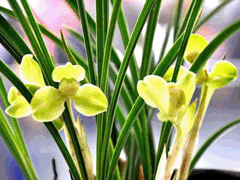 1. Symptoms: Within 24 hours of infection on any part of the petals and sepals, small translucent water-soaked spots appear. As the spots turn brown, there is sometimes a faint pink ring around them. The number of spots on each flower varies, but once the flower begins to fade, the spots all increase. On careful inspection, a fuzzy growth can be found on the flowers; this is the mycelium and spores of Botrytis cinerea.
2. Disease characteristics:OrchidsIn most cases, flower blight produces conidia in rotting flowers, and many conidia are produced from rotting flowers. When the weather is cool (7-18'C), or when the orchid room is poorly ventilated, flowers often suffer from flower blight, leading to an epidemic of the disease. The conidia of this pathogen are spread by water or air. After fertilisation, rapid leaf growth together with moist and cool conditions favours the occurrence of this disease.
3. Control methods: (1) Pay attention to ventilation in the orchid room. When watering, be sure not to water the flowers. If watering from above, it should be done in the morning so that the leaves dry as quickly as possible. (2) Remove and destroy all diseased flowers and their infected parts. Chlorothalonil can be used at 180g/100L, 600-800 times dilution; benomyl at 30g/100L; maneb at 192g/100L. In addition, applying benlate 50% wettable powder gives good results at a dilution of 1000 times, sprayed once every 30 days. If flower blight has already become a problem, the flowers must be sprayed just before flowering, and 7 days later benlate should be applied at the above ratio, but it may leave a faint visible stain on coloured flowers.
A 58% metalaxyl-mancozeb (mancozeb Ridomil) wettable powder at 600 times dilution can also be used, and on thecultivationmedium surface, apply 5% metalaxyl (Ridomil) granules.