Appreciation of the Strong Leaf Butterfly Three-Star Butterfly Orchid Variety
Strong Leaf Butterfly Three-Star Butterfly
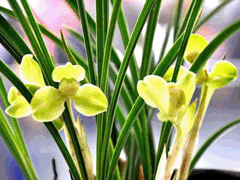 When an orchid enthusiast described the currentorchidmarket, he summed it up with a poem: You stand on the bridge looking at the scenery, and the one looking at the scenery looks at you from the tower. The bright moon decorates your window, and you decorate another's dream.
Most people are desperately searching for the "savior" of the orchid market, so that people in a depressed mental state show a touch of sensitivity. At the end of 2007, an obscure newspaper published an inconspicuous piece of news, which claimed that the Wenzhou real estate speculation group had begun to inject a large amount of outflow capital into the orchid market, and the revival of the orchid market was just around the corner. This piece of news, stacked in an inconspicuous section, nevertheless triggered a strong tremor in the orchid market.
Some people, however, disapproved. They surged and tangled, exchanged harsh words, and carried a rare snort of contempt. However, the facts that followed did not unfold as most people had imagined. The market remained as sluggish as before.
People's confidence was not defeated by this; instead, it became even more fervent and excited because of the subsequent natural disaster of the earthquake -- on June 8, 2008, nearly a hundred orchid growers from Sichuan, Zhejiang, Taiwan, China, Yunnan and other places gathered at the Dangshanzhou Orchid Garden in Dali to participate in the "2008 Dragon Boat Festival Shengxiang Butterfly Flower Appreciation Gathering" jointly held by Dangshanzhou Orchid Garden and Shengxiang Orchid Garden. What made this flower appreciation gathering different was that it was the first small-scale orchid appreciation and trading event after the earthquake disaster.
Thus, represented by Shengxiang Butterfly,Lianbanorchid three-star butterflies became the focus of discussion in the industry. Why, when the orchid market is so sluggish, are people still so full of confidence in pursuing Shengxiang Butterfly? In fact, it is not only Shengxiang Butterfly that is constantly praised; the entire "Leaf Butterfly Three-Star Butterfly" series of Chinese orchids in its family is welcomed by people in the industry.
Perhaps, for now, you stand on the bridge looking at the three-star butterfly, while the one looking at the three-star butterfly is smiling at you from the tower.
Strong Leaf Butterfly Three-Star Butterfly
On June 8, 2008, nearly a hundred orchid growers from Sichuan, Zhejiang, Taiwan, China, Yunnan and other places gathered at the "Dangshanzhou Orchid Garden" in Dali to participate in the "2008 Dragon Boat Festival Shengxiang Butterfly Flower Appreciation Gathering" jointly held by Dangshanzhou Orchid Garden and Shengxiang Orchid Garden. At the gathering, the orchid growers admired together a pot of out-of-season bloomingflower"Shengxiang Butterfly."
Shengxiang Butterfly is one of the famous varieties of Lianban orchid leaf butterfly three-star butterflies. Its plant type is not tall, with soft drooping leaves, and butterfly transformation often appears in the leaves. Moreover, the leaf butterfly parts remain intact from seedling to old age. Under the current sluggish market conditions, its transactions are among the outstanding performers in high-end Lianban orchid leaf butterfly three-star butterflies. At present, it is mainly distributed in Yunnan, and orchid enthusiasts in Sichuan, Zhejiang, and Taiwan, China have also introduced it.
However, it is worth mentioning that this time is June, which is not the normal flowering period of Lianban orchid, yet Shengxiang Butterfly still produced an excellent bloom, which fully demonstrates that Shengxiang Butterfly has excellent stability and good expressive ability. For this reason, all the guests attending the gathering greatly praised its superb performance.
After the massive earthquake on May 12, the already sluggish orchid market was once again made worse, and cross-regional visits and transactions among orchid enthusiasts basically stopped. This flower appreciation gathering, however, was the first time after the massive earthquake that well-known orchid growers from various places were invited to gather, especially orchid growers from the disaster-stricken areas of Sichuan, making it the first post-earthquake orchid event. Because of the blooming of Shengxiang Butterfly, everyone was able to gather and exchange ideas in Dali, which also brought confidence to the sluggish orchid market, offered some comfort to the sorrowful emotions of industry people after the earthquake, and added infinite hope for the rise of the orchid industry again.
The blooming of the Lianban orchid Shengxiang Butterfly and the extraordinary gathering of orchid growers this time highlighted the elegance of Shengxiang Butterfly, and on closer thought, it was even more because of the enormous charm of the leaf butterfly three-star butterfly strain.
The past and present of the leaf butterfly three-star butterfly
Through an interview with Ma Zhihong, a famous Yunnan orchid grower and CEO of China Yunnan Orchid Network, a reporter from Orchid World roughly summarized the "struggling" course of three-star butterflies, especially those with leaf butterflies, in the great tide of the market.
Three-star butterfly is both a novel and an ancient topic, but bringing it up now is also timely, because right now is a relatively lively time for three-star butterflies. At present, whether from the perspective of appreciation or from the perspective of the market, the three-star butterfly has already become an independent strain. And when speaking of three-star butterflies, one cannot avoid mentioning leaf butterflies. Especially in recent years, to discuss three-star butterflies, one must certainly also discuss leaf butterflies at the same time.
The concept of the three-star butterfly has a long history. As early as hundreds of years ago, orchid predecessors in Ningbo, Zhejiang had already listed butterfly flowers together with plum, lotus, immortal, and plain flowers as important bases for appreciating orchid flower types. Therefore, regarding the understanding of three-star butterflies, it can be said that "previous generations have described it fully," and orchid enthusiasts have long understood it well. But the emergence of the appreciation theory of "leaf butterfly" was formed in the orchid world only in recent years. The emergence of this theory began to take shape and exist only after 2003. Of course, this is not to say that the leaf butterfly phenomenon did not appear before, but at that time people's understanding of the characteristics of Chinese orchid plants was not yet sufficient, and they had not yet identified them from a microscopic perspective. There were even cases in which leaf butterflies were treated asorchid grassdisease and handled accordingly. The emergence of all these situations naturally made it impossible for people to appreciate the charm of leaf butterflies as a whole.
By 2005, recognition of "leaf butterflies" across the country began to rise continuously, and leaf butterflies of comparable quality and market competition appeared in different orchid species, such as Peach Garden Three Sworn Brothers among Chun Jian,Chunlansuch as Tiger Stamen and Great Yuanbao Butterfly,Four SeasonsOrchidsuch as Double Butterfly and Colorful Cloud Flying, and among Lianban orchids such as Great Tang Phoenix Feather and Sweat-Blooded Horse, all almost simultaneously became representative leaf butterflies recognized by everyone. Because of their limited quantity and obvious advantages, their prices continued to rise under market pursuit, and they began to be recognized and sought after by the broad community of orchid enthusiasts, being hailed as veritable "hard currency" among orchids. Therefore, according to current concepts, the leaf butterfly phenomenon has not only become synonymous with high-grade three-star butterfly flowers, but has also opened up an entirely new field in Chinese orchid appreciation.
In the current market, leaf butterflies or leaf butterfly three-star butterflies have almost indisputably become the mainstream leading the market. The most typical example is the famous Sichuan Chun Jian variety Peach Garden Three Sworn Brothers, which is the first leaf butterfly three-star butterfly variety in the strict sense. From its discovery in the mountains of Mabian, the famous hometown of orchids in Sichuan, in 1992, it began to attract attention, and to this day, Peach Garden Three Sworn Brothers is still a mainstay of the market. On the great stage of the orchid market, where variety replacement is dizzying and "each one exits as another enters," the long-term firmness of Peach Garden Three Sworn Brothers is precisely the best proof of the position of the three-star butterfly in the market.
Later, several excellent similar varieties were discovered and cultivated in Chun Jian, all with beautiful leaf butterflies and blooming as standard three-star butterflies, such as the Chun Jian "Romance of the Three Kingdoms" cultivated by Dangshanzhou Orchid Garden. But as everyone can see, the appraisal of these varieties is basically based on Peach Garden Three Sworn Brothers as the reference. Then the weight and status of Peach Garden Three Sworn Brothers are self-evident.
Following closely on the infinite glory of Chun Jian leaf butterfly three-star butterflies, a whirlwind of Lianban orchid leaf butterfly three-star butterflies also began to sweep through the Yunnan orchid market. Jade Rabbit Colorful Butterfly, Star Sea Butterfly, Lijiang Star Butterfly, Sweat-Blooded Horse, Great Tang Phoenix Feather, Manjianghong, Shengxiang Butterfly... Excellent Lianban orchid leaf butterfly three-star butterfly varieties were like a hundred-flower garden swept by a spring breeze, with fine flowers blooming in competition, and among these three-star butterflies, the vast majority carried rare leaf butterflies.
The earliest Lianban orchid to produce leaf butterflies was Liangzhu, and by the years 2000 to 2003, when the orchid market was at its extreme peak, the leading players among Lianban orchid three-star butterflies were Lijiang Star Butterfly and Jade Rabbit Colorful Butterfly. Among them, Lijiang Star Butterfly has so far not been found to show the leaf butterfly phenomenon, while Jade Rabbit Colorful Butterfly does produce leaf butterflies, but the probability is not high, with the proportion at less than 10%. Later, Peach Garden Butterfly appeared, now also called Yunxi Butterfly. Practice has proved that Yunxi Butterfly has the possibility of producing leaf butterflies, but the probability is very low. Although in these varieties the advantage of leaf butterflies has not yet been fully brought out, it was precisely under their strong impetus that the entire three-star butterfly strain began to leap into becoming the new darling of the market.
In 2004, the Lianban orchid Sweat-Blooded Horse, which shook the entire orchid world, burst onto the scene. Everyone could not help but feel their eyes light up, both surprised and delighted. So there were indeed such outstanding leaf butterflies among Lianban orchids! At that time, the market also happened to be booming, so leaf butterflies became even more popular all the way, and many varieties, even if not particularly impressive in flower quality from an appreciation standpoint, as long as they had obvious leaf butterflies, suddenly became rare goods in great demand!
While Sweat-Blooded Horse was galloping through the market, everyone discovered another three-star butterfly with leaf butterflies even more excellent than this "fine horse," and that was another legendary variety -- Great Tang Phoenix Feather. Ever since it appeared with astonishing leaf butterflies and three-star butterflies at the 15th China (Leshan) Orchid Expo in 2005, it gained absolute leadership in the field of Lianban orchid leaf butterfly three-star butterflies. It is no exaggeration to say that Great Tang Phoenix Feather itself is a market miracle.
Later, Manjianghong, Shengxiang Butterfly... one after another excellent Lianban orchid leaf butterfly three-star butterfly variety began to be active in the orchid market. At this point, the Lianban orchid leaf butterfly three-star butterfly had already become an invincible new force in the market.
"The three-star butterflies among Lianban orchids have already become a mainstream in the market and can basically form a group, so a new brand has also been born. Jade Rabbit Colorful Butterfly, Lijiang Star Butterfly, Yunxi Butterfly (Peach Garden Butterfly), Star Sea Butterfly, Sweat-Blooded Horse, Great Tang Phoenix Feather, Manjianghong, Shengxiang Butterfly -- together they form a stirring 'Eight Dragons.'" At the beginning, famous Yunnan orchid growers including Ma Zhihong proposed the concept of the "Five Golden Flowers" that is popular in the orchid world today. Today, Yunnan orchid growers have again proposed the highly vivid and lively concept of the "Eight Dragons," which has attracted considerable attention and recognition in the Yunnan orchid world, and the reporter and this article have had the honor of becoming the "first publishers" of this concept.
"Of course, this issue still needs continued discussion in the future. After all, the relationship between leaf butterflies and three-star butterflies still requires several more years of careful observation." Although Ma Zhihong expressed this modestly and with low key, since these eight famous varieties provide a guarantee with their indisputably proud varieties and market capability, the "Eight Dragons" will surely carry the supreme secret manual of the "union of twin swords" of leaf butterflies and three-star butterflies and laugh proudly across the martial world!
Appreciation and playing advantages of leaf butterfly three-star butterflies
Yunnan orchid grower Ma Zhihong believes that the advantage of the three-star butterfly lies in its clear appreciation standards, such as brilliant colors, regular distribution of the tongue (in a triangular arrangement), presence of a throat tube, and splitting of the column. In addition, leaf butterfly three-star butterflies also have the characteristics of stability and easy identification. This is one of the reasons why butterfly-type flowers have become popular.
Taiwan, China orchid grower Zhong Longwang believes that after several years, the orchid market's requirements for variety style will become higher and higher. In other words, the future high-grade orchid appreciation standard will not only be having flowers or having leaf art; the standard for good flowers in the future will surely enter the appreciation field of both flower and leaf art, or three stars. In addition, the greatest advantage of three-star butterflies with leaf butterflies also lies in their unique anti-counterfeiting function, so people therefore omit many kinds of disputes caused by fake plants in daily transactions, and both buying and selling are reassured. Apart from this, leaf butterfly three-star butterflies also have the characteristics of a high probability of producing good flowers; having the features of strange flowers while also having the neatness of petal-form flowers, and looking comfortable. In Zhong Longwang's view, three-star butterflies with leaf butterflies will never exit the stage of the orchid market.
Sichuan orchid grower Yu Renyou believes that because leaf butterfly three-star butterflies have strong identifiability, obvious anti-counterfeiting marks, stable varieties, many strains and easy selection, and large market stock, their market potential is enormous. When the global economy is revitalized and society and the environment are transformed, leaf butterfly three-star butterflies will become a new round of appreciation standards after the circulation standard of regular flowers.
When a reporter from Orchid World interviewed Huang Demin, a Yunnan orchid grower and the discoverer of Great Tang Phoenix Feather, it was found that the process of discovering Great Tang Phoenix Feather, praised as a fine flower among flowers, was actually also a process in which the discoverer made bold hypotheses about leaf butterfly three-star butterflies. Among orchid plants, line art, dwarf types, and crystal are all leaf art, and all have been recorded in history. But the leaf butterfly phenomenon had no record. At the time, when Huang Demin saw the leaf butterflies of Great Tang Phoenix Feather, he felt they were more beautiful than line art, crystal, and dwarf types, except that the books at the time did not record them. So Huang Demin began to ponder that it should be a new variety. At the time, he felt that as long as it was something new, its value would be very high, so he subjectively imagined it should have market prospects. After some thought, Huang Demin took this plant seriously and cultivated it carefully to see what kind of flower it would produce.
What was astonishing was that Great Tang Phoenix Feather produced a three-star butterfly. It can be said to combine leaf art and flower art in one, and occasionally it even blooms flowers on the leaves. Judging from the current market, the prospect of Great Tang Phoenix Feather is affected by quantity. As more and more people cultivate it and the number of seedlings increases, the price will slowly decline. But one thing is certain: as long as there is an orchid market, Great Tang Phoenix Feather will be recognized by everyone, just like Song Mei.
Huang Demin also told the reporter that as far as leaf butterfly three-star butterflies are concerned, they have a great appreciation advantage, namely their stability. No matter where they are or who cultivates them, the flower quality produced is much the same. At present, as resources become fewer and fewer, the chances of leaf butterfly three-star butterflies appearing are also fewer. But with the development of existing leaf butterfly three-star butterflies and the emergence of new ones, this market for leaf butterfly three-star butterflies will become more and more vigorous.
Yunnan orchid grower Zhang Jianbo, an indirect discoverer of Shengxiang Butterfly, believes that the stock of Lianban orchid leaf butterfly three-star butterflies is not yet very large, with well-known ones such as Great Tang Phoenix Feather. However, at present, the number of leaf butterfly three-star butterflies has begun to increase, but among Lianban orchids there are only a handful. In fact, leaf butterfly three-star butterflies have many appreciation advantages. Take Shengxiang Butterfly for example: its characteristics of high seedling production rate, long retention time of leaf butterflies, and obvious anti-counterfeiting marks make its market prospects very promising. Zhang Jianbo believes that leaf butterfly three-star butterflies will surely become a strain contending with petal-form flowers and strange flowers, because three-star butterflies with leaf butterflies are much more stable than three-star butterflies without leaf butterflies. However, as the number of varieties in this strain increases, the price of leaf butterfly three-star butterflies will undergo a process of decline, but that will also mean more people participate. At the same time, as things stand now, leaf butterfly three-star butterflies are accepted nationwide. Unlike some flowers in the past that were controversial, what leaf butterfly three-star butterflies will have is a large nationwide market.
Sichuan orchid grower Zhou Shaoyan believes that in the entire petal-form theory, the three-star butterfly plays a leading role and has gained fair social recognition. He believes that leaf butterfly three-star butterflies have unparalleled appreciation advantages, and their characteristics of strong stability, high ornamental value, no variation, large quantity, and strong circulation make their future market potential enormous.
Yunnan orchid grower Ma Zhihong believes that the success of many leaf butterfly three-star butterfly varieties is related to their own high grade, but it can also be said that they took full advantage of timely opportunity (the orchid market's recovery), geographical advantage (the mainstream market being in the hottest area, Dali, Yunnan), and human harmony (leaf butterflies being recognized). Now the market is sluggish, and leaf butterfly three-star butterflies, like other strains, have lost "timely opportunity," and transactions have begun to be somewhat sluggish, but this is a problem faced by all varieties, not a problem of the three-star butterfly. Then can leaf butterfly three-star butterflies, relying on their own characteristics, become the vanguard that "breaks out of the encirclement" for orchids from the sluggish market? Ma Zhihong calmly believes that "at least for now, no such sign can be seen," but at the same time he also objectively states that "no matter what, having the dual arts of leaf butterfly and three-star butterfly is certainly more advantageous than other single-art varieties." This is the most fair and pertinent evaluation of leaf butterfly three-star butterflies, and it is also where the hope lies for this strain to reach an even higher level in the future tide of the market.
Compared with art grasses such as striped grass, crystal, and dwarf types, butterfly grass has been known and cultivated by people for not a long time, and as for the ornamental value of the grass itself, it is also not as colorful or as rich in sculptural artistic beauty as art grasses such as line art, crystal, and dwarf types. Then why has butterfly grass become a new darling that orchid enthusiasts rush to buy? The most important point is because leaf butterflies provide an unparalleled and indisputable omen and confirmation of blooming as a regular three-star butterfly. Because there is such an almost one-to-one correspondence between leaf butterflies and three-star butterflies, there has long been a saying among orchid enthusiasts that buying a leaf butterfly is equivalent to buying a three-star butterfly. It should be pointed out that not 100% of leaf butterflies can bloom as three-star butterflies. Some emulsified crystal butterfly grasses, including butterfly grasses with black stripes or red stripes, do not have a high probability of blooming butterfly flowers.
When orchids are traded as commodities, of course the fewer disputes, the easier they are to be recognized by orchid enthusiasts. And the issue of variety disputes is precisely the "chronic difficult problem" of orchid trading. The special identifying function of leaf butterflies enables grasses with this characteristic to almost avoid this problem, and this is precisely an important reason why Peach Garden Three Sworn Brothers, the representative variety of leaf butterfly three-star butterflies, enjoys enduring prosperity, and why Sweat-Blooded Horse gallops through the orchid world.
Then, apart from this, what other magic weapons do three-star butterflies with leaf butterflies have that keep them forever youthful and never aging? In fact, after leaf butterflies began to gain recognition from orchid enthusiasts in various places, they gradually became a main force in the cross-regional exchange of orchid varieties. Excellent leaf butterfly three-star butterflies, including Chunlan's Great Yuanbao, Tiger Stamen, and Biyao, and Four Seasons Orchid's Double Butterfly and Colorful Cloud Flying, all began to become darlings of the market and carried out large numbers of cross-regional transactions and circulation. Thus leaf butterfly three-star butterflies became a relatively independent appreciation and market system, and will certainly occupy the mainstream position in the market for a considerable time.
Narration of new leaf butterfly three-star butterfly varieties
There is a question that must first be clarified: what exactly is meant by so-called new varieties? New variety is a term that easily causes confusion and misunderstanding. Ordinarily, when orchid enthusiasts meet, they always like to say, "Look at how my new variety is," not realizing that they have misunderstood the true meaning of new variety.
Strictly speaking, a new variety refers to "a wild-collected orchid that was gathered from the mountains by orchid collectors, brought down from the mountains, and after several years or even decades of cultivation, has shown leaf art tendencies or fixed flower shape and color." Therefore, defining all ordinary newly collected preliminary art plants as new varieties is actually usurping the good name of new varieties. A true new variety is an excellent variety that began from seed in the mountains, accumulated long-term cultivation under the natural environment, and after being collected and brought down from the mountains, was cultivated by various artificial methods and has already shown excellent art-transformed characteristics. So a new variety is not necessarily a variety that has "newly" appeared on the market; some may have been brought down from the mountains many years ago, only that their excellent characteristics have not yet been generally recognized or accepted by orchid enthusiasts.
The situation of leaf butterfly three-star butterflies is the same. In recent years, in addition to those traditional famous varieties that appeared relatively early and have relatively high recognition and identifiability among orchid enthusiasts, orchid enthusiasts in various places have also continuously discovered and bred many excellent new varieties. These varieties carry beautiful leaf butterflies and three-star butterflies, adding glory to the expansion of the leaf butterfly three-star butterfly ranks, and also providing more choices for many orchid enthusiasts who seek to "stay ahead" in variety introduction. Among these new leaf butterfly three-star butterfly varieties, some have not yet formally appeared on the market, and the breeders may still be continuing to cultivate them and observe their characteristics and stability, but they have already attracted attention and importance in some circles of orchid enthusiasts; another portion has already appeared on the market and has achieved a certain degree of fame in the orchid world, becoming new darlings for many orchid enthusiasts to invest in and introduce.
Zhejiang-produced new Chunlan varieties such as "Huading Crystal Core" and "Tang Sancai"; Four Seasons Orchid varieties such as "Double Butterfly" and "Colorful Cloud Flying," praised by some orchid enthusiasts as the "Peach Garden Three Sworn Brothers" among Four Seasons Orchids; Chun Jian varieties such as "China Twin Beauties" and "Romance of the Three Kingdoms," which have always hoped to compete with Peach Garden Three Sworn Brothers; and Lianban orchid varieties such as "Shengxiang Butterfly" and "Manjianghong," whose prices are still called "sky-high"; as well as many formally unnamed leaf butterfly three-star butterflies, are all outstanding among the new varieties that have emerged in recent years.
Because orchid growers recognize the "leaf butterfly phenomenon," at present there are many orchid growers selecting and cultivating leaf butterfly varieties. Therefore, whether these "new" leaf butterfly varieties or those "old" leaf butterfly varieties, their transactions, even under the current sluggish market conditions, have maintained surprising trading and exchange activity. This seems to have become a perfect "bright spot" remaining in a sluggish market, and this spark may perhaps start a prairie fire!
"One step ahead, and every step ahead." For investors, only by operating with keen appreciative vision and forward-looking investment concepts can they possibly laugh proudly in the subsequent market competition by being one step ahead. Selecting popular varieties for cultivation and investment can of course reduce many risks, but if one wants to create an "investment and introduction" myth oneself, then only new varieties will do. Those new leaf butterfly three-star butterfly varieties whose traits are already relatively stable but whose quantity and number of investors are still relatively small will surely therefore become the first choice and necessary choice of a new round of investors. Seizing the opportunity and acting at the right time should be where the key to success lies.
In fact, judging from the current market situation of leaf butterfly three-star butterflies, there are many varieties with leaf butterflies, but there are not many varieties that are truly confirmed as three-star butterflies after blooming, and there are even fewer varieties that, after producing three-star butterflies, can truly be accepted by orchid enthusiasts and truly become famous varieties. For example, among Lianban orchids, Erfeng's leaf butterflies are actually very outstanding, but the flower seems not quite ideal, placing it at a relative disadvantage in market competition, and it was not selected into the "Eight Dragons"; Sanyang Kaitai is a true "sky-high orchid" in the Yunnan orchid market, with very beautiful leaf butterflies and reportedly a flower that is one in a hundred, but after all it is still in the "species preservation" stage, and most orchid enthusiasts have not yet had the good fortune to see its true appearance, so there is still a wait before it appears in the trading market, and therefore it was not selected either.
This also indirectly demonstrates the rarity and preciousness of the simultaneous appearance of leaf butterflies and three-star butterflies. In addition, there are many leaf butterflies that everyone has not seen or that have not yet bloomed, full of the eager hopes of countless orchid enthusiasts, waiting for the test of time and the market, and the number of this group must not be small, and "can be described as a magnificent spectacle."
But no matter what, in the existing Chinese orchid market, the leaf butterfly three-star butterfly has already become an indispensable and already important Chinese orchid art form in trading. It can be predicted that for a fairly long time in the future, leaf butterfly three-star butterflies will become an investment pursuit and market hot spot for Chinese orchids.
Index of some famous leaf butterfly three-star butterfly varieties
Chunlan
1. Great Yuanbao
Great Yuanbao was discovered in the mountains in 1990 at Huifeng in Xiamenli, Zhoushan, Zhejiang. The new buds are purplish red, and the tips of new shoots have a purplish red halo. The probability of leaf butterflies appearing at the leaf edges is about 30%, usually starting from the 6th leaf, with purple leaf butterflies appearing in the middle of the leaf. The flower stalk is purplish red, the scape is tall, and the inner three petals are completely symmetrical and transformed into a butterfly. The color is brilliant on a white-green background, with a purple vein stripe in the middle of each of the outer three petals. The column gradually changes from pale yellow to silvery white as the flower opens. The flower is large and richly colored, and it is a representative famous variety of leaf butterfly three-star butterflies produced in Zhoushan.
2. Tiger Stamen
Tiger Stamen, discovered in the mountains in 1994 in Xinchang, Zhejiang, is one of the representative varieties of Chunlan three-star butterflies. The outer three petals are narrow and long, and the cat-ear-shaped pollen caps do not curl backward, being just right. The petals have a white background, with rose-colored patches in the middle, very symmetrical and very brilliant, with a strong color contrast that creates a powerful visual impact. The flower stem rises above the leaves, often with two flowers per scape, and the flower shape is large, making it a rare variety among three-star butterflies. Tiger Stamen's flower shape is unique and easy to identify. The red patches on the petals and tongue are its signature and very difficult to imitate; moreover, it often produces leaf butterflies, adding to its appeal, usually beginning butterfly transformation from the 7th leaf. Tiger Stamen can be regarded as a junction point for interaction between Jiangsu-Zhejiang orchids and western orchids. Orchid enthusiasts in Sichuan and Yunnan all like to purchase it in large quantities. At present, the overall quantity is not large, but the seedling production rate is high, making it one of the first-choice varieties for investors hoping to obtain returns relatively quickly.
Chun Jian
1. Peach Garden Three Sworn Brothers
Peach Garden Three Sworn Brothers was discovered in the mountains in 1992 in the famous orchid hometown of Sichuan -- the Mabian mountain area, and is the landmark variety of Chun Jian leaf butterfly three-star butterflies. From its discovery in the mountains in 1992 to 1999, it bloomed consistently for four consecutive years, showing the stability of its flower shape. Its outer petals are covered with fine red stripes, and the three outer petals are evenly distributed in a triangle. Both petals are fully lip-transformed, with a lip transformation rate of 100%, making it one of the most regular and standard three-star butterflies; the petals and tongue are transformed into the same shape, evenly surrounding the center, resembling the three brothers of Peach Garden jointly pursuing a great cause; the rose-pink lip color spots and pink cheek color patterns are densely distributed on a white background, brilliant and eye-catching; the column is standard, cylindrical, and without an anther cap; the outer petals also show different butterfly transformation phenomena.
The leaves of Peach Garden Three Sworn Brothers are upright and upward, slanting and standing, about 1 cm wide, and about 40 cm tall; when the seedling is strong, butterfly transformation appears on the heart leaves of new shoots, with a butterfly emergence probability of about 40%, forming a natural special anti-counterfeiting mark. Together with its stable three-star butterfly quality, this variety is one of the varieties with the fewest disputes in all orchid transactions over the years, and it is also an indispensable signature variety for orchid enthusiasts investing in Chun Jian.
Great Tang Phoenix Feather
Lianban Orchid
1. Great Tang Phoenix Feather
Whether speaking generally of Lianban orchids or more specifically of leaf butterfly three-star butterflies, the variety most orchid enthusiasts think of first is probably Great Tang Phoenix Feather. Its fame is so great that it can almost be said without exaggeration that everyone in the orchid world knows it. This is not only because its long-standing proud and high price attracts attention, but more importantly because of its representative position among Lianban orchid leaf butterfly three-star butterflies.
Great Tang Phoenix Feather was collected in 2001 by mountain people by the Lancang River, and belongs to the dwarf type of Lianban orchid. It has medium-wide leaves, with a leaf width of 0.6 to 0.8 cm and a leaf length of 10 to 15 cm. The leaves are arched, drooping, and twisted. It sprouts leaf buds in spring and autumn each year, appearing fleshy purple with red crystal. From the moment the leaf buds emerge from the soil, they look like flower buds. After the orchid plant grows, from the cotyledon to the central leaf, butterfly transformation gradually deepens, making it a typical model of butterfly-transformed leaves; when it grows to the 2nd to 3rd central leaf, the butterfly-transformed leaf surface can reach more than 90%, with the butterfly pattern in a gathered form, irregular chicken-blood red on a white background lined with emulsification; during the strong seedling stage, several butterfly leaves alternate red, white, and green, like the feathers of the legendary phoenix, hence the name "Great Tang Phoenix Feather." With two seasons of new shoots each year, the butterfly leaves are sometimes single and sometimes gathered in multiple leaves, brilliant and eye-catching, rich and colorful, and truly spectacular. With such excellent leaf butterflies as a guarantee, the flower of Great Tang Phoenix Feather is also an extremely standard regular three-star butterfly, with all petals fully transformed into a three-star butterfly, and the colors are brilliant and beautiful. Most importantly, Great Tang Phoenix Feather has no nose, and the throat tube is also fully emulsified. These obvious characteristics determine that it is worthy of being one of the most excellent varieties among leaf butterfly three-star butterflies. Lianban Orchid - Shengxiang Butterfly
2. Shengxiang Butterfly
Shengxiang Butterfly is another "signature" variety of Lianban orchid leaf butterfly three-star butterflies. This variety was discovered relatively late, having been brought down from the mountains in the autumn of 2001 in Lanping County, Yunnan Province. The existing quantity is not large, and it is one of the varieties with great market potential. In the early period it was mainly developed by Yunnan orchid growers Zhang Yuxiang, Zhang Jianbo, and others. It has now been introduced by quite a few orchid enthusiasts in Yunnan, Sichuan, and other places. When the Zhang father and son went to purchase this variety at the time, they even encountered a car accident on the way and nearly met with disaster, so it can be considered a precious variety obtained in exchange for their lives.
When Shengxiang Butterfly was first brought down from the mountains, there were no flowers on the grass, but the butterfly transformation on the leaf surface was already very obvious and beautiful. This was an important reason why it attracted the attention of orchid enthusiasts immediately, and it once again verified the foresight and reliability of leaf butterflies in testing the quality of varieties. Shengxiang Butterfly's leaf butterflies are bright in color, with evenly distributed color patches and good contrast, and many butterfly-transformed leaves. Both new and old seedlings produce leaf butterflies. What is even rarer is that the butterfly-transformed leaves can persist for a very long time, and unlike other butterfly grasses, they do not scorch, but instead degenerate into normal leaves. After several years of cultivation, both the leaf butterflies and three-star butterflies of Shengxiang Butterfly have shown very reliable stability. In addition to blooming as a three-star butterfly, in recent years even the main petal has begun to show butterfly transformation. Various excellent characteristics determine the quality of Shengxiang Butterfly, and it is also one of the varieties that has repeatedly won major awards at various orchid exhibitions. Lianban Orchid - Sweat-Blooded Horse
3. Sweat-Blooded Horse
Sweat-Blooded Horse, the most excellent and precious among horse breeds, and the variety most dreamed of by horse lovers. Naming an orchid after it not only proves its distinctiveness and preciousness, but also shows the orchid lovers' affection and tenderness toward this flower.
Sweat-Blooded Horse originated in 2002 in Jiuzhou, Yunlong, Yunnan Province. It is a natural hybrid of Lianban orchid and Douban orchid, possessing the elegance and delicate fragrance of Lianban orchid as well as the advantages of thick petal texture and large flowers of Douban orchid. It has seven leaves, and most of those appearing after the fifth leaf show butterfly transformation. Green leaves paired with red color truly make one marvel at the wonder of nature's creation! It bears two or three flowers, and the flowers are huge, being standard three-star butterflies. The three complete tongues are distributed in a triangular arrangement, and the red spots on the tongue surface are brilliant and eye-catching, with a high degree of butterfly transformation; the petals are thick and solid, and the color is yellow-green, which is uncommon among three-star butterflies.
In 2004, famous orchid grower Mr. Peng Mushun introduced this variety, and after seeing the flower, asked people in the industry to name it. Mr. Cao Jianhua believed that this grass was a rare and hard-to-find variety, a butterfly flower with both leaf and flower arts, especially outstanding in leaf butterflies, and a representative variety of this category, with each emerging leaf butterfly just like the "Sweat-Blooded Horse" in ancient legend -- sweating as if bleeding. When blooming, the arrangement of the inflorescence and the spirit of the flowers are like the galloping horse under Xu Beihong's brush, and even more like the imposing "Horse Stepping on a Flying Swallow." The name "Sweat-Blooded Horse" was fully deserved, and this naming is also regarded by people in the orchid world as the most fitting and mutually enhancing match between flower and name. Four Seasons Orchid - Colorful Cloud Flying
Four Seasons Orchid
1. Colorful Cloud Flying
Although there are many famous Four Seasons Orchid varieties, excellent ones combining both flower and leaf arts are few and far between. Among them, Colorful Cloud Flying is one example. Its petals form a stable three-star butterfly, the inner three petals are relatively broad and large, and the contrast with the outer three petals is strong. The flower color is delicate and gorgeous, with red and white contrasting, colorful and vivid.
The most important appreciation point of Colorful Cloud Flying is still its leaf butterflies. Colorful spots on its leaf surface suddenly appear, now left, now right, now sparse, now dense, now large, now small, now hidden, now visible, like colorful clouds flying in all directions. The patches are well-proportioned, many but not messy, disordered yet orderly, and extraordinarily beautiful.
Planning/Orchid World Editorial Department
Execution/Orchid World Editorial Department
Images/Orchid World Image Library
Source: Orchid World