Spring Orchid Care Methods and Experience Sharing
Chit-chat --- Growing Orchids in Spring
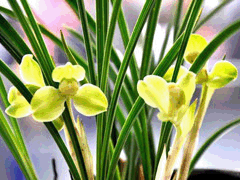 Cymbidium goeringiiRuidin Chit-chat --- SpringGrowing Orchids
I visited the Wenzhou Orchid Show, saw other growers' fine flowers, then looked at the few old varieties in my own orchid room. Hehe, mine have bloomed too. Isn't being able to smell the orchid fragrance one of the very purposes of growing orchids? Be content! Better to just grow your own orchids well and care for your own flowers well! Oh, it's almost Jingzhe now, so let me chat with fellow orchid growers about spring orchid care. But this is just chit-chat, made up off the top of my head, so don't take it too seriously, fellow growers, especially beginners. Where there is anything misleading, please correct me, other experts. This new orchid grower thanks you here.
As for spring orchid care, I mainly think it's important to do the following points well:
1. Prevent.
Prevent late spring cold snaps and rapid temperature rises. If the weather gradually warms noticeably and then a cold air mass suddenly arrives,orchidswill still suffer freeze damage. Although they may not immediately die, it has a fairly big impact on this year's new growth and rejuvenation. If the temperature rises quickly and the orchid room temperature rises noticeably, then if you don't open the windows to ventilate in time, it may become stuffy for theorchid plants, bringing unnecessary losses. Therefore, fellow growers should pay more attention to weather changes.
2. Do
Do a good job of pest control and sterilization in the orchid room and for the orchid plants. I generally do an all-around pest control job in the orchid room in early March, using insecticides such as dusiben and fenvalerate to spray the orchid room, orchid pots, and orchid leaves, so as to eliminate pests in the bud. Then, about a few days later, I use fungicides such as tuobujing to also spray the orchid room, orchid pots, and orchid leaves to do a sterilization job. Generally speaking, I only do pest control and sterilization around Jingzhe in spring and when the seasons change in autumn and winter. At ordinary times, I don't use medicine. Of course, if orchids develop unexpected diseases, that is naturally a separate matter.
3. Repot.
See which few pots of grass in your orchid room are crowded and which few pots are growing poorly, and then divide and repot those few pots. Of course, the specific details of how to divide and the steps for repotting will be skipped today. I'll start another post when I have time later.
4. Management.
Spring management is very important. There's no need to talk about temperature differences, because in spring it is basically cold in the morning and evening and hot at noon. As long as there is a temperature difference, the orchidflowers'smooth growth is guaranteed. The main thing is to ensure the humidity of the orchid growing environment, generally between 70-90, and irregular ventilation of the orchid room, plus appropriate light. I think, if you want the orchid plants not to sprout, that's hard. If you want to grow orchids poorly, that's even harder.
5. Fertilizer.
As for fertilizing, I don't really advocate it, because I use orchid soil made from humus soil to grow orchids, and orchid soil made from humus soil already contains the nutrients orchids need for growth. Therefore, I rarely fertilize. If fellow growers feel uneasy about not using fertilizer, afraid they won't sprout, I suggest using a very weak fertilizer once. If still uneasy, after a certain period, use it once more. I estimate that is enough. Of course, I have also seen fellow growers add fertilizer every time they water. I think that is not advisable. However, remember this: for small seedlings, old seedlings, and diseased seedlings, please do not fertilize.