What kind of flower is Cattleya? A detailed look at this orchid
Introduction to Cattleya
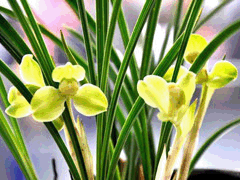 Cattleya is one of the long-renowned flowers of the world. It reigns as king among tropical orchids with its large blooms and brilliant colors, and some varieties are also fragrant, making them superb ornamentals, earning it the title "King of Tropical Orchids." In China,cultivationhas a relatively short history, but it has developed considerably in recent years.
Cattleya's scientific name is Cattleya; in Chinese it is translated as or. There are many varieties, and horticultural cultivation is mainly based on artificial hybrid varieties. In the past, people sought large plants with big, brightly colored hybrid flowers, but in recent years medium- and small-sized plants and outstanding individuals among the species have become popular.
Cattleya is a tropical or subtropical epiphyticorchid, and its cultivation and management differ from those of Chinese orchids. First, the growing medium: for Cattleya, use sphagnum moss, orchid stone, bark or fern root (osmund fiber), which must be loose, breathable and clean; never use soil-based media. Second, environmental temperature: Cattleya has relatively high temperature requirements, and its optimum growing temperature is the same as that of Chinese orchids (15-30°C). Most varieties can tolerate extremes of 8-36°C, and a few varieties can tolerate 5-38°C. Third, air humidity: like most other tropical orchids, Cattleya needs relatively high air humidity during the growing period, generally maintained at around 70%, and good ventilation must be maintained at the same time. Fourth, light management: Cattleya needs relatively high light, but not direct sunlight; in management you can refer to the Chinese orchidCymbidium sinense。
When selecting Cattleya, pay attention to the following points: First, it should have a registered name. Cattleya registered names generally use Latin, and the registered name is equivalent to an ID card; from the registration information you can trace its place of origin or lineage, while those without a registered name cannot be traced and are hard for people to recognize. Second, you should choose varieties according to your own environmental management conditions. Cattleya has many varieties, and because their places of origin differ, the environmental management requirements among varieties also differ, so before buying you should first understand the growth characteristics of that variety. Third, you need to pay attention to differences among individuals. Cattleya propagation generally uses division and tissue culture; tissue culture is further divided into slice propagation (cloning) and seed propagation (hybridization). Those propagated by division or slicing basically have no individual differences, while those propagated from seed have relatively large individual differences.
screen.width-500)this.style.width=screen.width-500;" border=0>The related image for this topic is as follows:
Recently, I newly introduced three plants: Guanlong, Golden Monkey and Snow-in-Red. I feel they are not bad, are relatively ornamental varieties, and the prices are relatively cheap as well.
One, Guanlong
Registered name: Blc. Sang Yang Luby, plant height about 40CM, leaf width about 8CM, flower diameter about 20CM, flower color deep red, with a strong fragrance.
screen.width-500)this.style.width=screen.width-500;" border=0>The related image for this topic is as follows:
screen.width-500)this.style.width=screen.width-500;" border=0>
Two, Golden Monkey
Registered name: Blc. Taiwan Queen, plant height about 40CM, leaf width about 4.5CM, flower diameter about 18CM, flower color orange-yellow, with red splashes on the petal tips.
screen.width-500)this.style.width=screen.width-500;" border=0>The related image for this topic is as follows:
screen.width-500)this.style.width=screen.width-500;" border=0>
Three, Snow-in-Red
Registered name: Lc. Hwa Yuan Arqel, plant height about 17CM, leaf width about 3.5CM, flower diameter about 8CM, flower color pure white, with purple-red splashes on the petal tips, and a light fragrance.
screen.width-500)this.style.width=screen.width-500;" border=0>The related image for this topic is as follows:
screen.width-500)this.style.width=screen.width-500;" border=0>