Orchid Monthly Guide in Detail: Year-Round Monthly Care Essentials
Orchid Care Monthly Guide
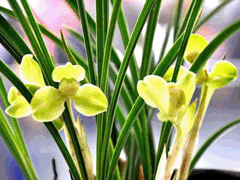 Based on the climate of Jiangsu and Zhejiang, care is arranged month by monthorchidsissues that need attention, for reference.
January: This month's average temperature is above 4°C, and at its lowest it drops to around -10°C. At this time, because strong cold waves from the north keep moving south, frost and snow are also most frequent, so for orchids' cold protection work is most important. Under generally non-low-temperature conditions, the flowerpots can be placed under a south-facing eaves with stronger sunlight, and it is best to turn the direction of the pots once every 2 or 3 days so that sunlight is even. But if low-temperature freezing occurs, they must be moved indoors, windows tightly closed, and if necessary a fire must be lit (but be careful to prevent coal smoke); if the soil in the pot is found to be completely dry, a little water should be poured, only seeking moisture, and it must not be watered too much.
February: This month's average temperature is slightly higher than last month by 1-2°C, there are still cold waves, the weather is still very cold, and the number of days with freezing is about 8-10 days. Orchid care is still mainly about preventing freezing, and a certain degree of moisture must be maintained to prevent the pot soil from drying and cracking.
March: This month's average temperature is about 7-8°C, 1-2°C higher than last month. The weather is slightly warmer, and orchids gradually begin to sprout and produce leaves. Therefore, sometimes the flowerpots can also be placed in the open air for ventilation. But the weather is changeable, often cloudy and rainy, and frost and snow are still not over, so attention must still be paid to cold protection, especially on cold nights, when inspections are still needed. The ancients also wrote of "worrying for flowers in cold nights," which shows that this month is indeed the most difficult month for orchid care. In addition, during this month it is also necessary to prepare for next month's propagation by potting, as well as the preparation of growing soil and other such work.
April: This month's average temperature is more than 6°C higher than last month. The weather is warm, and frost and snow have also stopped. At this time the orchid's new shoots are already very long and can be moved out for ventilation and light. But it is worth noting that this month is precisely the period when cold and warm air alternate, with a lot of rain, so it is necessary to prevent the pot from becoming too wet or having standing water, otherwise root rot easily occurs; when heavy rain occurs, the leaves should be tied up with fine string to prevent lodging. Sometimes when cloudy rain continues for 3-5 days, attention must also be paid to moving them away. Conversely, if clear weather lasts relatively long, whether flowering or not, some water can be poured, but it must not be poured too much.
This month is the most suitable season for orchids to be potted, repotted, and divided, and at the same time sheds must be set up in preparation for shading, so it is the busiest month for growing orchids.
May: This month's average temperature rises by about another 6°C compared with last month. The weather is relatively hot, with the temperature often above 20°C and the minimum also above 10°C. At this time, sparse curtains or white cloth can be appropriately used to block sunlight. At the same time, as the temperature gradually rises, the pot soil dries easily, so watering can be done once in the morning and once in the evening. But another feature of this month is that cold and warm air often clash, forming a prolonged "plum rain" period. During this period there is little sunshine, high humidity, and frequent showers, which is unfavorable to orchid growth. At this time, not only should the flowerpots be moved to a place away from the sun and standing water in the pots be avoided, but a cloth awning should also be put on to shelter from rain.
From this month on, rainfall gradually increases, so more rainwater can be stored for watering, and preparations for preventing and controllingpests and diseasesshould be made.
June: This month's average temperature is generally around 25°C, 4-5°C higher on average than last month. This month is still the plum rain season, and shading management is basically the same as last month, but heavy rain or torrential rain occurs more often, so special attention must be paid. After the weather clears, the climate is often very dry, so attention must be paid to watering. Fertilizing can begin, but the fertilizer solution must not be too concentrated. Watering is best done at dusk, and the next morning letCymbidium goeringiibask in sunlight for 2 or 3 hours (summer orchids can bask longer), as this will further promote the robust growth of new seedlings.
July: This month is the month with the highest average temperature. Over the years, the average temperature for the whole month is about 28.3°C, and clear days account for about 2/3. Therefore, shading and ventilation are the most important work. Whenever the weather is hot and the sun strong, dense curtains can be used to cover at any time, but once the strong sun has passed, the curtains should be rolled up or moved away to facilitate ventilation, otherwise various diseases are most likely to be brought about. The flowerpots can also be moved indoors. At this time, if orchids lack water, they easily turn yellow and wither, so watering must be frequent. Watering should also be done in the morning and evening, and some liquid fertilizer made from grass juice should be applied more, to promote vigorous growth and strengthen resistance.
This month typhoons already appear, so close attention must also be paid to weather forecasts and typhoon prevention work must be done well. If pests and diseases are found, Bordeaux mixture should be sprayed 1-2 times.
August: This month's average temperature is about the same as last month, and even if lower, only by a limited amount. In extremely hot weather, dense curtains are still needed for covering, while generally sparse curtains can be used. The flowerpots can also be moved indoors, and at the same time watering must be frequent and an appropriate amount of more organic liquid fertilizer applied. If the pot soil becomes hard, a small bamboo strip should be used to loosen the soil slightly on the pot surface, so that new roots develop strongly.
In addition, work to prevent and control insect pests and prevent typhoons must continue to be done well.
September: The average temperature is similar to June, also around 25°C, 2-3°C lower than last month. The summer heat has cleared, there is a slight hint of autumn, and the orchid's roots and leaves are already very lush. More sunlight can be given each day, so shading work can basically end. But the reed curtains still must not be removed, because during this period there may still occasionally be high-temperature weather, and sparse curtains are still needed for short periods of covering. At the same time, whenever there is prolonged clear and dry weather, more watering is still needed to prevent the pot soil from drying and cracking and causing death. For fertilizer, organic liquid fertilizer can still be used.
This month the temperature is normal, and the division method can be used to propagate orchids.
October: The average temperature for the whole month is about 18°C, about 6°C lower than last month. As autumn deepens, the orchid's new roots and new shoots have all fully developed. Orchid growers believe that this month is one in which the success or failure of orchidcultivationcan be seen. Because the temperature is low, there may be light frost, so attention must be paid. But during this period autumn shoots still emerge, and generally the soil surface in the pots must not be too dry, so more rain and dew can be received, and more sunlight can also be given.
November: The average temperature for the whole month is about 12°C, and it has not yet entered the winter season range (meteorologically speaking, when the average temperature is below 10°C it is winter). But this month strong cold waves have already invaded, and low-temperature frost damage occurs, so attention must be paid to freeze prevention. Generally the orchid pots can be placed under the eaves, and moved indoors when a cold wave comes. This month the temperature sometimes rises again, so attention must also be paid to ventilation.
December: This month formally enters winter, and the average temperature for the whole month is generally 6.4°C. Cold waves and frost damage are most frequent, and there is accumulated snow, so cold protection is the central task of this month. When the weather is cold, the windows should be closed, and when it is clear, sometimes the windows should also be opened for ventilation.