Orchid Cultivation Management Methods and Technical Key Points
Orchid Cultivation Management
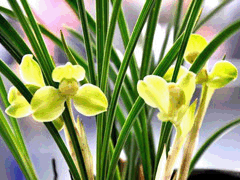
The orchid shed should be situated in a location facing east with its back to the west, with open space to the southeast and a high wall or large trees to the west and back. It should be able to receive the early morning sun while blocking the scorching midday sun. The surrounding micro-environment should have clean air and a courtyard with a certain level of humidity. Pay attention to ventilation, exposure to dew, avoidance of scorching sun, and prohibition of smoke. If built on a rooftop or a balcony on an upper floor, in addition to shade above, curtains should mainly be hung on the northwest side to prevent the slanting afternoon sun from burning the leaves. Below the orchid shed, it is best to use bare earth or install a clean water pool to keep the air around the orchid shed humid. Also pay attention to ground cleanliness to preventpests and diseasesfrom breeding. When the outdoor temperature drops to around 0°C, orchid pots must be moved indoors to prevent frost damage to the orchid roots.
Traditionalorchid growingall uses clay pots. Because the traditional growing medium isorchidmud, whose particles are extremely fine. To allow the orchid roots to breathe, clay pots are used. Due to changes in growing media and the need for ornamental appeal, sand pots and glazed pots are now mostly used. Sinceorchidroots are slender and long, a tall, flared, trumpet-shaped round pot is preferred. To facilitate drainage, the hole at the bottom of the pot should be large in diameter. To enhance air exchange inside and outside the pot, the pot base should preferably be high with tripod-style feet. Porcelain pots are rarely used because of their poor breathability.
1. Orchid mud: soil accumulated in depressions of mountain rocks from decomposed leaves, characterized by being loose, well-draining, and fertile. pH value between 5.5-6.5.
2. Fire-baked soil: granular soil left after the surface soil of raw weeds is baked over fire
3. Xiantu: granular soil mined and processed from Mount Emei in Sichuan, available in three sizes: large, medium, and small.
4. Pine and cypress orchid stone (volcanic stone): produced in Taiwan, China, available in three sizes: large, medium, and small.
5. Kuangjishi: produced in Taiwan, China, a continuous bubble body made from high-mountain mineral soil through technical processing. Available in three sizes: large, medium, and small.
6. Zhijinshi: produced in Japan, available in three sizes: large, medium, and small.
7. Emperor stone: produced in Japan, a natural breathable porous stone.
8. Perlite: strong drainage, moisture retention, and relatively good breathability.
Orchids favor shaded, breezy places. Without the shade of an orchid shed outdoors, they will inevitably suffer from scorching sun exposure and pounding rain. Traditional orchid sheds use bamboo frames with cloth curtains and bamboo blinds. They block the scorching sun on sunny days, keep out rain on rainy days, and at night the curtains are pulled back to let the orchids bathe in dew. Modern orchid sheds are mostly made of metal, using shade netting and plastic sheeting to block sun and rain. Orchid benches can be divided into stepped and platform types for ease of management. For indoor cultivation, no shed is needed.
After completing the preparatory work for the orchid site, orchid shed, orchid pots, and growing media, orchids can be planted. First, soak the orchid pot thoroughly with clean water, cover the bottom hole with a plastic mesh, and use coarse stone or coarse Xiantu as the bottom layer, to a height of 1/3 of the pot's depth. If using coarse-grained Xiantu, it must first be soaked in water for ten days. Then place the orchid in, arrange the orchid roots, and add medium-grained Xiantu or coarse-grained orchid mud. Fill to about one inch from the pot rim, use the finest Xiantu or orchid mud to fill around the orchid's pseudobulbs, and then cover the top with a layer of medium-fine Xiantu or fine gravel. When placing the orchid seedlings in the pot, be careful to leave space for future new shoots. After watering and keeping in a shaded place for one week, they can be moved normally into the orchid shed for care.
Due to the renewal of growing media and flower pots, modern inorganic fertilizers have replaced traditional organic fertilizers because they are safe, clean, and easy to apply. Commonly used ones include:
1. American-made "Huabao" (Flower Treasure), divided into Nos. 1, 2, 3, 4, and 5.
No. 1: N-P-K is 6-7-9, promotes strong roots and stems, dilute 1/1000
No. 2: N-P-K is 20-20-20, usable year-round, dilute 1/2000
No. 3: N-P-K is 10-30-20, promotes flower buds, dilute 1/2000
No. 4: N-P-K is 25-5-20, strengthens orchid pseudobulbs, dilute 1/1000
No. 5: N-P-K is 30-10-10, strengthens young seedlings, dilute 1/1000
2. Japanese-made liquid Huabao.
3. American-made Jialanbao. N-P-K is 20-30-15
4. Sichuan Huakang three-in-one nutrient solution.
5. Sichuan Huakang high-efficiency compound fertilizer.
6. Japanese-made Haokangduo No. 1 compound fertilizer (granular). N-P-K is 14-12-14
7. Japanese-made "Huagenwang". (powder).
8. Japanese-made "Zhixiang" (granular). N-P-K is 5.3%-6.9%-5.4%.
9. Dutch-made Aomiaofei (granular). N-P-K is 14%-6.8%-14%.
10. Taiwan, China-made "Yishifei". N-P-K is 0.3%-0.4%-0.3%.
11. American-made "Xindamo" orchid-specific fertilizer, divided into Nos. 1-5.
No. 1 N-P-K is 7-7-7 balanced fertilizer.
No. 2 N-P-K is 10-5-5, a shoot-promoting fertilizer.
No. 3 N-P-K is 7-9-5, a balanced fertilizer specifically for dwarf varieties.
No. 4 N-P-K is 3-12-6, a broad-leaf top-dressing fertilizer.
No. 5 N-P-K is 9-3-6, a leaf-nourishing fertilizer.
12. Lanjunwang (strong rooting and bud-promoting agent), dilute 1/500.
13. Japanese-made growth regulator Aiduoshou, dilute 1/6000.
Orchidflowers'pests and diseases should focus on prevention, with prevention valued more than treatment. To prevent pests and diseases, first of all, orchids must be grown vigorously to enhance their own resistance; on the other hand, the environment must be kept clean and hygienic, with appropriate ventilation to prevent contagion.
1. Scale insects often occur when orchids are overly wet and poorly ventilated.
50% trichlorfon 1/250 solution spray.
5% malathion 1/1000 solution spray.
50% phoxim 1/1000 solution spray.
50% naled emulsifiable concentrate 1/1000 solution spray.
2. Mites, commonly including red spider mites and mites.
Manbisi 1/1000 solution spray.
Miemanmeng 1/2000 solution spray.
Shamansong 1/1000 solution spray.
3. Thrips: spray with diluted Caidan, 1605, Ledai, etc.
4. Aphids: spray with diluted 1605, malathion, lindane, chlorinated Ledai, etc.
5. Black rot: the pathogen is Pythium. Spray with thiophanate-methyl, lime-sulfur mixture, carbendazim, etc.
6. Mold disease, also called white silk disease. Sterilize soil, burn infected plants.
7. Brown rust disease: caused by excessively wet pot soil or attack by cold.
8. Bacterialsoft rotdisease: can be sprayed with Bordeaux mixture, methyl parathion, etc.
9. Leaf spot disease, also called tiller rot, mainly harms new shoots and leaves. Remove diseased shoots and leaves; can be sprayed with 0.01% boric acid solution, dikushuang, disulfoton, etc.
10. Viral disease, such as Baras disease, etc. The virus enters cells with the help of protein to form virus particles, damages cells, and immediately replicates toxic nucleic acid to form a protein shell. It is mainly transmitted through contagion. So far there is no specific cure.
1. Sichuan-made Huakang No. 1 (high-efficiency compound insecticide).
2. Sichuan-made Huakang No. 2 (high-efficiency compound fungicide).
3. Taiwan, China-made DuPont Yili (fungicide).
4. Taiwan, China-made Suba emulsifiable concentrate (insecticide).
5. Taiwan, China-made "Peilusu" for preventing viral diseases and Baras disease. (granular)