A Detailed Explanation of Crop Diseases and Scientific Pesticide Application
On Diseases and Pesticide Application
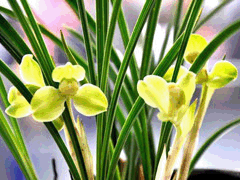 We know that plants and animals are both made up of cells, and all cells contain a nucleus. We often hear about bacteria, fungi and so on, but do not understand the details. In fact, among microorganisms, only fungi have a true cell nucleus and complete organelles, so they are also called eukaryotic microorganisms; bacteria have only a primitive nuclear structure, with no nuclear membrane or nucleolus, and very few organelles, belonging to prokaryotic microorganisms; and viruses have no cellular structure at all, belonging to primitive microorganisms. All three of the above types can causeorchidsto become diseased.
1. Fungal diseases
Fungal diseases are caused by fungi. Their main difference from bacteria is the cell nucleus: fungi have a cell nucleus, bacteria do not. Like bacteria, fungi play an important role in the material cycle of nature for humans, animals and plants. Fungi are both beneficial and harmful; what we study here is their harmfulness, such as white silk disease, brown spot disease, black spot disease and mildew disease, all of which are detrimental to orchid growth. Fungi are a class of lower organisms without chlorophyll, varying in individual size, most of which can only be seen clearly under a microscope.
The fungal body is composed of hyphae, with no differentiation of roots, stems or leaves, no chlorophyll, unable to manufacture its own nutrients, and living as a parasite or saprophyte as a lower organism. Fungal hyphae are tubular, and most hyphae have septa; such hyphae are multicellular, with small pores in the center of the septa allowing cytoplasm and nuclei to pass through. Some fungal hyphae have no septa and are multinucleate cells. Fungi reproduce by two methods: asexual reproduction and sexual reproduction. There are many kinds of fungi, divided into five classes: flagellate fungi, zygomycetes, ascomycetes, basidiomycetes and deuteromycetes, widely distributed in nature and very closely related to humans.
Humans have used fungi for several thousand years. The fermentation products of fungi can be made into foods and seasonings with different colors, aromas and tastes, such as fermented bean curd, soy sauce, etc. Enzyme preparation production, fabric desizing, petroleum dewaxing, and the production of antibiotics and steroid hormone drugs are all related to fungi. Many fungi are famous medicinal materials and are widely used. Growth hormones secreted by fungi can promote plant growth. This is the beneficial side of fungi.
Fungi can decompose various organic matter, increase soil fertility, and play an important role in the material cycle of nature. Fungi often cause mold spoilage of food and industrial products such as textiles, leather goods, paper, woodenware and optical instruments. Fungi also cause plant diseases, and as pathogenic microorganisms fungi can also invade the human body and animals.
The development of fungi is divided into two stages: nutrition and reproduction. The hyphae are the vegetative body, and asexual and sexual spores are the reproductive body. They are mainly spread by wind, rain, insects, or the seeds and seedlings of flowers, entering the body through natural openings such as stomata, hydathodes and lenticels on the epidermis of flower plants, as well as various wounds, and can also directly invade an uninjured epidermis. On the diseased parts they show symptoms such as white powder, rust powder, sooty mold, spots, rot, wilting and deformity.
Among flower diseases, fungal diseases are the most common, widely distributed and most harmful.
Fungal diseases of orchids account for at least more than 2/3 of all diseases. The fungi that infectorchidsare all parasitic. They absorb nutrients from the host and destroy tissues, thereby causing the host to produce many symptoms, such as rot, rust, damping-off, wilting, canker, anthracnose, scab and spots. Some fungi parasitize the surface of the orchid plant body, inserting special hyphae into epidermal cells; some live between cells or around living cells; but most fungi indiscriminately pass through tissues (including cells) and kill them. The fungi harmful toorchidsnumber about 30-plus genera and more than 100 species. The common ones are: Collectotrichum, which causes anthracnose; Sclerotium, which causes white silk disease; Botrytis, which causes flower and fruit wilt; Phytophthora, which causes black rot or heart rot; Fusarum, which causes leaf spot or wilt; and Uerdo, which causes rust, Coleosporium, etc.
2. Bacterial diseases
Bacterial diseases are caused by bacteria. Bacteria: the commonsoft rotdisease bacteria can cause orchid roots, stems and leaves to become diseased and rot. Such bacteria are called "pathogenic bacteria." The main approach is prevention.
On the surfaces of objects and inside bodies, bacteria live everywhere. It is a very tiny organism, invisible directly to the naked eye; 1 billion bacteria piled together are only the size of a millet grain. The bacterial cell is composed of a cell wall, cell membrane and cytoplasm, and it has no cell nucleus; inside it forms an oval dormant body called a "spore," which is very stubborn and has strong vitality under harsh environmental conditions. The vitality and reproductive capacity of bacteria are very strong because they reproduce by simple division, one generation every 20-30 minutes, an astonishing speed. If you see disease symptoms on an orchid today and are slightly negligent, tomorrow it may be beyond control; this is caused by bacteria. Bacteria generally do not contain chlorophyll and can only absorb ready-made organic matter to sustain life, which in botany is called "heterotrophy." "Heterotrophy" is divided into 2 situations: saprophytism and parasitism. "Saprophytism" is shown by relying on the remains of animals and plants to survive, such as Bacillus subtilis, which can cause plant remains to rot. Onceorchid plantsdecline or stop respiratory function, bacteria immediately invade. "Parasitism" is absorbing organic matter from living animals and plants to survive. The beneficial orchid fungi are symbiotic with orchid roots. Most bacteria are beneficial, but some are harmful;in orchid growingthese are "soft rot bacteria" and "anthracnose." Low-toxicity thiophanate, bingchongqing, carbendazim and potassium permanganate can be used alternately for prevention and control.
Bacteria are a class of single-celled lower organisms, whose morphology can only be observed under a microscope. Reproduction is the most basic function of the bacterial life form. Bacterial reproduction is roughly as follows: in the bacterial cell, the genetic data in a single DNA ring is replicated, then the cell wall slowly expands to form a new cell, and finally the bacterium splits into two identical cells. Under favorable conditions this process occurs once every 20 minutes, so their reproduction speed is quite fast. Based on the reproductive characteristics of bacteria, people use antibiotics to prevent the growth of new cell walls during division, thereby achieving the purpose of treatment.
3. Viral diseases
Viral diseases are caused by viruses. In recent years, viral diseases have risen to a position second only to fungal diseases. Viruses are an extremely tiny class of parasites that can harm many precious flowers. Viruses are mainly transmitted through piercing-sucking insects and through grafting, mechanical damage and other routes; even when pruning, cutting flowers or hoeing weeds, virus sap on hands and gardening tools can play a role in transmission. Mostly it is due to poor small-environment sanitation conditions. Poor ventilation and air permeability, long-term waterlogging in the pot, excessive pesticide use, and the potting medium causing an imbalance of nitrogen, phosphorus and potassium fertilizers may also lead to viral disease. Because the viral system occurs within cells, if cell synthesis is too rapid and there is a lack of phosphorus and potassium factors, immunity declines, the viral protein body gains the upper hand and destroys the normal growth of orchid leaves, so that the virus takes advantage of the opening.
Plant viruses are one of the pathogens affecting crop yield and quality, often bringing huge disasters to agricultural production. History has recorded many human famines caused by plant viruses. For example, in the mid-19th century, as a result of the first "Green Revolution," only a single high-yield food crop, the potato, was widely planted in Europe. Between 1843 and 1847, due to abnormal climate, a large-scale potato viral disease occurred in Europe, destroying nearly five-sixths of the potatoes, and in some places there was even no harvest at all. At that time, of Ireland's 8 million population, 1 million died directly of starvation or indirectly of disease, and 1.64 million fled to North America to make a living. In the Americas, Japan and other regions, there have also been facts of tobacco, strawberry and other crops suffering destructive blows due to infection by plant viruses.
Many plants carry plant viruses in their bodies. Due to the limitations of human vision, the smaller an organism is, the harder it is to discover, so viruses were discovered much later than other organisms.
Most plant viruses belong to single-stranded RNA viruses, with a few being DNA viruses. Their basic forms include rod-shaped, filamentous and isometric nearly spherical icosahedral. Although plant viruses are strictly intracellular parasites, their specificity is not strong; often one virus can parasitize plants of different species, genera or even different families. For example, tobacco mosaic virus can infect more than ten families and more than 200 species of herbaceous and woody plants.
There are more than 600 known species of plant viruses, and the vast majority of seed plants are prone to viral diseases. After a plant is infected by a virus, it generally shows three types of symptoms: ① Because the host cell's chlorophyll or chloroplasts are destroyed, the plant develops mosaic or yellowing symptoms. ② It hinders plant development, causing dwarfing, witches' broom or deformity. ③ It kills plant cells, causing blight spots or necrosis.
Because plant viruses generally have no specialized adsorption structures, and no virus-specific receptor sites have so far been found on plant cell surfaces, the main route of plant virus infection is through wounds. For example: ① Through insects' piercing-sucking mouthparts injuring the plant and then invading cells. ② Through contact between diseased sap and plant wounds. ③ Through wounds made during artificial grafting.
At present, the basic strategy for preventing and controlling plant viral diseases is: prevention is more important than treatment, and integrated control. 1. Breeding disease-resistant varieties: breed disease-resistant varieties that viruses cannot invade or, even if they invade, cannot replicate, and disease-tolerant varieties with strong adaptability to viral infection.
In addition, eliminate virus-transmitting insects, using chemical pesticides, biological pesticides or physical trapping and other methods to control insects.
Wild orchids, because they are located in suitable places with ecological balance, may have diseases, but these are controlled by nature to a minimal degree. In addition, in the wild environment orchids grow vigorously. We have seen somewild-collected orchidswith incomplete leaves but vigorous growth. If they were home-grown, they would certainly be barely alive. Therefore, we have no choice but to use pesticides as assistance.
Correct pesticide use can prevent diseases and achieve twice the result with half the effort.
Pesticide Application Precautions One
Temperature. The active ingredients of biological pesticides are composed of protein crystals and living spores, and must be controlled at the ideal level above 20°C. Once sprayed below the above temperature, the reproduction speed of the spores within the pest body will be very slow, and the protein crystals will also find it difficult to play their role, often showing no control effect after spraying. According to experiments, spraying biological pesticides at a temperature of 25-30°C has an insecticidal effect 1-2 times higher than spraying biological pesticides at a temperature of 10-15°C.
Environment. The greater the humidity, the more significant the efficacy of sprayed biological pesticides, especially powder-form biological pesticide preparations. It is best to spray bacterial powder when there is dew in the morning and evening, so that the pesticide can adhere well to stems and leaves, enabling the spores to reproduce quickly.
Sunlight. Ultraviolet rays in sunlight have a fatal killing power on spores. Scientific experiments show that under direct irradiation of strong sunlight, it takes only 30 minutes for the spore mortality rate to reach 50%. After 1 hour of irradiation, the spore mortality rate is as high as 80%, and ultraviolet radiation can also deform and reduce the effectiveness of parasporal crystals. Therefore, choosing to apply biological pesticides after 16:00 or on cloudy days will give better efficacy.
Rainwater. Heavy rain will wash away sprayed biological pesticides, causing the spores to lose their killing power. But if light rain occurs for five or six hours after spraying, the efficacy will not decrease but instead increase. Because light rain is very favorable for spore reproduction, thus more pests can be killed.
Watch the wind: applying bacterial pesticides on windy days causes great waste, especially powder formulations, which drift away even more. At the same time, windy days are also unfavorable for spore germination. Therefore, bacterial pesticides should be applied on windless or breezy days.
Pesticide Application Precautions Two
Do not use running water to prepare pesticides. Because running water contains many impurities, using it to mix pesticides easily clogs the nozzle of the sprayer, and it can also destroy the suspension property of the pesticide liquid and cause precipitation.
Do not use well water to prepare pesticides. Because well water contains more minerals, especially calcium and magnesium. After these minerals mix with the pesticide liquid, they easily undergo chemical reactions, forming precipitates and reducing efficacy.
Do not arbitrarily increase the amount of water. Too much water will reduce the concentration of the pesticide, leaving only a very small amount of pesticide on the crop, which is not enough to kill pests, and in some cases may completely fail and lose its killing ability. Excessive water can also cause pesticide loss and lead to environmental pollution.
Do not apply pesticides in wind, rain or under scorching sun. Spraying pesticides when it is windy will cause pesticide powder or liquid to drift away; spraying pesticides in rainy weather makes the pesticide easy to wash away by rainwater and reduces efficacy; spraying pesticides under scorching sun, when plant metabolism is vigorous and leaf stomata are open, easily causes pesticide damage, and at the same time makes the pesticide volatilize easily, reducing control effectiveness. Therefore, the best application times should be grasped: 8 to 11 a.m. and 3 to 6 p.m. are suitable.
Do not arbitrarily increase the pesticide dosage. Because before a pesticide is approved for production and sale, it must undergo strict field efficacy trials, and then the dosage, application time, number of applications and other actual use data are determined. Therefore, applying pesticide according to the dosage specified in the instructions can achieve the control effect, while increasing the dosage not only increases input but also causes pesticide damage to crops, increases pesticide residues in agricultural products, and aggravates environmental pollution.
Do not mix pesticides unreasonably. Some pesticides mixed together can increase control effectiveness, reduce dosage, or achieve simultaneous control of insects and weeds or diseases and insects, and mixed use also saves labor.
Do not arbitrarily use expired pesticides. Pesticides must be used within the shelf life, otherwise losses will result.
Correct use of fungicides. The correct use of fungicides is of great importance; rational use can achieve twice the result with half the effort. Improper use is ineffective, and some orchid friends vent their anger on orchid medicines and lose confidence in growing orchids, which is really an injustice to fungicides.
Precautions:
1. When using fungicides, first look at the target of control. This is what is meant by suiting the remedy to the case. If the remedy does not suit the case, even the best fungicide can only be wasted.
2. When using fungicides, look at their content. In pesticide use, the same fungicide with different contents is used at different concentrations. 50% carbendazim wettable powder is diluted 500-1000 times. It can control flower black spot, brown spot, lawn frog-eye disease, powdery mildew and other diseases with good results, while 25% carbendazim needs to be diluted 250-500 times. Therefore, in order to reduce unnecessary losses and waste, one should accurately check its content before using a fungicide.
3. When using fungicides, seize the timing. As is well known, plantdiseases and insect pestsoccur and develop with strong seasonality, and plant protection work should give priority to prevention, with treatment as a supplement, especially for diseases. Therefore, we must seize the opportunity to controldiseases and insect pestsat the lowest point, so as to achieve twice the result with half the effort.
4. Fungicides should be used alternately. Long-term single use of a fungicide easily causes pathogens to develop resistance, failing to achieve the expected control effect.
5. When using fungicides, master the prohibited targets. Almost every fungicide has its prohibited targets. Before use, we must make them clear: thiophanate cannot be mixed with copper preparations, and chlorothalonil cannot be mixed with strongly alkaline pesticides such as lime sulfur mixture.
In addition, also pay attention to the sensitivity of certain fungicides to plants.
Precautions Two
1. When spraying with liquid formulations, it is often necessary to use water to prepare or dilute the pesticide into an appropriate concentration. Too high a concentration will cause pesticide damage and waste, while too low a concentration will be ineffective. Some non-wettable or difficult-to-wet powders should first have a small amount added, be stirred into a paste, and then be mixed with water; a wetting agent can also be added during preparation.
2. Spraying too early will cause waste or reduce control effectiveness, while spraying too late means a large amount of pathogens have already invaded the host, and even if systemic therapeutic agents are sprayed, little will be gained. Pesticide should be sprayed for protection in a timely manner according to the disease occurrence pattern and the situation at the time, or according to short-term forecasts, when there is no disease or just the beginning of disease.
3. The number of sprayings is mainly determined according to the length of the pesticide's residual effect period and meteorological conditions. Generally, spray once every 10-15 days, for a total of 2-3 times, with additional spraying after rain. Cost should be considered and pesticide use should be economized.
4. The spray amount should be appropriate. Too little cannot provide thorough protection to all parts of the plant, while too much wastes pesticide and may even cause pesticide damage. Spraying requires fine droplets and even application, and all parts of the plant that should be protected, including the front and back of leaves, must be sprayed.
5. Pesticide damage to plants from spraying has many causes. Pesticides with stronger water solubility are more likely to cause pesticide damage, and different crops have different sensitivities to pesticides. For example, Bordeaux mixture generally does not cause pesticide damage, but it can also cause pesticide damage to copper-sensitive crops. In addition, it is also related to meteorological conditions; generally the effects of temperature and sunshine are more obvious. High temperature, strong sunlight, heavy fog or high humidity can all easily cause pesticide damage.
6. Generally, pesticides that easily decompose and fail when encountering alkaline substances cannot be mixed with alkaline substances.
A small number of pesticides have a synergistic effect after mixing. For example, dimethoate mixed with neutral and acidic fungicides such as zineb, wettable sulfur, colloidal sulfur, etc., not only is the efficacy unaffected, but it is slightly improved.
7. Long-term use of a single pesticide (mainly systemic fungicides) will cause pathogens to develop resistance, making the pesticide used ineffective. To avoid this problem, different types of pesticides can be used alternately, or systemic fungicides and traditional fungicides can be mixed.
I sincerely hope that orchid friends' orchids grow vigorously.