It's the perfect time for orchid introduction, and another good season has come around
It's orchid introduction time again
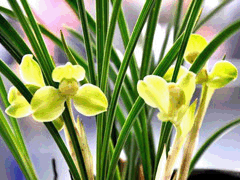 It's againorchidintroduction time
Midsummer has passed, and it's once again a great time for orchid enthusiasts to get active, while many new friends are also joiningorchid growingranks. Here are a few suggestions for friends on introducing orchids, for your reference.
1. Friends new to orchid growing can start with cheap, easy-to-growCymbidium ensifolium(Four Seasonsorchid), orCymbidium sinense, orCymbidium goeringiiCymbidium faberiwild-collected plants. At this stage, the main goal is to accumulate orchid-growing experience; even if they die, it's no great loss. At this stage, you can deliberately grow some sickly and thin plants, and conduct experiments in watering, fertilizing, and pesticide use, so as to combine book knowledge with your own practical experience, understand theorchid'sgrowth patterns and characteristics, and find a management method that suits you.
2. Named variety orchids are relatively expensive and have a corresponding market price. There is a saying in orchid circles: "If the price isn't right, the variety isn't right." Therefore, when buying named variety orchids, absolutely do not seek bargains and end up buying fakes. The best approach is to buy flowers after seeing them bloom, or to buy from large orchid farms and orchid dealers; the price may be higher, but the variety is guaranteed.
3. When buying orchids, do three inspections:
First, check whether they are healthy, strong plants. Mainly check whether leaf width and length meet standards (specific varieties differ in leaf width and length), whether the pseudobulbs are round, large, and plump (some orchid types have inconspicuous pseudobulbs, such as Cymbidium faberi), whether the leaves are intact and free of abnormal spots, and so on;
Second, check whether the orchid roots are healthy and intact. Healthy, intact orchid roots are white-brown, with a translucent crystal tip at the root end. Diseased orchid roots are often black, often mixed with rotten roots, and show no crystal tips. "Roots are the foundation of a plant," so when buying orchids you must take them out of the pot to inspect the roots;
Third, check the orchid's growing environment, that is, whether it is a sun-grown plant cultivated in a natural environment or a shade-grown plant cultivated in a high-temperature, high-humidity environment. Incultivationmanagement, the former is easy to grow and the latter is difficult. This can mainly be identified from leaf color and plant shape: sun-grown plants from a natural environment generally have rougher leaf color, poorer gloss, yellow-tinged green, and short, sturdy plant shape, while shade-grown plants from a high-temperature, high-humidity environment are the opposite.
Wishing friends find good orchids that fully satisfy them!