A Detailed Explanation of Connoisseurship Terminology: A Guide to the Meanings of Common Professional Appreciation Terms
Connoisseurship Terminology
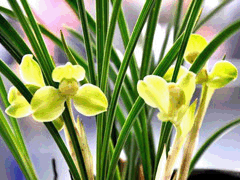 1. Color and BearingOrchidcolors, although relatively uniform and plain, lacking the seductive allure of other flowers, possess a quiet elegance and refined charm that ordinary flowers cannot match. According to tradition in the Jiangsu and Zhejiang regions, among orchids and cymbidiums, green is preferred, with tender green ranking first, old green second, yellow-green next, and red-green even lower. For red flowers, those with a glutinous (soft, creamy) color are considered superior, while those with dull, purplish hues are inferior. For other types oforchids, color evaluation varies by region.
2. Shoulders Among the three outer petals of an orchid, the central vertical petal is called the main petal, and the two lateral petals are called side petals. The term "shoulders" refers specifically to the posture of the side petals: the first type is horizontal, called "single-character shoulders," and is a superior form; the second type, when the petals open, the two side petals droop slightly, called "drooping shoulders," which is inferior; the third type, when the flower just blooms, the side petals droop dramatically, forming a triangle with the main petal, called "great drooping shoulders," "tripod horse," or "character-eight frame." Even if the petal shape and flower quality are good, if the outer three petals have such a poor posture, they are not worth considering and are classified as inferior; the fourth type, where the side petals curve slightly upward, is called "flying shoulders," and is a noble form.
3. Rui (Inner Petals) These are the two short petals among the inner three that stand vertically and close together toward the outside (slightly shorter than the outer three petals). The rui petals should be smooth and clean. They can be classified by form as follows:
Silkworm Moth Rui Shaped like a silkworm moth. Further divided into hard and soft types, for example,Spring Orchid (Cymbidium goeringii)varieties such as Lüying, Rongxiang Mei, Liangxi Mei, and Yichun Xian;Cymbidium (Cymbidium faberi)varieties such as Da Yi Pin, Pei Xian, Dang Zi, Lou Mei, Duan Mei, Cui Mei, and Qing Hua.
Guanyin Rui (commonly called Guanyin Hood) Shaped like the Guanyin Bodhisattva in mythology, with a hood-like front edge, such as Long Zi and Chun Yi Pin among spring orchids, and Lao Ran Zi among cymbidiums.
Bean Shell Rui The tip of the rui petal is relatively round and blunt, with thick petal flesh and a hood shape, resembling one end of a broad bean shell, such as Guan Ding among cymbidiums.
Clam Shell Rui Each rui petal is concave inside and convex outside like an empty clam shell, such as Changshu and Da Kui He among spring orchids, and Tai Su among cymbidiums.
Scissors Rui The rui petals resemble scissors in shape, such as Wen Tuan Su among spring orchids, and Hua Zi and Chi Tuan Zi among cymbidiums.
Crab Claw Rui The middle of the rui petal's back is raised, and the tip is hooded and flattened, most typically seen in Wan Nian Mei among cymbidiums.
Cat Ear Rui The front part of the rui petal turns upward, resembling cat ears, such as Feng Qiao and Duo Yun among cymbidiums.
Short Round Rui The rui petals are short and round, with a relatively large arc on the back, such as Zheng Tong He.
Cattail Fan Rui The rui petals are short and round, but the arc on the back is relatively small, such as Xi Shen Mei among spring orchids.
Qing Mouth Rui Although the rui petals have no hood shape, the petal tip edge has a slight qing-mouth (chime-mouth) shape, such as Gai He among spring orchids.
Among the various rui petal forms above, the silkworm moth rui is superior, the Guanyin rui is next, and the rest are all inferior. Of course, this must also be differentiated in combination with each petal type. In addition, the posture of the rui petals: some have the two petals separated from each other or partially connected, or even mixed and stuck together with the nose (column) and tongue (lip). Therefore, they can be further divided into three forms:
Five-Petal Separate Nest The two rui petals are each separate, with their bases attached at the point where the bases of the outer three petals converge.
Split Head, Joined Back The tips of the two rui petals are separated from each other, but from the middle to the base they are joined as a whole.
Joined Shoulders, Joined Back The rui petals are joined with the nose and tongue into a block-like whole, or the tips of the rui petals have a slight trace of separation from the nose. For example, Cai Mei Shui Xian among spring orchids and Pan Lü among cymbidiums often show similar forms.
Among the three rui petal postures above, sometimes the same variety, due to genetic evolution, can have both five-petal separate nest and split head joined back, but joined shoulders joined back is limited to only a few varieties. Generally speaking, the five-petal separate nest form is the most elegant, split head joined back is next, and joined shoulders joined back is the most inferior.
4. Tongue (Lip) This is the lip petal, located below the column. Its shapes can be distinguished as follows:
1. Liu Hai Tongue The tongue shape is round and upright, slightly turned upward, with a slight hood at the tip, such as Song Mei and Xi Shen Mei among spring orchids, and Pei Xian among cymbidiums. However, due to flowering-period humidity or fertilizer effects, the tongue tip may also appear slightly drooping.
2. Large Round Tongue The tongue is large and round, drooping slightly, such as Tang Mei, Wang Zi, Xiao Da, Yue Pei, Cui Yi Pin, and Yi Chun Xian among spring orchids, and Rong Mei among cymbidiums.
3. Ruyi Tongue The tongue shape resembles the head of a jade-carved ruyi ornament, hanging flat and not curling, such as Qin Mei, Yuan Hu Di Yi Mei, Tai Yuan Mei, Lü Ying, Tian Lü, and Fang Zi among spring orchids, and Da Yi Pin, Pan Lü, and Qing Hua among cymbidiums.
4. Large Spread Tongue The tongue shape is slightly larger and longer than the large round tongue, and appears trailing downward, such as Long Zi, Cai Yun Tong Le Mei, Tai Ji, and Xi Zi (when opening in lotus-form narcissus petals) among spring orchids; and Lou Mei and Bi Lian among cymbidiums.
5. Dragon Swallow Tongue The tongue is hard and not extended, with the tip edge concave and slightly hooded; among cymbidiums, Cheng Mei, Cui Mei, and Ji Pin are standard only when opened normally.
6. Large Curled Tongue This tongue shape mostly occurs among cymbidiums, with the tongue long and curled backward, such as Tai Su, Hua Zi, Chi Tuan Zi, Song Jiang Da He, and Wang Yang Ming Su among cymbidiums.
7. Large Persimmon Tongue The tongue resembles a persimmon in shape, such as Da Chen Zi among cymbidiums.
8. Square Notched Tongue The center of the tongue tip is concave or slightly notched, such as Feng Qiao and Yi Xing Shuang She Mei among cymbidiums.
9. Double Tongue Two lip petals grow side by side, a rare form among orchids, such as Su Die Lian among spring orchids.
The tongue is generally considered superior when short, round, and well-formed; pointed, narrow, or crooked forms are inferior. The tongue color is best when pale green or white (among spring orchids, white is prized; among cymbidiums, green is prized). According to the experience summarized by our country's orchid-growing circles regarding petal forms, plum petals with tight edges and hard rui mostly have pointed ruyi tongues or hanging tongues. Large ruyi tongues, Liu Hai tongues, and large round spread tongues are sure to open fully, but these are only found among plum-form narcissus. As for square victory tongues and square board tongues, their flowers are mostly slightly wrinkled; slightly notched tongues come from wrinkled corners. In addition, a tongue that does not extend within the rui heart is called a flat tongue; one leaning to one side is called a crooked tongue; one that extends but does not curl is called a trailing tongue; these are all inferior among tongues. If the tongue is stuck together with the nose, it is called no tongue, and is even more inferior. Whenever one has just bought a newly collected flower from an orchid peddler (that is, a naturally wild orchid just dug from the mountain that year), if the tongue shape is round, large, and drooping, it is not easy for it to deteriorate when it blooms again the following year.
5. Moss The velvety substance attached to the tongue; uniform, fine, and of glutinous color is superior, while coarse and dull-colored is inferior. Green and white are superior, slightly yellow is next. As for fully red moss color, it did not exist among our country's traditional orchids, but has now been discovered.
6. Nose The column. Its shape must be small and flat, so that the rui petals can nest tightly and the flower form can be handsome and spirited. If the nose is thick and large (commonly called a large nose tip), then the two rui petals will inevitably be pushed apart; this form is commonly called "opening a skylight," and no matter how good the three-petal flower form is, it cannot be considered superior.
7. Vermilion Dots Red dots embellishing the tongue. Their color must be bright, clear, luminous, and evenly distributed to be considered superior; in short, they must evoke a sense of beauty in the viewer. The red dots on the tongue of spring orchids may be one dot, two dots, or in a pin-character formation, and may also be block-shaped or ingot-shaped; the red dots and blocks on the tongues of cymbidiums and others differ from those of spring orchids, mostly being scattered dots and blocks, densely concentrated, and darker in color. On one stem with manyflowers,the tongue is slightly longer and larger than that of spring orchids, and the moss color is richer and more vivid, so the colors enhance each other and make it even more gorgeous and varied.
8. Stem The flower stalk of the orchid. Spring orchid stems are short and small, generally 0.2 cm thick; those taller than 10 cm are superior. If they are short and hidden among the leaf clusters at the pot surface, it hinders their elegance because they are difficult to see (except for Gai He among short-leaf varieties). Cymbidium flower stems are sturdier and taller; generally those with a stem 0.3 cm thick and more than 20 cm tall are superior. Summer orchids and New Year orchids have even thicker and taller flower stems. According to traditional evaluation, cymbidiums with large flowers and slender stems are prized, commonly called lampwick stems; if the flowers are small and the stems thick, commonly called wooden stems, they are inferior. Flower stems are generally judged by being upright, straight, and perfectly round. As for color, among spring orchids, green stems with green flowers are superior, such as Song Mei and Lü Ying; among cymbidiums, Da Yi Pin has flower stems white-green like jade, with tall stems and large flowers, making it one of the most elegant varieties among cymbidiums. Among red cymbidiums, those with thick, straight stems are preferred; for example, Cheng Mei has thick, upright stems and is quite magnificent. Although slender round flower stems are considered superior, this is relative; as long as they match the flower form and type, they are still superior. Regarding the flower stem color of New Year orchids, according to Guang Qun Fang Pu: "Purple stems with green flowers are superior, green stems with green flowers are next, purple stems with purple flowers are next again, and the rest are not rated."
9. Phoenix Eye Before the outer three petals open from the bud, the tips of the main petal and side petals overlap each other. At the place where the petal edges on one side of the main petal and side petals rise with a gap in the middle, the base of the tongue is exposed below, and the side of the rui heart can be seen in the middle; this area is called the phoenix eye. If the phoenix eye is large and the upper overlap is deep, the petals are sure to be broad and hooded, and the shoulders will not droop.
10. Upper Overlap and Lower Overlap When the phoenix eye is exposed, the covering top areas on both sides of the back of the petals are called the upper overlap, and the area below the breast is called the lower overlap.
11. Row of Bells The young buds of cymbidiums are commonly called bells. When the flower stem has grown to a certain height, each young small flower bell grows on it, in a vertical posture, closely attached to the flower stem; this form is called small row of bells. When the flower stalks of the young bells extend horizontally away from the stem and are arranged horizontally, it is called large row of bells; at this time the buds are about to burst and the petals about to open, gradually blooming in succession.
12. Turning Stem When a cymbidium is about to enter the large row of bells, the flower stalk of each flower bell on the flower stem grows horizontally, with the flower center facing outward; this is called turning stem, commonly called turning dig, turning down, turning body, etc.
13. Middle Nest The collective term for the whole area of the rui petals and nose. For plum petals and narcissus petals, the middle nest head shape is best when tightly nested; for lotus petals and butterfly petals, the middle nest is relatively broad and large. In all cases, the middle nest must match well with the outer three-petal shape and type to show an elegant and handsome flower posture.
14. Hood Refers specifically to the form of the petal-flesh tissue at the tip of the rui petals, and is determined according to the size, depth, and thickness of the inward-curling shape of the petal edge at the rui tip. According to its thickness and size, it can be further divided into soft hood and hard hood; according to depth, it can be divided into deep hood and shallow hood.
15. Contracting Root and Releasing Corner Refers specifically to the broad or narrow shape of the outer three petals of an orchid, involving the beauty of the flower quality and the posture of the flower form. Gradually narrowing from the central part of the petal toward the petal base is called contracting root; gradually widening from the central part of the petal toward the petal tip, and then at about 0.4 cm from the front edge of the petal tip gradually drawing in and curling slightly inward to form a slight hood at the petal tip, this transition area is called releasing corner. The phenomenon of contracting root and releasing corner is most pronounced in lotus petals and lotus-form narcissus petals. Narcissus petals, because the petals are mostly oblong, are not so obvious. Plum petals, especially full plum-petal types, because they are perfectly round, have no contracting root and releasing corner.
16. Tight Edge Each petal edge among the outer three petals is slightly curled inward, and from about 0.3 cm from the petal base toward the front of the petal, the slight curl becomes more obvious, and the curled band gradually widens, the petal edge thickens, and at the releasing corner it extends further to the petal tip and joins with the opposite edge, forming a hood shape. This inward-curling band is called a tight edge. Plum petals mostly have thick, substantial tight edges, narcissus petals are slightly thinner, and lotus petals are the thinnest (similar to plain lotus petals).
17. Chicken Beak When the flower bud first breaks through the soil, the bud tips are relatively closed together, either tightly kissing, slightly separated, or cracked open; all are called chicken beak. If the bud tip has a white jade hook or an overall fleshy texture, most will produce plum petals or narcissus petals.
18. Fine Flowers and Ordinary Flowers Flowers with plum, lotus, narcissus, plain-heart, or strange petal types are all called fine flowers; flowers whose outer three petals and rui petals are all pointed, narrow, and chicken-claw-shaped or bamboo-leaf-shaped are all called ordinary flowers, commonly called coarse flowers.
19. Resting Flower A naturally wild orchid that continues to develop flower buds after being potted and domesticated is called a resting flower. If it produces flower buds again after an interval of several years, it is called reflowering.
20. Orchid Cream Also called life dew. When a cymbidium flower turns its stem and reaches full bloom, at the end of the flower stalk (near the scape), there is a small round, crystal-clear, transparent gelatinous substance; it tastes sweet and mellow like honey. If wiped away casually, it easily causes the flower to wither early and lose spirit. Orchid cream is rarely seen among spring orchids, or if occasionally present, it is only a tiny dot.
21. Hairpin Also called short base. Refers to the short small flower stalk of each cymbidium flower.
22. Sheath The one among the several layers of bract leaves that is tightly attached to the flower, also called the flesh-attached small bract. In famous spring orchid varieties, this bract leaf appears rounder, broader, thicker, larger, and longer than in other orchids; some grow behind the main petal, some grow to one side, and some grow away from the flower on the front of the flower stem. In cymbidiums,Jian Orchid (Cymbidium ensifolium), autumn orchids,Cold Orchid (Cymbidium kanran), and New Year orchids, the inner-attached small bract clothing always grows at the end of each short small flower stalk, and its base is half-wrapped around the flower stalk, while the front half spreads open; the sheath width is narrow and slender. For famous flowers with various petal types, the flesh-attached small bract must show a strong unusual color and have luster, most obviously in spring orchids. If the color is pale and the texture thin, the petal flesh is also thin; if one side has an unusual color and the other does not, then one side of the rui petal has a hood and the other does not.
23. Clever Type and Official Type Those whose rui petal tips are white or have a thick fleshy hood are called clever type; those without a white head or with only a slight thin hood are called official type.
24. Stunted Opening Orchid flowers that are weak and soft, with petals stiffly closed and insufficiently extended, are all called stunted opening. This phenomenon often occurs among cymbidiums, such as when the top flower opens first and is weak and powerless, while the lower flowers often open stiffly or remain in bud without opening. Another case is when the flowers on the scape are arranged too closely together and the flowers open weakly. All such forms are the most inferior flower postures.
If newly collected flowers are potted that year and, due to excessive injury to roots and leaves, the flowers on the flower axis cluster densely together like a feather duster, it is also called ball opening.
25. Bud Tip When the flower bud is about to open, the flower bud protrudes through the small bract clothing and reveals the tip or overall form. According to spring orchids and cymbidiums, there are many forms of bud tips, listed as follows:
1. Spring Orchid
(1) Lotus Seed Shape The upper and lower parts are nearly equal, shaped like a lotus seed. In this form, the three petals are fleshy, with wrapped tips and heavy white heads (that is, the petal tips have a slightly white-haloed fleshy hood), and tight edges. Most open as large-tongue plum petals, with relatively round and upright petals. If the entire bud is white, with delicate color, after the petals fully open they tend to elongate and become wrinkled.
(2) Peanut Flesh Shape The flower bud resembles a peanut kernel, but with a small front end, a large middle, and a long shape. If the sheath veins are fine and glutinous, it mostly opens as large spread tongue or plum-form narcissus. If the white head and flesh-wrapped tip are heavy, it mostly opens as plum petals.
(3) Loom Shuttle Shape The flower bud resembles a weaving shuttle. After the petals open, there are tight edges. If the sheath veins are coarse and hard, it mostly opens as hard rui, pointed-tongue narcissus petals, or small ruyi-tongue plum petals.
(4) Olive Shape The flower bud has small ends and a broad middle. If the sheath veins are fine and glutinous, it mostly opens as small-tongue narcissus.
(5) Melon Hammer Shape The top of the flower bud is flat and the lower part tapers small. If the sheath veins are slightly hard, it mostly opens as split head joined back plum petals, or as three petals with one nose, etc. If the veins are fine and glutinous, and green, and the lower part of the flower bud is broad and large, the tongue shape will surely be large and the petals broad.
(6) Round Lamp Shell Shape The flower bud is relatively long and round. The sheath veins are fine and glutinous, each extending to the top; this form mostly opens as wrinkled-corner plum petals or soft-rui slightly wrinkled narcissus petals.
(7) Pure Bottle Mouth Shape The flower bud is slightly long, with the three petal tips drawn in and the mouth open. If the sheath veins are fine and glutinous and the color is vivid, it mostly opens as wrinkled-petal narcissus.
(8) Pomegranate Mouth Shape The flower bud is round and short, with the three petal tips slightly turned outward. If the sheath veins are coarse and upright, and the vein color is vivid, it will surely open as martial-petal narcissus.
(9) Longan Shape The flower bud is perfectly round and solid. If there is no white head or colored shell, it opens as short round petals, or although the three petals are short, they lack elegance and are still not considered precious. This form mostly opens as lotus petal types and the like.
Through the introduction of the various bud forms above, it is convenient for orchid enthusiasts to understand the evolution into various petal types and their relative merits through the process of bud form change, and to use this as a basis for identification when selecting new flowers.
2. Cymbidium
(1) Clever Type Category
Centipede Pincer The two side petals of the flower bud close together in a pincer shape. After the petals open, there are tight edges, thick petal flesh, joined back and hard rui; this mostly opens as small-tongue plum; if separate nest and large tongue, narcissus petals are few; if separate nest and soft rui, it mostly opens as large-tongue plum, ranking first among superior forms, such as Pan Lü and Cheng Mei.
Large Flat Cut Flat edges and thick flesh. Large tongue, mostly separate-nest rui heart. If split head joined back and hard rui, small-tongue plum is few. This form occurs among both plum petals and narcissus petals, ranking second among superior forms, such as Shang Hai Mei and Yuan Zi Xian.
Small Flat Cut The three petals are slightly long, with flat edges and round heads. Mostly separate-nest rui heart and large tongue; if joined back and hard rui, small tongue is few. Narcissus petals mostly come from this form, ranking third among superior forms. Such as Xiao Dang and Da Chen Zi.
(2) Wrinkled Corner Category
Melon Seed Mouth Broad edge, civil wrinkles; mostly opens as narcissus petals, rarely as plum petals. It ranks fourth among superior forms.
Pomegranate Head Broad edge, martial wrinkles, flying rui, square notched tongue; both plum petals and narcissus petals have this, ranking fifth among superior forms. Such as Feng Qiao, E Feng Mei, and Duo Yun.
(3) Official Type Category
Official Type Shape The rui hood is shallow and thick.
Slippery Mouth Shape Slightly has a shallow thin rui hood.
Almond Shape Broad edge, cattail-fan rui, small tongue. These are mostly narcissus petals, ranking sixth among superior forms.
(4) Stunted Opening Category Commonly called oil-putty block. When about to open from the bud, the rui heart is seen first, and the form looks stiffly stuck together as a whole. When the outer three petals open, the edges curl and the corners wrinkle, and they cannot extend smoothly and flatly. In all such forms, the rui petals are mostly fully joined and hard, and there are also split head joined back. If the rui petals and lip petals stick together into one piece, it is commonly called three petals and one nose, and is the most inferior opening among plum petals and narcissus petals.
(5) Ordinary Flower Category Any flower bud with sharp tips and a narrow, long shape, after the petals open, the petals all appear pointed, narrow, and chicken-claw-shaped; this form is commonly called coarse flower or ordinary flower, a general orchid without petal type. However, if the flower bud is slightly short and the upper overlap deep, sometimes a general lotus petal may also appear.
In addition to the above "five categories and eight forms" of bud shapes among cymbidiums, there are still many other forms, but most do not produce superior good flowers.
26. Veins The fine, long vein lines on the bract leaves. Veins vary in length, density, thickness, flatness, protrusion, and color. Veins are generally considered promising for producing petal-type flowers when they are fine, long, reaching the top, soft and moist, sparse rather than dense, and slightly lustrous. If the veins are coarse and reach the top, the petals will surely be broad, and lotus petals may appear. If green veins with green shell or white shell with green veins, with every vein line running to the tip and reaching the top, and the bud shell crystal-clear throughout, then there is a high possibility of producing plain-heart petals. The vein lines of plum petals and narcissus petals are relatively fine and glutinous, and the spaces between them must also be filled with sand and halo.
27. Hemp Short veins on the bract leaves that do not run to the tip and reach the top are called hemp. Hemp varies in thickness and length, and is rather closely arranged; this is commonly called hemp network. If the spaces between them are broad and sparse, and filled with unusual-colored sand and halo, strange petals or unusual plain-heart petals often appear. Because hemp varies in color, it can be divided into green hemp, red hemp, white hemp, brown hemp, etc. It is also divided into deep and light according to how early or late the flower bud emerges from the soil.
28. Sand and Halo Fine, dust-like tiny dots scattered among the vein lines are called sand; dense, thick-smoke, heavy-mist-like concentration is called halo. If there is sand and halo on the bud shell, plum petals and narcissus petals mostly appear. If the sand on the bud shell is densely gathered like apricot hairs, and when the flower bud gradually elongates the bud tip also appears deep green, then most will produce plum-form narcissus petals. If the sand and halo are soft, and the color is either white or green, plain-heart petals mostly appear. For all famous flowers with petal types, besides fine glutinous vein lines running to the tip and reaching the top on the bud shell, there must also be sand and halo.
29. Shell Refers to the bract leaves. They have many colors, such as green shell, white shell, red turning green, mercury red, red shell, etc. However, due to the depth of vein color and the reflection of sand and halo, there are even more: deep green, pale blue, bamboo-leaf green, bamboo-root green, powder blue, green hemp green shell, white hemp shell, red hemp shell, lotus color, deep purple, pig-liver red shell, and so on. Among them, mercury red shell, green shell, and red turning green shell most easily produce famous flowers. In addition, shells differ in looseness and tightness, thickness and thinness. According to the experience summarized by our country's orchid-growing predecessors, no matter which color shell, good flowers may appear, but the complexion must be bright and vivid, and the shell thin and hard, with a glutinous color, to be considered superior; if the shell is thin and soft, it is called "rotten clothing," and superior flowers rarely appear; if the shell is thick and hard, with a soft glutinous color, good flowers also frequently appear.
Shells are divided into long and short, commonly called long-tip shell and short-tip shell. For short-tip shells, if the middle color is rich and thick, the tip has a fleshy hook, and the bud tip also has a magpie-mouth shape, most produce plum petals and narcissus petals. If the shell is long and the bud tip is blunt, most produce lotus-form narcissus petals. If green veins with green shell or white veins with green shell, with fine veins and slender hemp, crystal-clear and transparent, and running to the tip and reaching the top, and the sand, halo, shell, veins, and hemp are all the same color, plain-heart petals often appear. On the belly of cymbidium bud shells, if the spaces between the vein lines are filled with sand and halo, and there are also bead-like protrusions, plum petals and narcissus petals repeatedly appear, but the shell color must not be too clearly lustrous. If the cymbidium flower bud shell is tightly round and sturdy, with the lower part full, it generally opens as large-petal lotus-form flowers.
Through the points of veins, hemp, sand, and halo on the bud shell, one can identify whether newly collected flowers are famous flowers or not. Through long practice, our country's orchid-growing predecessors summarized much rich experience, enough to leave us as reference in selecting new flowers with petal-type famous flowers, and it still has certain reference value today. The "Various Formulas for Reading Shells" are appended as follows:
1. "A green shell with green veins hanging all around, green veins reaching the top, fine and distinct, truly blue-green with rosy halo like smoke protecting it, surely a true transmission and certainly a plain heart."
"Green veins should avoid brightness; there must be sand and halo, necessarily like smoke and rosy clouds. The veins should reach the top in small buds. When the flower is raised, if it looks like crystal in sunlight, it is plain; if dim, it is not."
2. "A gauze robe naturally green is also considered good; a large shell with long tips is no hindrance. Pale green vein lines run to the top, and the small clothing turning green is surely extraordinary."
"A white shell with green flying tips, green reaching the top, sand and halo filling the clothing; this kind is surely plain. The bells emerge small; if the bud appears flat, narcissus is among them."
3. "Old-colored silver-red covered by smoky halo, the peak head pale green is most praiseworthy; purple veins reaching the top with bells like powder, surely the embryo is fully plain without error."
"When the bells emerge, if the color is like eggplant-skin purple, with plum-root green back, and yellow, it is plain."
4. "Silver-red shell color is the most numerous; do not pass over red hemp with a glance. The more you pick and search, the more benefit you gain; nine out of ten plums come from silver-red nests."
"Silver-red shells must first be pale and then deep, with vein lines reaching the top, flying tips dotted with green, small clothing thick in flesh, and mostly smooth; careful selection is essential."
5. "A green shell with triple layers rising purple-gray; in this there will surely be immortal plum. The small clothing has flesh, the peak like snow, and the bell top is flat as if cut by scissors."
"If an official green shell has one layer of purple halo, its flower will surely be extraordinary; vein lines should avoid brightness."
6. "Deep blue hemp shell no one knows; do not say blue hemp rarely produces wonders. With green tips, red top, and lines reaching the top, and halo sand filling the shell, it is surely extraordinary."
"Deep blue hemp shell, extremely lustrous, with white sand filling the bud; it must not be plain and extraordinary. There must be purple veins reaching the top, flying tips dotted with green; this flower is surely extraordinary."
7. "Coarse veins and thick shell produce lotus flowers; iron bones still must be praised for unusual color. Regardless of purple-red or green shells, extraordinary flowers are often seen among them."
If the veins are coarse and the shell hard, lotus flowers repeatedly appear; whether red or green, they are viewed in the same way. If after a few days in the pot they can raise sand and halo, then unusual flowers may be expected. The rarest are lotus small buds, with long sharp tips and deep overlap, phoenix eye slightly exposed, root contraction surely fine, stove door open and broad; it is surely flying shoulders.
30. Daughter Buds Young small leaf buds growing from the base of the pseudobulb are commonly called daughter buds. When daughter buds first emerge from the soil surface, all green-flower types and plain-heart petal tips appear white-green; if from red-green shells or mercury-red shell types, the bud tips appear slightly red; if from red shell types, they all appear red-purple. Daughter buds that break through the soil around the time of "entering mold" are the strongest; those breaking through during "summer fu" are weaker; if they grow as late as mid-autumn, the daughter buds are commonly called "autumn poles," small, thin, and weak, and the leaf clusters they grow into are also short, small, and narrow.
31. Drawing Arrows After the orchid's flower stem emerges from the bract shell, it gradually grows taller; this process is commonly called drawing arrows.