How to Mix and Manage the Four-in-One Soil
Mixing and Managing the "Four-in-One Soil"
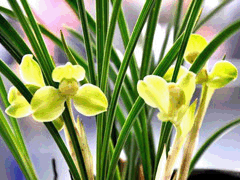 I once posted on a Chineseorchidforum a thread titled "My Planting Materials," giving a brief introduction to what I call the "four-in-one soil." This planting material has now been through another year of "testing." Judging from theCymbidiumsprouting, rooting andfloweringresults, I feel the effect is quite good, and through continuous experimentation it has been improved somewhat. I now present it here for everyone's reference and correction. 1. Composition of the four-in-one soil. 1. Main ingredients: Xiantu (immortal soil), granularorchidmud, pond foundation stone (Zhijinshi), and red brick granules. Jokingly called "four-in-one soil." Additional ingredients: activated soil, charcoal, and snake wood. 2. Preparation of the planting materials. Pass each main planting material through 4-mesh and 8-mesh sieves (as shown in Figure 3) (anything below 8 mesh is not used), dividing them into two sizes, large and small. After soaking the Xiantu in water for more than 24 hours, drain off the water. The granularorchidmud needs to be sun-dried or sterilized by other methods, and the brick granules must be clean and rounded. Then mix the four planting materials by size, each accounting for 25%, calling this the "mother soil." 3. Choice of pots. The four-in-one soil is suitable for unglazed purple-clay pots (also called sweating pots), plastic pots, clay pots, etc. When planting, the pot size should be chosen according to the size of the orchid clump being planted, and should be as small as possible, which is beneficial for rooting and for small plants growing larger. 4. Use of the planting materials. For ordinary establishedorchid plants
⟧15⟧, the mother soil with an appropriate amount of activated soil, charcoal and other additional planting materials added can be used for planting, with coarse material below and fine material above. For some, add an appropriate amount of active soil, charcoal and other supplementary planting materials to the mother material and it can be planted; when planting, place the coarser material at the bottom and the finer material on top. For someorchid plants
⟧17⟧, adjustments should be made according to the different conditions of the, according toorchid plants
⟧19⟧ by adding a single planting material as appropriate: 1. To promote variegated orchids, weak orchids and diseased orchids, increase the amount of pond foundation stone and brick granules appropriately, so that the fertilizer nature of the planting material leans toward mildness, and a small amount of activated soil, snake wood and charcoal may be added. 2. different situations, adjustments should be made accordingly by adding a single planting material: 1. To promote artistic orchids, weak orchids and diseased orchids, appropriately increase pond stone and brick granules, so that the fertilizer nature of the planting material is on the lean side, and a small amount of active soil, snake wood and charcoal may be added. 2.Wild-collected orchids
⟧21⟧, increase the amount of granular orchid mud appropriately to about 40%, and snake wood and charcoal may be added. 3. Re-exported plants: they can be planted with the mother soil, with 5-10% activated soil and snake wood added. 4. Butterfly-type orchids generally sprout and flower more frequently, so the amount of Xiantu and granular orchid mud should be increased appropriately, and activated soil, snake wood, etc. may be added. 5. For orchid clumps found at introduction to have poor, blackened or damaged roots, some charcoal powder may be added. 5. Fertilizer and water management for the four-in-one soil. (1) Fertilizing: Apart from applying 800-times-diluted Lanjunwang twice in early March each year as a sprout promoter, I apply no other fertilizer, because fertilizer is a "double-edged sword." Used properly, it naturally brings many benefits; used improperly, it brings a series of problems, such as burned roots, scorched tips, plant collapse, halted growth, and even death of the orchid plants. Therefore, orchid enthusiasts like me who have not been, appropriately increase granular orchid mud to about 40%, and snake wood and charcoal may be added. 3. For re-exported grass: the mother material mud can be used for planting, and 5-10% active soil and snake wood may be added. 4. Butterfly-type orchids generally sprout and flower fairly frequently, so appropriately increase immortal soil and granular orchid mud, and active soil, snake wood, etc. may be added. 5. For orchid clumps found at introduction to have poor, blackened or damaged roots, some charcoal powder may be added. V. Fertilizer and water management for the four-in-one soil. (1) Fertilizer use: apart from applying 800-fold orchid fungus king twice in early March each year as a sprouting promoter, I do not apply other fertilizers, because fertilizer is a "double-edged sword"; used properly, it naturally brings many benefits, but if used improperly, it brings a series of problems, such as burning roots, scorched tips, seedling collapse, growth stopping, and even death of the orchid grass, so orchid friends like me who have not been growing orchidsgrowing orchids
⟧23⟧for long should use fertilizer cautiously, and if using it, should follow the principle of applying thin fertilizer frequently. (2) The watering hurdle. 1. Settling-in water: After potting, water thoroughly repeatedly with a strong stream until the water seeping from the bottom of the pot shows no cloudiness or fine particles. For orchids with poor roots, add some thiophanate-methyl to the pot surface before watering, so it seeps into the mud with the water. In the early stage, pay attention to the humidity inside the pot, because just after potting, the pot surface is dry and the inside of the pot is also dry, so prevent the orchid plants from losing water. 2. Daily management: During the sprouting and shoot-growing period, keep it relatively moist. Once the temperature is above 18°C, water whenever it looks dry, preferring moist over dry, and try to raise air humidity and air circulation as much as possible; when the pot surface is dry below 1 cm, it should be watered. In summer, except after watering during long periods of overcast and rainy weather, water once every day or every other day, and the watering time is best at night when the temperature is lower. In autumn, the watering frequency is slightly lower than in spring; when the inside of the pot is found to be wet and the pot surface dry, a sprayer can be used to moisten the pot surface, making it moist and fresh. In winter, water should be controlled, and water when the soil below 2 cm of the pot surface is dry; the watering time is best around midday. If a watering day falls on an overcast or rainy day, it should be postponed. (3) Points to note: 1. The granules on the pot surface being relatively dry does not mean the inside of the pot is dry; you can pour out some granular mud to observe. 2. At the same location and at the same time, pots of different materials and sizes have different degrees of dryness and wetness inside, and the sturdiness and number of orchid plants in the pot consume water differently, which causes the watering times needed by each pot to be inconsistent and makes watering time difficult to control. For this reason, ways should be found to make the watering times consistent. The specific methods are: for few, small or weak seedlings, combine more clumps in one pot, and choose some pots with good air permeability for planting; for large, robust seedlings, choose slightly larger pots with good moisture retention, and adjustment can also be made by adjusting the granule size of the planting material; large granules dry easily, small granules retain moisture. When watering, if individual pots are found to still be relatively wet, water them a little less. 6. Advantages of the four-in-one soil. 1. Easy to obtain and easy to mix. 2. Relatively high sprouting rate; with normal care, second- and third-generation seedlings are produced, and the seedlings are robust. 3. Good rooting, with old roots showing new root growth. 4. The addition of granular orchid mud overcomes the defects caused by using a single hard planting material for for a long time should use fertilizer cautiously, and if using fertilizer should also follow the principle of thin fertilizer applied frequently. (2) The watering hurdle. 1. Settling water: after potting, water thoroughly repeatedly with a large flow until the water seeping from the bottom of the pot no longer appears cloudy or contains fine particles. For orchids with poor roots, add some thiophanate-methyl to the pot surface before watering, and let it seep into the mud with the water. At the initial stage, attention should be paid to the humidity inside the pot, because just after potting, the pot surface is dry and the inside of the pot is also dry, so orchid grass must be prevented from losing water. 2. Daily management: during the germination and bud growth stages, keep it relatively moist; after the temperature is above 18°C, water as soon as it looks dry, preferring moist over dry, and try to increase air humidity and circulation; when the pot surface is dry below 1 cm, it should be watered. In summer, except after watering during long periods of overcast and rainy weather, water once a day or every other day, and it is best to water at night when the temperature is lower. In autumn, the watering frequency is slightly lower than in spring; when the inside of the pot is found to be wet and the pot surface dry, a sprayer can be used to humidify the pot surface so that it becomes moist. In winter, water should be controlled, watering when the soil below 2 cm of the pot surface is dry, and it is best to water around noon. If the watering day falls on an overcast or rainy day, it should be postponed. (3) Points to note: 1. The granules on the pot surface being relatively dry does not mean the inside of the pot is dry; some granular mud can be poured out for observation. 2. At the same location and at the same time, pots of different materials and sizes have different degrees of dryness and wetness inside, and the strength and number of orchid grasses in the pot consume water differently, which causes the watering times among pots to be inconsistent and makes watering time difficult to control. For this reason, ways should be found to make the watering times consistent. The specific method is: for those with few, small or weak seedlings, combine more clumps in one pot and choose some pots with good air permeability for planting; for large, robust seedlings, choose slightly larger pots with good moisture retention, and adjustment can also be made by adjusting the granule size of the planting material; large granules dry easily, while small granules retain moisture. When watering, if a few are found to still be relatively wet, water them less. VI. Advantages of the four-in-one soil. 1. Easy to obtain and easy to mix. 2. Higher germination rate; with normal care, second- and third-generation seedlings can be produced, and the seedlings are robust. 3. Good rooting, with old roots showing new root growth. 4. The addition of granular orchid mud overcomes the defects caused by using a single hard planting materialgrowing orchids
⟧25⟧, such as small flowers, thin petals and fragrance that does not carry far. Less fertilizer can be used, avoiding the trouble caused by improper fertilizing. 7. A few words worth noting. 1. Orchids are not killed by drying out, only by overwatering! 2. Moist and damp ≠ excessive and waterlogged. 3. Grow, such as small flowers, thin petals and fragrance that is not deeply lingering. Less fertilizer can be used, avoiding the trouble caused by improper fertilizer use. VII. A few words worth noting. 1. Orchids are not dried to death; they are only watered to death! 2. Wet, moist ≠ excessive, waterlogged. 3. With an ordinary mindorchids
⟧27⟧with an ordinary mind; pulling up seedlings cannot help them grow, and haste makes waste. 4. Do not treat orchids as a big deal, and yet do not treat orchids as no big deal. The above are just a few superficial reflections from my process of growing orchids, and my ability to express them is limited; the issue of planting materials can only be touched on superficially, and I still ask everyone for much guidance., pulling up seedlings cannot help them grow, and haste makes waste. 4. Do not treat orchids as a big deal, yet do not fail to treat orchids as a matter at all. The above are just some superficial experiences from my orchid-growing process, and my ability to express them is limited; the issue of planting materials can only be touched on superficially, and I ask everyone for much advice.