Orchid Care Essays: Recording My Orchid-Growing Experience
Orchid Growing Essays
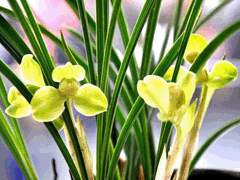 Orchid GrowingEssays----
One: Author's Preface
Two:OrchidsBasic Knowledge
Three: Conditions for Growing Orchids
Four: Overview of the Basic Knowledge of Growing Orchids
Five: Special Tips
Six: A Brief Discussion on How to Grow Orchids to Become Wealthy
Seven: Orchid Virtue, Reflections, Thoughts, and Observations
1: The Way of Orchids and the Way of Humanity
2: A Million Is Easy to Come By, Wealth Lasts Ten Years
3: Reflections and Insights
One: Author's Preface
My hometown is Chongzhou, Sichuan (the Shuzhou of Tang dynasty poet Wang Bo's > is today's Chongzhou). In this small city unknown to the world, people from ancient times to the present have loved growing orchids. My father is an ordinary orchid-growing enthusiast. Under my father's influence, I also grew very fond of orchids. I remember a few months ago, when I had just graduated with my bachelor's degree and returned home, during a conversation with my father, I learned that he wanted to summarise his decades of orchid-growing experience but was limited by his writing ability. I decided to use my summer vacation to help him write something, and also to include some of the things I have seen and heard from him over the years and my own reflections.
In my father's more than twenty years of orchid growing, although he encountered many setbacks and many bitter experiences, what he gained ultimately outweighed what he lost. Over these long years, among the people he met, there were senior figures in the orchid world whom he respected, many sincere orchid friends he made, and also profit-seeking orchid swindlers. The variety is too numerous to list.
Orchids, as a plant for people to appreciate, are actually traded and circulated in the orchid world at incredible prices. There is no standard for orchid prices; they can only be estimated based on the length of one's orchid-growing history and one'sunderstanding oforchids for trading. Although orchidprices have no fixed standard, a reasonable price can be set by comparing with similar varieties. Leaf-art and strange-leaf varieties can be traded by directly viewing the actual plant. As for colour flowers, strange flowers, and petal-type flowers, because they are rare and expensive, the result is that early division makes them difficult to bloom, and new shoots are thin and weak. Some people, without waiting for the flowers to bloom, judge them as colour flowers, strange flowers, or petal-typeflowersbased solely on special forms of leaves and new shoots, and sell or buy the expected varieties at high prices, and so on. The result is that most people are cheated, and disputes are endless. Therefore, this article advocates growing, appreciating, buying, and selling orchids under the principle of orchid virtue that "the way of orchids is the way of humanity."
Two: Basic Knowledge of Orchids
1 If you want to appreciate orchids and grow them well, you must know orchids
Orchids are perennial plants of the Orchidaceae family, with the most species, and are the most ecologically evolved plants. They are composed of flowers, leaves, roots, and stems.
A: Basic structure of the flower: three petals, two sepals, one lip, and one column in the centre, for people to appreciate.
B: Basic structure of the leaf: composed of upper epidermis and lower epidermis with mesophyll tissue. It can carry out photosynthesis and respiration.
C: Basic structure of the root: the outer layer is a thick fleshy velamen tissue, and the inner layer is a slender central column, with a distinct root tip. Its function is to absorb nutrients for the orchid plant's growth.
D: Basic structure of the stem: composed of plant fibres, with the function of storing water and nutrients. The stem bears flower buds and grass shoot embryo tips.
2 If you want to learn to grow orchids, you must understand the growth habits of orchids
In order to adapt to various growing environments, orchids have developed various different growth habits. Orchids are divided into terrestrial orchids and epiphytic orchids (aerial epiphytes), and among these are further divided into high-temperature orchids, medium-temperature orchids, and low-temperature orchids.
Orchids that grow in organic soil are called terrestrial orchids. Those that grow epiphytically on rocks and trees are called epiphytic orchids.
Orchids that grow in high-temperature tropical regions, with growth temperatures between 20°C and 35°C, belong to high-temperature orchids, such as Cymbidium types.
Orchids that grow in temperate regions, with growth temperatures between 18°C and 30°C, belong to medium-temperature orchids, such asCymbidium goeringiitypes and Chun Jian types.
Orchids that grow in low-temperature, low-light regions, with growth temperatures between 5°C and 15°C, belong to low-temperature orchids, such as Paphiopedilum types and Pleione types.
Orchids are further divided into Chinese orchids and foreign orchids. Within these two major categories, they are further divided into: orchids growing in the wild are called original species; orchids from natural hybridisation in the wild and artificial improvement are called hybrid species.
Those propagated by technological means such as tissue culture are called cloned species
Three: Conditions for Growing Orchids
1. Site and Equipment for Growing Orchids
Utilisation of the courtyard. Orchid sheds and equipment should be suited to one's means; the principle is to strive for sturdiness, durability, practicality, and theft prevention.
If there is a courtyard at home for growing orchids, it is more advantageous than a rooftop or balcony. Especially nowadays, with many residences, as long as a small plot of a little over ten square metres can be left in front or behind, if it can be put to good use, growing orchids can still achieve good results and great profits.
When designing an orchid garden in a courtyard, the following points should be noted:
A. The orchid garden should choose a position with good lighting as much as possible; generally, a north-south orientation is best.
B: Sufficient space should be left around the orchid garden, because ventilation is very important.
C: The orchid garden should not be located where air conditioner outdoor units are installed, nor near kitchens or range hoods.
2. Rooftop andBalcony Orchid GrowingThe following points should be noted
In city apartments where land is worth its weight in gold, orchids can also be grown on balconies. As long as one is good at making use of the space, orchids can still be grown well. When designing an orchid garden on a rooftop or balcony, be sure to pay attention to measures such as sturdy structure, protection against strong winds, strong sunlight, dryness, and high temperatures.
Four: Overview of the Basic Knowledge of Growing Orchids
1. The Environment Must Be Suitable
In an excellent environment, orchid management is extremely easy and can achieve the best results. Conversely, it is not easy to manage and the results are poor. The environment orchids need is roughly the same as that of humans: cool in summer and warm in winter. If such an environment can be provided, ideal results can naturally be achieved.
2. Temperature Must Be Appropriate
Orchid growth is greatly affected by temperature. Orchids prefer high temperatures during the day and low temperatures at night. The reproductive growth temperature for most orchids is between 5°C and 15°C, and vegetative growth is between 15°C and 30°C. Therefore, if the location of your orchid garden cannot meet the reproductive growth and vegetative growth needs of orchids, you should appropriately control and adjust the temperature.
3. Humidity Must Be Moderate
If you water every day and the orchids still wither, then there is a problem with air humidity. Humidity is one of the four major factors in orchid growth. When humidity is mentioned, some people mistakenly think it refers only to the amount of water poured into the orchid pot. In fact, it should refer to two parts: the air humidity in the orchid garden and the humidity of the growing medium in the orchid pot.
Orchids prefer air with higher humidity, because the roots, stems, and leaves exposed outside the pot all have the function of absorbing moisture from the air. Therefore, efforts should be made to raise the air humidity in the orchid garden to above 60%. However, air humidity is closely related to ventilation. Poor ventilation will raise humidity, while good ventilation with greater air flow will lower humidity. But orchids prefer to grow in an environment with both good ventilation and high humidity. How to resolve this contradiction? That depends on individual experience, and it requires long-term practical experience in orchid growing.
An old saying goes: Three years of watering does not mean you know how. This means that when it comes to orchidcultivationwatering is extremely difficult. Indeed, if one does not study carefully, not only will three years not be enough to get started, but even five or ten years may not be enough to learn the key. It can be said that if watering succeeds,cultivationsucceeds; if watering fails,cultivationfails. In short, both the air humidity in the garden and the humidity of the growing medium in the orchid pot are related to watering.
Everyone should be reminded that watering should be done in the morning as much as possible. If watering has already been done normally but the orchid plant still shows curled leaves and signs of water shortage, then air humidity must be increased, and one must absolutely not pour even more water heavily. If watered too much, orchid roots soaked in growing medium with excessive moisture will have their respiration hindered, and the growing medium will accelerate in becoming acidic. Over a long period, this will cause root rot, damping-off, and other soil-borne infectious diseases, harming the root system and accelerating the death of the orchid.
4. Light Must Be Appropriate
Orchids need sufficient but not excessive light; that is to say, orchids are suited to growing in a weaker light environment. If excessive light is found, it will scorch the chlorophyll on the leaf surface, causing the leaf colour to turn yellow, the leaves to curl and dry up, losing their beauty and causing growth decline. Conversely, if light is insufficient, sprouting is delayed, leaves are narrow and thin, the pseudobulbs are small, the leaf colour is dark green, and it is not easy to bloom or the flowers are not vivid.
5. Ventilation Must Be Good
Only good air circulation can promote the metabolism of orchid cell tissues and increase the ability to produce nutrients. Ventilation can also reduce excessively high air humidity and temperature, and reducepests and diseases. For ventilation, it is best to use natural wind. If in summer the southwest wind can blow through, and in winter the northwest wind can be blocked, this relates to the choice of orchid garden orientation mentioned above. If the natural environment cannot provide ventilation, then only artificial means can be used to regulate air flow.
But note: the cleanliness of the flowing air is very important. Avoid polluted air entering the orchid garden.
6. Fertilisation Must Be Moderate
It takes 7-8 months for an orchid to go from sprouting to maturity. During this long period, appropriate fertilisation must be applied at appropriate times. Fertilisers can be divided by composition into organic fertilisers and inorganic fertilisers, but whether organic or inorganic, they must contain sufficient nitrogen, phosphorus, potassium, and trace elements. First, we must understand clearly the role of nitrogen, phosphorus, and potassium in plant growth and development.
Nitrogen (N) can promote lush growth of branches and leaves, with tender green leaf colour. Too much nitrogen, although branches and leaves grow faster, causes excessive vegetative growth without flowering. Conversely, a lack of nitrogen causes old leaves to turn yellow and fall, and growth to stagnate. Generally, seedlings need more nitrogen.
Phosphorus (P) can help plant root development and nutrient absorption, and at the late growth stage can promote flowering. Conversely, a lack of phosphorus makes it difficult to bloom. Therefore, mature plants that are to bloom must be supplied with more phosphorus.
Potassium (K) can promote robust growth of plant roots, stems, and branches, improve flower colour, and resist pests and diseases. A lack of potassium makes orchid plants less robust and flower colour less vivid. Generally, medium-sized plants need more potassium.
For ordinary varieties grown for the purpose of appreciating flowers, attention should be paid during cultivation to the supply of phosphorus and potassium and to giving more light. For those grown for leaf art and flower art, attention should be paid to changes in leaves and stems; nitrogen fertiliser must not be supplied in excess, more light should be absorbed, and humidity should be lower.
Pay special attention: when fertilising, never apply too much or too strongly at one time. Better to apply small amounts more frequently.
7. Growing Medium Must Be Safe
It is very difficult to answer which growing medium should be used to achieve the best cultivation results; it depends on one's own actual situation. But the growing medium used must be highly safe, simple to use, and appropriately coarse or fine. The principle is: loose, breathable, sterile, well-draining, and fertiliser-retaining.
Six: A Brief Discussion on How to Grow Orchids to Become Wealthy
Setting aside orchid art for now, and purely studying this from the perspective of business and economics, how can one make money from orchid cultivation? In every industry in the world, some people make money and some lose money, and the orchid-growing business is no exception. The secret to becoming wealthy through orchid growing is to follow the principles below in cultivation and management.
1: Buy orchids with prospects for propagation. Whether engaging in production or in buying and selling goods, you must consider whether the goods have a broad market. Orchid management is the same. You should first investigate in detail the future prospects of the varieties you intend to cultivate, and select species and genera welcomed by the orchid world to cultivate. That is to say, before buying, you should consider whether they can be sold after propagation, and must not invest blindly just because of a temporary craze.
How to choose orchids with prospects for propagation is a matter of knowledge, and also partly a matter of luck. Before investing in buying orchids, one should visit orchid gardens and successful orchid friends in various places, organise, analyse, and assess the information obtained from all sides. In this way, some inspiration can be gained. But one must not believe one-sided statements or the words of a small number of people. Whether the opinions provided by others have ulterior motives must especially be carefully analysed.
Generally speaking, orchids that have already been propagated in too large quantities should not be invested in; varieties that are not easy to cultivate and have low propagation rates should not be invested in; those that are too special, such that their characteristics are not easily understood or accepted by others, should not be invested in; those with especially high prices should not be invested in (such investments not only carry great market risk, but also great cultivation risk).
2: Make appropriate capital investment. Orchid prices are unstable and have periodic rises and falls. Therefore, investment in orchids must never exceed one's own financial capacity, to avoid the danger of bankruptcy when the orchid market is depressed or luck is poor. One should be mentally prepared that costs may not be recovered for three to five years, so that it will not affect the capital turnover of other businesses or the living expenses of the whole family. Suppose after investing, prices fall. If the investment exceeds what one can bear, although one clearly knows there will be a good opportunity in 3 to 5 years, because one cannot hold on and is eager to sell, one will suffer a great loss.
3: The varieties purchased must not be staked all on one throw, nor should they be too dispersed. Orchid investors must not have absolute confidence in a single variety and use all their capital to buy one variety. This approach often turns out contrary to one's wishes and creates an irretrievable situation. Nor should they be too dispersed, buying too many varieties and turning their orchid garden into a general store, with the result that it is difficult to become famous.
It is best to choose 2 or 3 varieties that one is interested in for investment. In this way, one's orchid garden will also have a focus and specialty, and only then can one survive in the orchid world. This approach is based on the hope that among the 2 or 3 varieties one chooses, at least one will by good fortune meet with luck, bringing both fame and profit.
4: Cultivation results must be good. Since a considerable amount of capital has been invested, one should put more effort into the orchid garden's equipment. First visit orchid gardens of considerable standard, then take orchid friends with better cultivation results as examples, and humbly learn from them in building one's own orchid garden.
With an ideal orchid garden, combined with good management, the propagation capacity of the orchids cultivated will naturally be above the general level. However, one must not be insatiably greedy and seek even better cultivation results by excessive heating, humidifying, or fertilising. It is best to strive to maintain steady propagation of the orchids. In this way, after proportional increases, 5 or 10 years later the quantity will be astonishing.
5: Do not sell too early. Orchids can propagate continuously. If you are eager to sell before reaching a certain quantity, the orchid garden you operate will never have a chance to develop. If you can persist, wait until your orchids have propagated to a certain quantity, then sell a portion of each year's propagation, and you can have income every year, and the scale of the orchid garden will also expand year by year. If things continue this way, your own orchid garden will stand out and become a large orchid garden that attracts everyone's attention.
My father has grown orchids for many years and adhered to the above principles. Therefore, he could not become enormously wealthy, but neither did he end up with nothing. Of course, in the long years of orchid growing, there were also failures. On later reflection, these failures arose from a moment of greed, forgetting the above principles. In short, in pursuing the orchid-growing business, one should proceed steadily; that is the best policy. (To be continued.....)