Master the habits of orchids, and you can grow them well even on a balcony
Orchid habits and growing orchids on a balcony
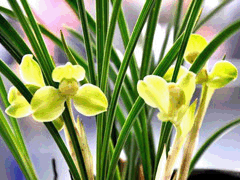 Onthe balconygrowing orchidsin this little world of ours, to makeorchidsgrow strong and healthy, do your best tomeet what orchidsneed. First you must understand their habits, and then create suitableconditions for orchidsto grow, such as potting medium, temperature, humidity, light and ventilation, and many other natural factors, which are closely related to theorchids'survival, growth and development.
Potting medium: Orchids require a slightly acidic potting medium rich in humus, loose and fertile, with good drainage and water retention, pH 5-6.5.
Light: Orchids prefer shade and require short sunlight hours. In their natural distribution this shows:Cymbidium goeringiigenerally requires tree canopy shade density of 70-95%,Cymbidium faberirequires 50-80%.
Temperature and humidity: Orchids prefer a warm and humid environment. In winter, it is best if it does not freeze, with 3-7 degrees being most suitable, and in summer below 28 degrees is appropriate. In their natural distribution they endure rain and dew all year round, with humidity generally at 40-90.
Orchids generally have drought-tolerant characteristics and a certain adaptability to irregular water supply. At the same time, Cymbidium plants have a dormant habit in their native regions, which depends on the rainy and dry seasons. Usually the dry season is in winter, which is the dormant period for orchids; the rainy season is in spring and summer, which is the growing period for orchids, so they continuously form buds and bloom.Cultivationof orchids must grasp these natural growth patterns.
Once you know the habits of orchids, you can create the conditions yourself. If the balcony humidity is not enough, you can use a simple method: place more water containers under and around the orchid stand, and increase humidity through natural evaporation; if conditions allow, you can use a humidifier. If the light is too strong, use a shade net; if too shady, use plant lights for supplementary lighting. During cultivation you can let them get light rain, and when appropriate you can also water from overhead, and strengthen ventilation, but be careful that strong winds do not damage the orchid plants.
It does not matter if you cannot meet the requirements; just do your best. Orchids are also very adaptable. I also grow some on an open-air balcony, with a carpet underneath to absorb water and increase humidity, and a shade net on top. When it rains they get rained on, and when it is clear I water from overhead. In summer there are no cooling facilities. Last year during high temperatures, the orchid shed reached 41 degrees, and humidity was only just over 20. Not a single pot was placed in an air-conditioned room. Now the temperature is also 38 degrees. Recently I withheld water from 20 pots of orchids for 8 days. During these 8 days it was clear to partly cloudy, and the highest temperature in the orchid shed was 35-38 degrees. I did not pour a single drop of water, and it was fine. But with rough growing, you cannot be careless. Usually you must observe more. If there arepests and diseasesthey must be controlled promptly, and weak plants must be separated and cared for separately.
The orchids I grow as described above are quite strong, and their rate of producing new growths is also quite good!