Prevent stifling and overheating before spring: these management measures must be in place
Prevent stifling and overheating before spring
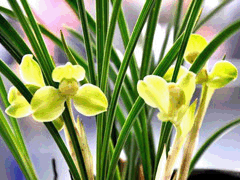 Since the start of winter, the lowest temperature encountered was minus three to four degrees Celsius at night a few days after the winter solstice. Under the assault of the cold snap, a thin layer of ice formed on the river flowing through the urban area. All the sides of the orchid garden facing outdoors were sealed tightly to resist the cold at night. The side facing indoors was left completely open, allowing the not-very-high indoor temperature to flow into the orchid garden, so that the nighttime temperature in the orchid garden could be about three degrees higher than outdoors.
After the cold snap passes, there will be a brief warming period. During the warming period, the south wind blows, and the south wind brings moist air currents. Under the effect of the south wind, with sunlight during the day, the temperature in the orchid garden will rise quickly. At this time, if you carefully observe the orchid pots, you will find that the walls of the pots are covered with moisture, and when there is a lot of it, fine droplets appear. This phenomenon is also called sweating. Sweating of the orchid pots means that, under conditions of relatively high indoor temperature and humidity, the ventilation in the orchid garden is not ideal, and the ventilation flow needs to be increased immediately, otherwise the orchid roots will suffer from steaming.
The so-called suffering from steaming means that, when the air is not circulating, sunlight and moisture act at the same time, the temperature inside the orchid pot rises quickly but cannot release heat in time, and the moisture seeping back inside the pot and the moisture in the air act together on the walls of the pot, further hindering the release of heat from inside the pot. At this point, the orchid roots in the pot will feel a lack of oxygen.
Once orchid roots suffer from steaming, they are prone to disease. This is mainly shown the following year as black spots or shrunken heads on the cotyledons of cymbidium orchids, and this is caused by suffering from steaming in the greenhouse. Once this disease appears, spots will still develop even after another year, and even with proper care, it will take four or five years to recover. Truly, as the saying goes: getting sick is easy, getting rid of the sickness is hard. Orchid enthusiasts often agonize over being unable to find the cause of black spots and shrunken heads on orchid leaves, and tend to think it is caused by improper watering or pathogen invasion, while overlooking the factor of suffering from steaming. Therefore, even in winter, attention must be paid to the link of ventilation, and one must never neglect ventilation, the first essential factor, in pursuit of raising the indoor temperature.
Winter ventilation must be done with attention to method. If you want to open a window for air exchange, it is best to open an upper-level window of the orchid rack or a window a little farther from the orchid rack, so that cold air enters from a slightly greater distance. In this way, the cold air will not easily blow directly onto the orchid leaves, and fresh air can still be exchanged. In winter,orchid plantsare most afraid of cross-hall drafts, also called thief wind; please do not ignore this.