A Detailed Explanation of the Relationship Between Fertilizing Crops and Light
Fertilizing and Light
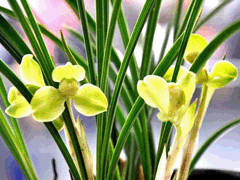 The question of the relationship between fertilizing and light isorchidsan extremely important yet often overlooked issue in the fertilizing process.
When it comes to fertilizing, orchid growers pay close attention to questions such as the suitable temperature for fertilizing, what fertilizer should be applied during the vegetative growth stage, what fertilizer should be applied during the reproductive growth stage, which plants can tolerate fertilizer, which plants need to be grown lean, and the concentration of the fertilizer solution.
When it comes to light, orchid growers also pay close attention to questions such as the suitable light intensity for various types of orchids at each growth stage, how to shade, and how to supplement light.
However, in thecultivationof orchids, paying attention only to the above issues is still not enough. We often see that some orchids grown by growers have very long leaves but very short roots, presenting a "top-heavy" state; while others, although only 3 or 4 orchid seedlings are planted in a pot and a large pot is used, have orchid leaves that grow short and yellow, yet their roots are long and numerous, filling the entire pot, also presenting a "top-heavy" state. The important reason for these two poor growth conditions is that the relationship between fertilizing and light has not been correctly handled.
As everyone knows, light can promote the synthesis of sugars and amino acids in the plant body. During the day, the sugars produced by photosynthesis are stored in the leaves in the form of starch, and only during dissimilation at night are they moved downward. The intensity or weakness of light leads to strong or insufficient assimilation.
If light is insufficient, the assimilation of the leaves is also insufficient. Because nitrogen fertilizer is not well digested during the day, the accumulation of sugars and starch is small, and what descends at night is also small. Over time, orchid leaves will inevitably be wide and thin, with elongated bases. The roots will be short and few, or even rot. This gives rise to the "top-heavy" phenomenon. After this happens, the light intensity needs to be gradually increased, organic nitrogen (which can reduce sugar consumption during metabolism), cell activators and cell strengtheners should be supplied continuously, and water supply should be reduced. After new roots grow out, normal management can be slowly restored.
If light is too strong, the assimilation of the leaves is also too strong. Because excessive nitrogen fertilizer is consumed, the leaves become short, small and yellowed. Because of sufficient sugars and amino acids, the pseudobulbs and roots grow excessively. When this "top-heavy" phenomenon appears in orchids, in addition to reducing light, sufficient inorganic nitrogen should be supplied continuously. Supplying inorganic nitrogen can lower the sugar content and also promote protein synthesis. Proper division or root thinning may also be done to increase the number of shoots. In this way, the new growths produced can return to normal.
Practice has proven that only under conditions of sufficient light can orchids absorb nutrients, so when fertilizing orchids there must be sunlight, and the best time to fertilize is in the morning on a day with good weather. When applying chemical fertilizer, the light intensity selected should be relatively higher; when applying organic fertilizer, it should be relatively lower.
In addition to the light factor, if orchids experience conditions such as the pot being dry for a long time, too much basal fertilizer, or being placed in a position that is too high, the "top-heavy" state can also appear; similarly, if during photosynthesis the carbon dioxide concentration in the orchid room is too high, causing high-carbon growth, if the night temperature is too high, making respiration too vigorous, or if there is nitrogen deficiency during good growth, the "top-heavy" state can also appear. These problems should be discussed separately.