How to completely solve the problem of scorched leaf tips? Teach you to cultivate strong seedlings
Completely solve scorched tips and cultivate strong seedlings
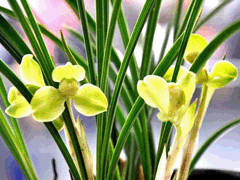 Fig. 1: The gold-award-winning Cheng Mei Fig. 2: Symptoms of physiological scorched tips Fig. 3: Symptoms of brown spot disease Fig. 4: Symptoms of anthracnose Fig. 5: Symptoms of black spot disease Fig. 6: Symptoms of leaf blight Fig. 7: Symptoms of tip blight Fig. 8: Leaf blight with black spot disease on the leaves Fig. 9: Anthracnose and black spot disease damaging simultaneously Fig. 10: Black transverse lines at the junction of diseased leaves Fig. 11: Physiological scorched tips, brown spot disease, anthracnose, tip blight, leaf blight and black spot disease Fig. 12: Pruning diseased leaves to completely solve scorched tips Cultivating strong seedlings
Lu Mingxiang
In 2006, China's firstCymbidium faberiExpo was held at Xuanwu Lake in Nanjing. The Dadiecai and Cheng Mei that the author submitted to the exhibition both won gold awards. After Cheng Mei won the gold award, a debate titled "Should This Pot of Cheng Mei Have Won the Gold Award?" was triggered on the "ChinaOrchidNetwork." The main focus of the debate was: some orchid enthusiasts believed that this pot of Cheng Mei was a native species,orchid plantvigorous, with good flower quality, and deserved the gold award; another group of orchid enthusiasts believed that although this pot of Cheng Mei had good flower quality,orchid plantalthough the orchid plant was vigorous, theorchid planthad scorched tips and should not have won the gold award. (Fig. 1: The gold-award-winning Cheng Mei) I had always believed thatorchids(especiallyCymbidium faberi) grown in a natural environment would inevitably show some scorched tips on the leaves, so I had never paid much attention to it. This spring, an orchid enthusiast from Shandong came to my garden to select orchid plants and insisted on having a pot of Jiepei Mei with no scorched tips at all. This debate and the Shandong orchid enthusiast's purchase had a great impact on me. It told me: although an orchid plant may grow tall and strong, if the tips are scorched, it still cannot be considered a strong, good plant. This matter also prompted me to calm down and study, think about, and explore how to solve the problem of scorched tips on orchid leaves.
(I) Main causes of scorched tips on orchid leaves
There are many causes of scorched tips on orchid leaves. Some are caused by natural factors, some by improper management, and some by diseases. Among them, scorched tips caused by diseases are the most serious.
1. Scorched tips caused by natural factors
(1) Humidity too low. Scorched tips on orchid leaves are closely related to water supply, especially since Cymbidium faberi leaves are relatively long; if water supply cannot keep up, scorched tips on orchid leaves are inevitable. The water supply for orchid leaves comes first from transport by the roots, and second from absorption from the air. Thereforeorchidthe causes of scorched tips, besides the potting soil being too dry, are also greatly related to air humidity being too low. If the humidity in the air is too low and it is too dry, this intensifies transpiration in the orchid plant, causing an imbalance between water supply and demand in the leaves and resulting in scorched tips. Generally speaking, indoororchid growinghas relatively high air humidity, so scorched tips on orchid leaves are not serious, while outdoororchid growingmakes air humidity difficult to control, so scorched tips on orchid leaves are more serious.
(2) Sudden climate changes. Taking 2007 as an example, just after people moved orchids out of the relatively humid orchid house, they encountered a drought unseen in decades. Rivers dried up to the bottom, air humidity was extremely low, and therefore scorched tips on orchids were relatively serious. Although the plum rain season came late, it lasted a long time, about 50 days. Orchid leaves that had not seen sunlight for a long time were both thin and soft. Just after the plum rain season ended, high temperatures and strong sunlight followed, so the scorched tip situation became even more serious. The author visited several outdoor orchid gardens, and the scorched tip situation of Cymbidium faberi was relatively serious.
(3) Air pollution. If an orchid garden is near a sewage area or industrial area, or if someone burns harmful substances near the orchid garden, harmful gases fill the air and harm orchid leaves, causing scorched tips.
2. Scorched tips caused by improper management
(1) Light too strong. Neglecting shading in summer or insufficient shading causes light to be too strong, resulting in scorched tips on orchid leaves.
(2) Long-term shaded cultivation. During the growth process of orchids, excessive shading, too weak light, and long-term shaded cultivation make orchid leaves thin and weak. If orchids are suddenly exposed to strong light, it easily causes scorched tips and curled leaves.
(3) Water damage harming plants. Watering too frequently causes root rot and leads to scorched tips. Spraying water in sunlight causes water to collect at leaf tips, and after strong light exposure the tips become scorched. If the water quality used for watering is polluted, or if orchids are exposed to acid rain, scorched leaves can also result.
(4) Fertilizer damage harming leaves. When fertilizing at the roots, if the fertilizer concentration is too high and the frequency too great, orchid roots become scorched black, which then causes scorched tips on orchid leaves.
(5) Pesticide application too concentrated. Pesticides have a certain mixing ratio. If the concentration exceeds the standard and too much is sprayed, pesticide accumulates at orchid leaf tips, harming the tips and causing scorched tips.
(6) Growing medium too dry. Being too lazy to water causes the growing medium in the pot to become too dry, unable to meet the orchid plant's water needs, forming empty roots. Orchid leaves cannot receive normal water supply, and water loss causes scorched tips.
The several kinds of scorched tips on orchid leaves caused by natural factors or improper management described above are usually called physiological scorched tips. This kind of scorched tip is usually black, and there are no black transverse lines at the disease margin. It will not rapidly advance forward. The disease course is relatively slow, and the degree of harm is not great. (Fig. 2: Symptoms of physiological scorched tips) As long as the cause is identified and management is targeted accordingly, the harm to orchid leaves can be controlled.
2. Scorched tips caused by pathogens
(1) Bacterial brown spot disease. Orchid brown spot disease is caused by bacterial infection of orchid leaves. It is the most vicious scorched tip disease among orchid leaf diseases. It is relatively easy to identify. Its lesions are brown. In the early stage of onset, the leaves have water-soaked faded spots that look as if scalded by boiling water, and they rapidly connect into a patch and advance forward, causing an entire section of the leaf to die. It is extremely contagious, spreads rapidly, and is extremely harmful. (Fig. 3: Symptoms of brown spot disease)
(2) Anthracnose. Orchid anthracnose is caused by fungi. It is the most common scorched tip disease of orchid leaves and is relatively easy to identify. Its notable feature is that after the leaf tip is damaged and dries up, there are several wavy transverse black bands. If the scorched tip leaves are cut off and no medicine is applied, it will still continue to advance. It is a relatively serious scorched tip disease. (Fig. 4: Symptoms of anthracnose)
(3) Black spot disease. Orchid black spot disease is caused by fungi. It is one of the most common scorched tip diseases of orchid leaves and is relatively easy to identify. Its notable feature is that the lesions are round and scattered on the leaf surface and leaf margins. In severe cases they can also connect into a patch, causing the entire orchid leaf to lose ornamental value. (Fig. 5: Symptoms of black spot disease)
(4) Leaf blight. Orchid leaf blight is caused by fungi. It is one of the more vicious scorched tip diseases and is relatively easy to identify. Its notable feature is that in the later stage the leaf tip turns grayish white and an entire section dies, with the junction of diseased leaves being dark brown, and it continuously advances forward, even causing the entire leaf to dry up rapidly. It is extremely harmful. (Fig. 6: Symptoms of leaf blight)
(5) Tip blight. Orchid tip blight is caused by fungi. It is the most common scorched tip disease and is relatively easy to identify. Its notable feature is that the dead part is grayish yellow with no band-like traces (distinguishing it from anthracnose), and there are dark brown markings at the junction. (Fig. 7: Symptoms of tip blight)
The several diseases above sometimes occur singly, and sometimes several diseases occur at the same time. For example, an orchid may not only suffer from leaf blight but also from black spot disease at the same time; after the leaf dies, the black spots still remain. (Fig. 8: Leaf blight with black spot disease on the leaves) Another example is orchid leaves suffering from both anthracnose and black spot disease; after the leaf dies, both symptoms exist at the same time. (Fig. 9: Anthracnose and black spot disease damaging simultaneously)
Scorched tips on orchid leaves caused by pathogens are generally relatively serious in harm. There are usually black transverse lines at the disease margin, and this black transverse line lesion continuously advances forward (Fig. 10: Black transverse lines at the junction of diseased leaves). In severe cases, an entire section of the leaf scorches and dries up. Even if cut off, it will continue to scorch and dry, and if cut again it will scorch again, until the plant is bald. It may even threaten the life of the orchid plant and must never be underestimated.
(II) Accurate diagnosis of scorched tip disease on orchid leaves
Although the symptoms of the various scorched tip diseases have been explained relatively clearly above, ordinary orchid enthusiasts still find it difficult for a time to distinguish what cause is responsible for scorched tips. In fact, as long as one observes carefully, it can still be identified. (Fig. 11: Physiological scorched tips, brown spot disease, anthracnose, tip blight, leaf blight and black spot disease) From this picture we can clearly see their notable differences:
1. Physiological scorched tips (water damage, fertilizer damage, pesticide damage, etc.): the damaged area is entirely black, and there are no black stripes at the junction; after pathological scorched tip leaves die, they are not black, and there are black stripe lesions at the junction.
2. Lesions caused by bacteria have water-soaked brown patches in the early stage that look as if scalded by boiling water; while dead tips caused by fungi have no yellow-brown patches.
3. Diseases caused by fungi generally have black transverse markings at the junction. On dead tips damaged by anthracnose, there are several transverse wavy black lines, while other diseases do not have this wavy pattern; diseased leaves damaged by leaf blight appear grayish white; leaves damaged by tip blight appear grayish yellow.
4. To sum up: the damaged part of physiological scorched tips is entirely black, with no black transverse lines at the junction of diseased leaves; bacterial brown spot disease begins with brown patches at the damaged part, and later the lesions become black, with black transverse lines at the junction of diseased leaves; anthracnose-damaged leaves have several transverse wavy black lines, with black transverse lines at the junction of diseased leaves; leaf blight damage appears grayish white, with black transverse lines at the junction of diseased leaves; tip blight damage appears grayish yellow, with black transverse lines at the junction of diseased leaves.
Only by accurately grasping the symptoms of each kind of scorched tip disease can we be well informed and targeted when treating scorched tip disease. Therefore we must put effort into studying it, and truly apply the right treatment to the disease during treatment.
(III) Measures to completely solve scorched tip disease
Fundamentally eliminating scorched tip disease on orchid leaves caused by pathogens is indeed relatively difficult, but as long as we actively address it, manage it carefully, and carry out comprehensive prevention and control, we will certainly achieve notable results.
1. Diseased leaves must be cut off. Once a leaf has a scorched tip, there is no regret in cutting it off; it must be resolutely cut off, with no reason at all to hold back. Diseased leaves must be cut off thoroughly, and the cut should be more than 1 cm away from the lesion. If an old plant is severely affected, the entire plant can be cut off without mercy. (Fig. 12: Pruning diseased leaves) Several years ago, the author purchased several clumps of wild-collected orchids with serious scorched tips and black spots. At that time the new plants were not infected. I immediately cut off all the old plants and sprayed with thiophanate-methyl. Later the new plants did not develop the disease. After diseased leaves are cut off, they must be burned or deeply buried. The cut diseased leaves must never be left in the orchid garden. Diseased leaves that fall to the ground during pruning must also be picked up, to prevent them from becoming a source of infection again.
2. Medication must match the disease. Once orchid leaves have scorched tips, it is necessary to find out what cause is responsible. If it is physiological scorched tips caused by improper management, then strengthen management in a targeted way. If the scorched tips are caused by disease, then first distinguish whether it is caused by bacteria or fungi. This point is very easy to distinguish: brown spot disease caused by bacteria has one obvious symptom: in the early stage of onset, the lesions look like water-soaked marks scalded by boiling water. Diseases caused by bacteria are controlled with agricultural streptomycin, yekuning, and koshagu; while diseases caused by fungi are controlled with agents such as thiophanate-methyl, chlorothalonil, and Shigao. If it is difficult for a time to distinguish what kind of disease it is, then mix bactericidal agents and fungicidal agents together, which can also achieve twice the result with half the effort.
3. Treatment must be timely. Once disease is discovered, medication treatment must be carried out promptly. One must absolutely not have the paralyzing thought that "scorched orchid leaf tips do not matter," and even less the mistaken thought that "scorched orchid leaf tips are normal," thereby delaying treatment and causing the disease to worsen and spread. We must clearly recognize that disease in orchid leaves spreads very quickly. Although it may not cause death, it causes loss of ornamental value, and moreover an orchid plant with bald leaf tips cannot possibly become merchandise.
4. Prevention must be carried out constantly. "Prevention is more important than treatment." Preventive work must be carried out persistently without slackening. Medicinal liquid must be sprayed regularly. Preventive medication should begin in early spring, and bactericidal and fungicidal medicines should be used together, once every 7 to 10 days. Even if no disease has been found, medication should still be applied, to prevent trouble before it occurs, and to eliminate disease in the bud.
5. Water spraying must be strictly prohibited. Once pathogen-caused scorched tips appear on orchid leaves, water spraying must be strictly prohibited. This is because spraying water moistens the leaf surface and accelerates pathogen reproduction, and at the same time spraying water accelerates the spread of pathogens, causing malignant transmission. If there is too much dust on the leaf surface, affecting the orchid's photosynthesis and respiration, then after spraying water and when the leaf surface is dry, immediately spray koshagu together with other fungicides to prevent pathogen spread and transmission.
6. Management must be strengthened. Not only is physiological scorched tip of orchid leaves related to management, but pathogen-caused scorched tips in the final analysis are also greatly related to management. Therefore we must think more and study more in management, do a good job in managing orchids, and as far as possible eliminate human-caused scorched tips on orchid leaves.
7. Purchasing plants must be done cautiously. Re-exported orchids and greenhouse seedlings, because they grow year-round in high-temperature and high-humidity environments and are almost grown soaked in medicinal liquid, once transplanted into a natural environment for cultivation, due to increased light and reduced humidity and other reasons, will rapidly develop scorched tips and curled leaves.
8. Pesticides must be rotated. Any pesticide used for a long time will produce resistance, so one pesticide must absolutely not be used for a long time to control disease. Pesticides should be rotated frequently. Generally speaking, each pesticide can be used continuously three times before switching, which can achieve a relatively good control effect.
"Growing orchids is difficult, and making orchid leaves seal their tips is even more difficult," especially for Cymbidium faberi grown in a natural environment, sealing the tips is even more difficult. "Making Cymbidium faberi seal their tips" is an important subject that every orchid grower needs to study, and it is also the highest realm that every orchid cultivator should pursue!