Appreciation of Cymbidium goeringii peony-type rare flowers, experiencing the beauty of unique flower forms
Appreciation of Cymbidium goeringii peony-type rare flowers
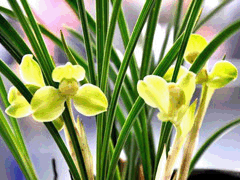 Since the early 1990s, a type of extraordinary flower with a markedly increased number of tepals, most of which have transformed into lips, has appeared in the large family of Chinese cymbidiums. Because its flower shape resembles that of a peony, people customarily call it the peony-type rare flower. Peony-type rare flowers occasionally appear inCymbidium goeringii, Cymbidium tortisepalum,Cymbidium tortisepalum var. longibracteatumand other orchids, and are very rare. By comparison,Cymbidium goeringiiproduces this flower type with somewhat greater frequency. Therefore, this article is devoted specifically toCymbidium goeringiipeony-type rareflowersand offers some immature views on related issues, in order to seek instruction from everyone.
1. Large flower size with more than 6 tepals transformed into lips, and an elegant and luxurious appearance, are the fundamental prerequisites for a Cymbidium goeringii peony-type rare flower to qualify.
The peony, honored with the reputation of "national beauty and heavenly fragrance," is renowned worldwide for its numerous tepals, large flower size, and elegant, luxurious appearance. An imposing and grand presence is the distinctive feature of peony-type rare flowers. Although Cymbidium goeringii peony-type rare flowers cannot compare with peony flowers in flower size, it is certain that they are more imposing than other petal-type flowers of Cymbidium goeringii; otherwise they could not be called peony-type rare flowers. To achieve this, the number of tepals transformed into lips must be significantly greater than in standard flowers. Specifically, the number of tepals transformed into lips must be more than 6, so that the elegant and luxurious bearing of a Cymbidium goeringii peony-type rare flower can be displayed. This view is my conclusion drawn from comprehensively examining the characteristics of peony-type rare Cymbidium goeringii flowers already discovered in various places, combined with traditional aesthetics and repeated observation and comparison, and it has gradually been accepted by more and moreorchidenthusiasts. Famous Cymbidium goeringii peony-type rare flowers meeting this standard mainly include: Shengshi Mudan, Tianpeng Mudan, Wumeng Mudan, and others.
2. A tall, upright flower scape standing gracefully, with lips arranged in an orderly, compact, and harmonious manner, is an important condition for a Cymbidium goeringii peony-type rare flower to rank among the best.
The leaves of Cymbidium goeringii are elegant in posture and moderate in length. Only when the flower scape rises high above the leaves or stands out above them can flowers and leaves complement each other and enhance its ornamental value. Therefore, orchid growers through the ages have taken the height of the flower scape as an important condition for judging the grade of Cymbidium goeringii. Under the premise that the petal type is roughly similar, the taller the flower scape, the higher the grade. This standard is especially important for the appreciation of Cymbidium goeringii peony-type rare flowers. Cymbidium goeringii peony-type rare flowers are distinguished by large flowers and many lips, and only when the flower scape rises high above the leaf surface can their true elegant and luxurious character be revealed. But this by no means says that the taller the flower scape and the more lips, the better; their grade also depends on whether the whole is harmonious. Harmony is beauty, and this is an important criterion of traditional aesthetics. To some extent, the beauty of an orchid lies in harmony. For petal-type orchids, whether they are beautiful depends on whether the center is harmonious and whether the sepals and petals are harmonious; for peony-type rare flowers, whether they are beautiful depends on whether the lips are orderly and coordinated and whether the sepals and petals are harmonious. Practice has proved that only peony-type rare flowers with tall flower scapes, many tepals but not chaotic, lips arranged in order, and overall harmony can bring people a sense of beauty and remain popular for a long time. In this respect, Cymbidium goeringii Shengshi Mudan and Tianpeng Mudan can be called classics.
3. Bright color and strong contrast are important standards for a Cymbidium goeringii peony-type rare flower to rank among the best.
The lip of a Chinese cymbidium is the most beautiful focal point of the flower, with a strong visual impact that brings out the finishing touch. This is even more true of peony-type rare flowers. Objectively speaking, the greatest highlight of a Cymbidium goeringii peony-type rare flower lies in its lip, and what most attracts the eye in the lip is its color. Under the premise that other conditions are roughly similar, the standard for measuring the grade of a peony-type rare flower is whether its lip color is bright and eye-catching. This mainly includes whether the background color of the lip is pure, whether the spots on the lip are vivid, and whether the overall color contrast of the lip is strong. Generally speaking, the purer the lip's background color, the more vivid the spots, and the stronger the color contrast, the stronger its ornamental value and the higher its grade; conversely, the poorer its ornamental value and the lower its grade.