What are the precautions for single-plant propagation of orchids (Cymbidium)?
Issues to note in single-plant propagation of orchids (Cymbidium)
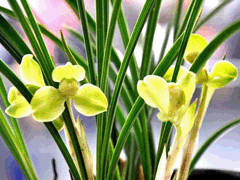 With the improvement of people's living standards, the ranks of orchid enthusiasts cultivating famous varieties of Cymbidium are growing day by day. Almost allorchid growershope their orchid babies will multiply and grow quickly, so some impatient orchid growers divide Cymbidium into single plants to speed up propagation and improve economic returns. This is quite normal and beyond reproach. However, single-plant cultivation of Cymbidium looks simple but is actually full of knowledge. It cannot be generalized; specific problems must be analyzed specifically, and one must not act rashly. Based on my own orchid-growing practice, I believe the following issues must be noted in single-plant propagation of Cymbidium.
1. The fundamental prerequisite for single-plant propagation of Cymbidium is strong seedlings with good roots
Orchidpropagation is divided into asexual and sexual types. Propagation using part of the vegetative body is called asexual propagation; propagation using seeds is called sexual propagation. Because sexual propagation is technically complex and requires advanced equipment and conditions, it is generally used only by research institutions when breeding new varieties. In the propagation of Chinese orchids in our country, the division method within asexual propagation has always been mostly used. The so-called division method refers to whenorchidpseudobulbs have multiplied to a certain point, cutting them apart with knives, scissors, or other tools, and then planting them separately in pots to become new plants. In China's orchid-growing circles, this method is called "dividing pots" or "dividing clumps." According to Chinese orchid-growing custom, each pot oforchidsmust have at least two shoots to grow normally.Cymbidium faberiBecause of its strong plant metabolism and small pseudobulbs, generally more than 3 shoots per pot are needed for vigorous growth. If there are too few orchid shoots in a pot, it is generally very difficult for the plants to grow quickly and healthily. But this does not mean Cymbidium cannot be propagated as single plants. It is just that single-plant propagation of Cymbidium has high requirements, and one must select the best of the best. The selection standard is strong seedlings with good roots. As the saying goes, "deep roots and lush leaves," and orchids are no exception. Orchidflowers'growth is mainly achieved by orchid roots absorbing soil nutrients and photosynthesis producing nutrients. Generally speaking, the more developed the orchid roots, the more sufficient the nutrients absorbed; the more robust the orchid plant, the more nutrients produced through photosynthesis: only when roots and leaves are strongly combined can orchids grow vigorously. Therefore, strong seedlings with good roots are the fundamental prerequisite for the success of single-plant propagation of Cymbidium. I have deep personal experience in this regard. Since 2002, I have successively conducted single-plant propagation experiments with Lao Shanghai Mei, Wuzi, Lao Ranzi, and Jiangnan Xin Jipin. Among them, Lao Shanghai Mei and Yuanzi both failed twice due to poor roots and weak seedlings; while Chengmei, Lao Ranzi, and Jiangnan Xin Jipin all succeeded due to good roots and strong seedlings.
2. For single-plant propagation of Cymbidium, it is best to choose plump front-growth shoots with a "horse road," which will significantly increase the chance of success.
Orchids are plants with pseudobulbs. When pseudobulbs have multiplied to a certain point, naturally wide gap zones appear between the pseudobulbs. This form is commonly called a "horse road" in orchid-growing circles. After a "horse road" forms, the pseudobulbs are easily separated naturally, and the root systems are also easy to divide, so this does not cause wounds or greatly reduces the wound surface, which helps the divided plants recover and grow quickly. Experienced orchid enthusiasts often choose shoots with a "horse road" for single-plant cultivation of Cymbidium, and this is the reason. Orchid pseudobulbs are organs for storing nutrients and water, and are also tissues that produce leaf buds and flower buds. Practice has proved that under the same orchid-growing conditions, orchid plants with plump pseudobulbs are more likely to sprout, and the stronger the front-growth shoot, the higher the sprouting rate. It can be seen that for single-plant propagation of Cymbidium, choosing plump front-growth shoots with a "horse road" is very necessary and can greatly increase the success rate.
3. Single-plant propagation of Cymbidium should be carried out at the appropriate time, preferably in autumn and spring, with autumn being best.
Experience shows that single-plant propagation of Cymbidium can generally be carried out except during severe cold and intense heat, but the most suitable seasons are late autumn (October to mid-November) and mid-spring (mid-March to April). Every year from "Qingming" to "Guyu," temperatures gradually rise, spring is warm and flowers bloom, child buds have not yet sprouted, and new roots have not yet grown; from "Qiufen" to "Lidong," young buds emerge, new roots have formed, and orchid plants become stronger. During these two periods, single-planted Cymbidium is relatively easier to restore growth, and there is not much impact on orchids after division. Purely from the perspective of Cymbidium growth, orchid plants planted singly in autumn go through a winter of acclimating and accumulating, and can smoothly enter the growth period the following Spring Festival, which is somewhat better than planting singly in spring and then growing after acclimating. Overall, for single-plant propagation of Cymbidium, autumn division is best.
4. Preparations for single-plant propagation of Cymbidium should be thorough, and daily management should be attentive.
On the surface, single-plant propagation of Cymbidium seems very simple, but due to orchids' physiological habits and seasonal restrictions, as well as technical handling, it is still relatively complex and not easy to master at once. Therefore, preliminary preparations must be thorough, and daily management must be attentive. Specifically, before division, watering should be reduced to let the soil in the pot become slightly drier, in order to prevent wet mud from sticking to the root system during division and injuring orchid roots when separating single plants. After separation, regardless of wound size, it is best to apply special orchid disinfectant powder to the wound to prevent infection. After division, orchid roots will inevitably be damaged to a greater or lesser extent, so the singly planted potted orchids need to be placed in a ventilated and shaded place to reduce evaporation of water from the leaf surface and within the plant. Within half a month after potting, the soil must absolutely not be too wet, otherwise it can easily cause root rot; it is best for the soil to be moist but not muddy. After the potted orchids have acclimated, bring them into daily management. During daily management, light should be appropriately increased. Especially in winter and spring, potted orchids can safely receive full sunlight to encourage the sprouting of strong buds. During the growing season, fertilizer should be applied lightly and frequently. Absolutely do not seek quick results with excessive fertilizer and water, otherwise it will be counterproductive; haste makes waste.
In short, because single-plant cultivation of Cymbidium has very high requirements for the quality of orchid plants, division techniques, and daily management, novice orchid growers must absolutely not attempt it, and experienced orchid growers should also proceed cautiously: it must never be treated carelessly.