How to Tell Whether an Orchid Plant Is Strong or Weak? Teaching You to Judge the Strength of Orchid Seedlings
How to Tell Whether an Orchid Plant Is Strong or Weak
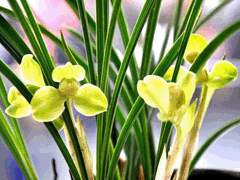 Recently, a fellow orchid grower asked how to distinguishChinese Cymbidium (Cymbidium goeringii)the strength or weakness of the traditional famous cultivar Luyun, and since this question involves many aspects, I am writing this article as a discussion.
Orchid plants' strength or weakness is crucial to theorchid'slater growth. Strong plants not only produce more shoots, but most of them are large plants with strong disease resistance, not easily infected, and easy to bloom; while weak plants need time to regain vigor, some even taking several years, and also require careful attention in daily care. Therefore, when buyingorchids, people should always choose strong plants, and it is quite normal that the price difference between strong and weak plants on the market is relatively large.
So how exactly do we judge whether an orchid plant is strong or weak? Based on theorchid'sgrowth patterns, the experience summarized by predecessors, and ourorchid-growingpractice, we can judge from theorchid'sappearance, namely the three parts: roots, pseudobulbs and leaves. Theorchid'sroots not only serve to anchor the orchid plant, they also absorb nutrients and water from thegrowingmedium, so intact orchid roots are a precondition for healthy orchid growth; generally orchids have fairly obvious pseudobulbs (except for a few species whose pseudobulbs are not obvious, such asCymbidium faberiand Chun Jian), which are the place where the substances needed for orchid growth are stored. Larger pseudobulbs store relatively more substances, so the size of an orchid's pseudobulb directly relates to the strength or weakness of the orchid plant; orchid leaves normally carry out photosynthesis and have respiration and transpiration capacity, being the carrier of the orchid plant's physiological activities, so the state of the orchid leaves is the ultimate reflection of the orchid plant's strength or weakness.
Orchids are planted in pots, and both the roots and pseudobulbs are buried in the potting medium, so we cannot casually turn them over to inspect the growth state of the roots and pseudobulbs. Therefore, in daily management or when buying orchids, we can only judge their strength or weakness from the growth state of the orchid leaves. Generally speaking, we can observe and judge through four aspects: orchid leaf length, orchid leaf width, orchid leaf number and orchid leaf base.
One, judging from leaf length.
The leaf length of orchids differs depending on the species and cultivar; some species and cultivars can reach over 70 cm, while others are only about 10 cm. According to the growth patterns of orchids, for a specific orchid cultivar, the length of its mature leaves always falls within a certain range, so we can judge the strength or weakness of this orchid based on the length of its leaves. That is, the closer to or beyond the upper limit of this range, the more fully the orchid plant has grown and the stronger the orchid appears; conversely, the closer to or below the lower limit of this range, the weaker the orchid is. For example, taking the traditional famous Chinese Cymbidium cultivar Luyun, its leaf length is generally between 15 and 20 cm; the closer to or beyond 20 cm, the stronger this Luyun is; the closer to or below 15 cm, of course, the weaker it is.
From the above, when selecting or cultivating a certain orchid, we should understand the leaf length range of that orchid species as a basis for judging its strength or weakness. However, the leaf length of an orchid plant will differ with different growing environments and management methods. For example, leaves of orchids grown wet and in shade will be longer than those grown dry and in sun, and those given more nitrogen fertilizer will have longer leaves than those given more phosphorus fertilizer, yet the former is not stronger than the latter. At the same time, it should be noted that at present quite a few people, for various purposes, apply certain hormone drugs in orchid cultivation, causing abnormal leaf length in orchids; such orchids will bring certain difficulties in later cultivation and management, and we must use them with caution and distinguish them.
Therefore, when judging the strength or weakness of an orchid plant by its leaves, we should also pay attention to identifying the growing environment and management methods of that orchid, and especially distinguish those to which hormone drugs have been applied. If it cannot be identified, then we can judge in combination with the leaf width of the orchid plant.
Two, judging from leaf width.
Just like orchid leaf length, orchid leaf width also differs with different orchid species and cultivars; the wide ones can reach over 2 cm, such asCymbidium sinenseor certain cultivars ofCymbidium ensifolium、and Cymbidium kanran, and the narrow ones are only 0.5 cm, such as thread-leaf Chinese Cymbidium,Cymbidium tortisepalumor certain cultivars of Chinese Cymbidium. For a specific orchid cultivar, its leaf width also always falls within a certain range, and usually the outer leaves are always wider than the inner leaves. We know that the main function of plant leaves is to carry out photosynthesis; the relatively wider the leaves of a certain orchid cultivar, the larger the leaf surface area, the stronger the photosynthetic capacity, the stronger its physiological activity, and naturally the stronger its growth. For example, the above-mentioned famous Chinese Cymbidium cultivar Luyun has a leaf width generally between 0.6 and 1 cm; if the width is closer to or even beyond 1 cm, it shows that this Luyun is stronger, and otherwise it is weaker.
Therefore, orchid leaf width should be one of the important criteria for us to select and judge the strength or weakness of the orchid. When selecting or planting a certain orchid cultivar, we should first understand what the leaf width range of that orchid is, so as to effectively judge the strength or weakness of this orchid. If we cannot learn the leaf width of the orchid we want to buy or are cultivating, and it is difficult to use this method to judge its strength or weakness, then we can also judge in combination with the number of leaves per shoot of the orchid plant.
Three, judging from leaf number.
The leaf number here specifically refers to the number of leaves per shoot of the orchid, which is also limited by the orchid species and cultivar, that is, different orchid species and cultivars have different ranges of leaf number per shoot; some orchids have a dozen or so leaves, while others have only three or four. In cultivation practice we can see that for most orchid species the leaf number is already formed at the stage when the orchid bud emerges from the soil, and only a few orchid species such as Songchun and Cymbidium faberi will continue to put out new leaves in later growth. Generally speaking, the leaf number of an orchid is innate, determined by the strength or weakness of the previous generation of the plant, that is, the stronger the previous generation of the plant, the more leaves the new plant it produces will have, thus providing a basis for us to judge the strength or weakness of the orchid: the more leaves per shoot of the orchid, the stronger the orchid, and otherwise the weaker. Still taking Luyun as an example, it generally has 4 to 6 leaves, and of course the one with 6 leaves is stronger than the one with 4 leaves.
However, precisely because the leaf number of an orchid is innate, when selecting or cultivating we should also pay attention to the acquired growth of the orchid, that is, the growth of the new plant. Sometimes although the new plant has relatively many leaves, because later management did not keep up, the width and length of the leaves it produces are both inferior to those of the old plant; sometimes the new plant has few leaves, but because acquired management of water, fertilizer and light is in place, the width and length of the leaves it produces both exceed those of the old plant. It goes without saying that the latter is stronger than the former.
Therefore, when judging the strength or weakness of an orchid by the number of its leaves, besides understanding the range of leaf number of that orchid, we must also consider its acquired management, that is, consider it together with other conditions of the new plant. Besides the above methods, we can also judge the strength or weakness of the orchid from the growth state of the leaf base.
Four, judging from the leaf base.
From the structure of the orchid we know that its leaves grow in bundles alternately at the top of the pseudobulb, arranged in a single line, with sheath leaves, namely the shell, protecting them at the base. From the growth process of the orchid we can also observe that generally at the seedling stage of the new plant its shell tightly embraces, and the leaf bases are rather tightly arranged; after maturity the shell begins to separate to both sides, and the leaf base also begins to loosen. If at this time we tip out the surface potting soil, we can see that the pseudobulb of the new plant buried in the medium has already begun to swell, while the base of a weak seedling or small plant does not loosen and separate for a long time. From this, judging the strength or weakness of the orchid through the growth state of the leaf base is very effective. Specifically, if it is at the bud stage or seedling stage of the new plant, we require its base to be broad and thick, showing that the innate nutrient accumulation is relatively good, and it generally produces large plants with many leaves; if it is an old plant or a mature new plant, we should see whether its leaf base has separated widely enough; the wider the separation, the larger its pseudobulb, and the stronger the orchid.
Judging the strength or weakness of an orchid by the above methods is relatively easy, intuitive and effective, but there are still some situations that need to be distinguished. Some orchid species have a relatively low shell, and the leaf base of the new plant begins to separate relatively early; for example, for the traditional famous Chinese Cymbidium cultivar Luyun, not long after its new bud emerges from the soil and opens, its shell begins to separate to both sides, and the leaf base is also rather loose. This does not mean that its pseudobulb has already begun to swell, but we can still judge its strength or weakness from whether its base is broad and thick. In addition, we should also pay attention to distinguishing the difference in leaf base between broad-leaf species and fine-leaf species; broad-leaf species naturally have relatively broad and large leaf bases, while fine-leaf species have relatively narrow bases.
In summary, when selecting or cultivating orchids we should pay attention to observing the growth state of the orchid's leaf base, and from its state we can generally judge the strength or weakness of the orchid. If we further combine the aspects of orchid leaf length, orchid leaf width and orchid leaf number, then we can accurately judge whether this orchid is strong.