An Analysis of the Compatibility Characteristics of Chinese Orchid Appreciation
The Compatibility of Chinese Orchid Appreciation
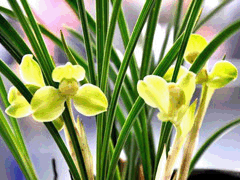 Orchids--this outstanding flower among the great family of Chinese flowers, has been loved and valued by people for thousands of years.OrchidsThe petal-type theory isin orchidappreciation, the ultimate pursuit of materializing the traditional Confucian outlook on life's values, in line with the meaning of "the Doctrine of the Mean" in Chinese Confucianism. Its pursuit points toward the ultimate pursuit of Confucianism -- the materialization of the noble character and sentiment of "outwardly a king, inwardly a sage." People take the petal type of orchidsflowers'"full and rich, round and complete, embracing, and closing into roundness" as the idea of "the Doctrine of the Mean." Its purpose lies in using "material forms" to express "aspirations," pursuing the "full and rich, round and complete, embracing, and closing into roundness" of orchid flower forms -- that is, the materialized expression of life's ultimate pursuit of "outwardly a king, inwardly a sage."
So, what is "the Doctrine of the Mean," that is, the meaning of "central harmony"?
According to the (excerpt) from The Doctrine of the Mean, the original text reads: "...When joy, anger, sorrow, and pleasure have not yet been expressed, this is called 'the center'; when expressed and all in due measure, this is called 'harmony.' The center is the great root of the world; harmony is the universal path of the world. When central harmony is achieved, heaven and earth take their places, and all things are nurtured." Translated into modern language, it means: "When joy, anger, sorrow, and pleasure have not yet been expressed, it is called 'the center'; when expressed and in accordance with due measure, it is called 'harmony.' 'The center' is the nature everyone possesses; 'harmony' is the principle everyone must follow. When the state of 'central harmony' is reached, heaven and earth each take their place, and all things grow and multiply." As one of the important categories of Confucianism, "the Doctrine of the Mean" has always been understood in various ways. This article approaches it from the angle of emotion and gives a positive explanation of "the center" and "harmony." According to the meaning of the original text, when a person has not yet expressed emotions of joy, anger, sorrow, and pleasure, the mind is calm and tranquil, so it is called "the center." But joy, anger, sorrow, and pleasure are possessed by everyone and are unavoidable; they are bound to be expressed. When expressed in accordance with common sense and with due measure, this is called "harmony." When the two are coordinated and harmonious, this is called "central harmony." When everyone reaches the state of "central harmony," people are calm and peaceful, social order is orderly, and the world is peaceful and free of trouble. Humans and nature can then coexist harmoniously, live and multiply. "Central harmony" here in fact already contains the meaning of "harmonious coexistence" between humans and nature. Every Chinese person who follows Confucian moral norms, whether an emperor, an official, or a rustic villager, is consciously or unconsciously a practitioner of the moral norms of "central harmony." As a kind of ultimate attainment in the appreciation of orthodox orchid flowers, the orchid petal-type theory, which treats the formal beauty of orchid petal types as a personified transformation, is undoubtedly reasonable. In our appreciation of Chinese orchid petal-type flowers, we should inherit and carry it forward; this is the noble embodiment of traditional Chinese culture in the appreciation of playthings. But it is only a traditional view of appreciation, belonging to the "category of traditional aesthetics."
As for the appreciation of other flower types, leaf types, and leaf arts among Chinese orchids, other views of appreciation are needed. If we say this: "People's stagnation in the appreciation of Chinese orchids is a manifestation of civilizational stagnation in Chinese orchid appreciation. Its subjective factor is the conservatism with which people cling to the orchid petal-type theory; its objective factor is that people cling to tradition yet have failed to fully interpret the connotations contained in the direction indicated by Confucianism. However, all things are developmental. People went from the initial pursuit of orchid fragrance to the standardization of its color and form, passing through a long stage. Confucianism influences Chinese people's outlook on life and value orientation. Through microscopic appreciation of orchids, a 'orchid petal-type theory' consistent with Confucian aesthetics gradually formed. To a certain extent, this is a kind of definition and standardization of orchid appreciation, guiding a value orientation. This orientation is not compatible.
Orchids have become a plaything, that is, a commodity, and a commodity inevitably has its value. Especially when the commodity is insufficient to supply the market, yet there are many seekers, it inevitably leads to high prices. People's dedication and reluctance to let go in pursuing the value of orchids always make them want to possess some new, strange, and unusual orchid varieties (while satisfying their vanity of exclusively possessing a variety) and at the same time be able to exchange them for enormous economic benefits. Under the action of these factors, people's view of orchid appreciation has become completely misplaced. Using a blurred view of appreciation to guide oneself into the field of orchid appreciation is much more difficult than entering other fields of art appreciation. And in the orchid petal-type theory, is the "lotus" in the core "lotus (harmony) is precious," which people fervently pursue, really the "harmony" of "central harmony," the essence of Chinese Confucian culture? If explained according to the original meaning of "central harmony," we already know that in a broad sense, apart from multi-petal and few-petal strange flowers, which do not conform to the meaning of "central harmony" (the Doctrine of the Mean), all other orchid forms conforming to normal orchid flower types are in line with the implication of "central harmony" (the Doctrine of the Mean). They all display the complete basic orchid flower-type characteristics of six petals and one nose, belonging to the neither biased nor strange, which is called "central harmony" (the Doctrine of the Mean). If understood in a narrow sense, then the so-called "central harmony" (the Doctrine of the Mean) in the traditional "orchid petal-type theory" refers to those "plum, immortal, and lotus" flowers with upright flower quality, neither turning nor twisting, which alone can meet this standard. Still according to the original text (excerpt) from The Doctrine of the Mean, the original text reads: "The Master said: I know why the way is not practiced. The wise go beyond it; the foolish fall short of it. I know why the way is not made clear. The worthy go beyond it; the unworthy fall short of it. People all eat and drink, yet few can know the flavor." Translated into modern language, it means: "Confucius said: 'I know the reason why the way of the Doctrine of the Mean cannot be practiced; clever people think themselves right and go too far in understanding; stupid people lack the intelligence and cannot understand it. I know the reason why the way of the Doctrine of the Mean cannot be promoted; worthy people go too far, and unworthy people cannot achieve it at all. It is just like how people must eat and drink every day, yet few can savor the flavor.'" Here it can be seen that petal-type flowers are a kind of formal beauty, a manifestation of Confucian scholars transforming their ultimate pursuit of life into the pursuit of orchid flower forms. In fact, this has in essence already violated the original intent of the essence of Confucianism and is far from the meaning of "the Doctrine of the Mean" in Confucianism. The doctrine of "the Doctrine of the Mean" in Confucianism advocates that people in doing things and conducting themselves should follow a natural rule (that is, the question of degree). If one does not follow this rule, that is falling short; if one follows it dogmatically and blindly, that is going too far. Applied to orchid appreciation, a tiny orchid in the mountains is no different from wild grass. The reason it attracts people is its unique delicate fragrance, not its flower form. People's persistent pursuit of orchid petal types is, relative to people'sorchid growingoriginal intention in growingorchidsflowers, an act of going beyond the "degree." Growing orchids in this way not only fails to achieve the purpose of cultivating moral character and tempering temperament, but also brings endless troubles to oneself. One likes orchids and finally manages to grow them to bloom, yet dares not let the flowers open normally; before the flowers have fully opened, one hurriedly cuts them off and puts them in a water bottle to smell the fragrance -- this is falling short. Neither is the way of "the Doctrine of the Mean." In orchid appreciation, in addition to truly understanding and grasping the appreciation view of the traditional "orchid petal-type theory," we should also take the modern appreciation view as our direction and expand the aesthetic orientation of self-expression through human liberation. While carrying forward the "restrained, modest, magnanimous, and dignified" qualities praised by the traditional appreciation view, we should also accept those open flower types that are "passionate and unrestrained, soaring and heroic, and uniquely distinctive."
The traditional orchid appreciation view requires that orchid forms, like people, should not be ostentatious or domineering, but should be modest and restrained. This restricts the diversified development of aesthetics in appreciation, making the aesthetic orientation tend toward uniformity. Orchids also have diverse traits like people: there are flower types that are implicit, restrained, modest, and magnanimous; and there are also flower types that are passionate, unrestrained, and spirited. While accepting the dignified beauty of modesty, restraint, propriety, and magnanimity in the traditional aesthetic view, we should also accept the individual self-expression of Western passion, unrestraint, and soaring heroism. This Western aesthetic value pursues the liberation of individuality, bringing people warmth and sunshine, a kind of unrestrained heroic feeling, vividly embodied by a person or certain things. Reflected in the expression of orchid flower types, it is: butterfly flowers represent charm and romance, bringing people into a dreamlike and illusory realm; multi-petal flowers, mimicry flowers, and curled flowers represent the display of individuality, emphasizing one's difference from others and fully expressing oneself; colored flowers represent nobility and unrestraint, (white flowers show a cold and aloof pride; red flowers show passion and sunshine; yellow flowers show nobility, peace, and self-restraint; compound and mixed-color flowers show auspiciousness and harmony.) People cannot always indulge in self-admiration of their own solitary beauty; they should integrate into society and accept and embrace more beautiful things, including accepting and embracing extremely ostentatious and contrary things. In the appreciation of orchids, this should be even more so.
Modern people's values have great compatibility with both traditional Chinese aesthetics and modern Western aesthetics. In the pursuit of beauty, they will not be limited to a single aesthetic view; people need to greatly expand their aesthetic horizons and accept all beautiful things. Otherwise, people will lose many experiences of beauty.
No. 30 Wenchang Road, Hengtai New Village, Shaowu City, Fujian Province
Yang Yonghua