What Is Vernalization? Let's Talk About Vernalization in Crops
Vernalization, Just Because
 Vernalization, understood as a piece of general botanical knowledge; vernalization (vernalization), the effect of low temperature on overwintering plants'floweringinduction and promotion. Winter annual herbaceous plants (such as winter wheat) generally germinate in autumn, go through a period of vegetative growth, survive the cold winter, and then flower and set seed in early summer of the following year. If sown in spring, they only grow stems and leaves without flowering, or flowering is greatly delayed. This is because winter-type plants need to experience a certain period of low temperature before they can form flower buds. If the sprouted seeds of winter crops are treated with low temperature for a certain period, they can also flower and set seed normally when sown in spring. This is where the term vernalization comes from. Winter cereal crops (such as winter wheat), biennial crops (such as sugar beet, radish, napa cabbage) and certain perennial herbaceous plants (such as forage grasses) all show the phenomenon of vernalization, which is thefloweringbasic reason they must wait until the following year before they can flower. So, from this understanding, some flowers can only promote flower bud formation and floral organ development through low temperature, and this process is called the vernalization stage. The low-temperature stimulation and treatment process that enables flowers to pass through the vernalization stage is called vernalization.
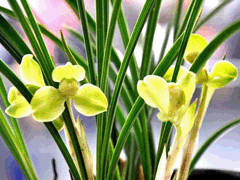
Mostorchid growersprobably believe that spring orchids andCymbidium faberican only bloom well, with their flower form fully expressed, after vernalization. Vernalization is indispensable for spring orchids and Cymbidium faberi. Hence the saying that in the south, especially in Guangdong, Yunnan, Fujian and other places, the flower form of spring orchids andCymbidium faberiis not as good as that in Jiangsu, Zhejiang and other northern regions. It is even said that spring orchids andCymbidium fabericannot bloom in southern regions. However, judging from the photos oforchidflower forms posted online and in real life by many southern orchid growers, the flower form of some spring orchids and Cymbidium faberi in southern regions is not necessarily worse than that in Jiangsu, Zhejiang and other northern regions. So, in regions that can be said to have no vernalization, why can orchids and Cymbidium faberi bloom with such good flower form? Therefore, I personally believe that vernalization is a certain condition for promoting flowering inorchids, but not necessarily the only necessary condition for spring orchids and Cymbidium faberi to bloom.
Let's start from the native habitats of our orchids. In July-August, that is, before low temperatures arrive, spring orchids and Cymbidium faberi are in a period of vigorous growth. At this time, flower buds gradually emerge from the soil and slowly grow larger. If so, can we say that spring orchids and Cymbidium faberi produce flower buds without going through low-temperature vernalization? Then, if we say flower buds are produced by going through the vernalization stage, is that not somewhat different from our earlier understanding of vernalization in the botanical encyclopedia, because spring orchids and Cymbidium faberi produce flower buds without going through the low-temperature vernalization period? If we must say there is one, then it can only be the low-temperature vernalization stage of last year.
After spring orchids and Cymbidium faberi with flower buds enter the low-temperature period, their growth gradually slows down because of the air temperature. After entering what we call the vernalization stage, because they are not growing, they have in fact entered a semi-dormant period, so the substances in their flower buds can accumulate (for example, certain essential nutrients for orchid flowering), and it is very likely also involves an increase in the content of hormones such as gibberellin (facts also prove that gibberellin can make spring orchids and Cymbidium faberi bloom normally without low-temperature induction). Ultimately, the flower buds acquire the material basis for sending up scapes and blooming. When the air temperature rises again, the external temperature signal, through the plant body's signal transmission system, enables the plant body to complete the final series of physiological and biochemical reactions before flowering, and the flower buds finally complete the process of sending up scapes and blooming.
So, the vernalization we talked about before is that spring orchids and Cymbidium faberi enter low temperature, which slows orchid growth so that they enter a dormant state, and the flower buds enter a period of nutrient accumulation, laying the foundation for blooming after the temperature rises. Then can we think this way: as long as some method is used to give spring orchids and Cymbidium faberi a semi-dormant period before flowering, restricting their growth to a certain extent, so that the flower buds have a certain amount of time to accumulate the nutrients needed for flowering, or as long as spring orchids and Cymbidium faberi are given certain drugs that can stop orchid growth and release the nutrients needed for flower buds to bloom, then without vernalization, orchids and Cymbidium faberi can also bloom normally.
I remember that Mr. A-Miao from Taiwan, China once applied management techniques for spring orchids and Cymbidium faberi, using water control and reduced relative humidity to forceCymbidium goeringiigrowth into a semi-dormant state, so thatCymbidium goeringiibloomed in Taiwan, China without low temperature. I have also heard that some orchid growers use gibberellin to make spring orchids and Cymbidium faberi bloom normally without low-temperature conditions. Therefore, only when we truly understand the concept that low temperature promotes flowering in spring orchids and Cymbidium faberi can we possibly try some new management methods to meet the needs of orchid flower form in regions without low temperature. Of course, we cannot simply assume that without low temperature, a method that can replace low-temperature flowering promotion will definitely be found.
I personally believe that, in reality, under different and identical seedling conditions, whether vernalization has been carried out or not, and whether other treatments have been carried out or not, the flower form of spring orchids and Cymbidium faberi will still vary. Because the specific circumstances of each orchid grower are different, besides finding the key to orchid vernalization, improving our own cultivation level, and further exploring and perfecting new management methods, only in this way can spring orchids and Cymbidium faberi bloom with the best flower form in different regions.
This is only my personal opinion, but my study and reading are not refined, so I am just talking nonsense. If it misleads beginners, please do not take offense.