Sharing My Experience and Insights on Growing Orchids on a Balcony
Reflections on Growing Orchids on a Balcony
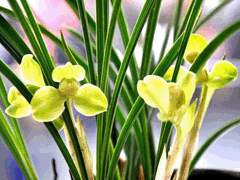 Balconyorchid growinghas become commonplace in real life. With the rapid development of the economy, the gradual improvement of home conditions, and the general rise in quality of life, orchid culture surges like a spring tide and has seemingly entered the leisure life of urban dwellers. Discussing and praising orchids over dinner tables and in tea rooms has become a trend, and the fragrance of orchids can be sensed in studies and halls. However,balconyorchid growing, how to grow orchids well, is an urgent yet difficult practical problem that orchid lovers care about.
I have been growing orchids on a balcony for 7 years. Over these years, I can say that I have drawn relatively profound experience from painful failures and lessons. When I first started growing orchids, three common misconceptions generally existed:
1. The issue of understanding potting medium. I could never break away from the traditional use of soil for cultivation, believing that orchids prefer fertile soil. Whether they were wild-collected plants or established plants, I used the same substrate to grow them, and kept adding fertilizer to supply nutrients, trying to help the seedlings grow by pulling them upward. Little did I know that wild-collected plants and newly pottedorchid plantsare not suitable for fertilizing. This easily causes southern blight and root rot, and the result is that rare original species collected from the wild die in one's hands time and again, new shoots rot at the core, and in serious cases large areas of roots rot until the entire pot dies.
2. The issue of understanding light: when first growing orchids, it is very difficult to grasp how much light orchids like and how to shade them properly. Some believe thatCymbidium faberilikes sun, so they place it on the balcony and let it be exposed to full sun, resulting in yellow, withered orchid leaves covered with black spots; while others believe thatCymbidium goeringiilikes shade, so they do not dare to put it on the balcony to grow and keep it indoors for a long time, lacking the nourishment of rain and dew and ventilation, which affects its healthy growth.
3. The issue of understanding misting and watering: when first growing orchids, watering is the most difficult part of orchid care. Indeed, "to succeed in growing orchids, watering takes at least three years of skill." But it is often neglected. Sadly, when first growing orchids, no one fully recognizes its importance, and everyone follows the guidance of "famous books": "once in the morning and once in the evening in summer, once every three days in autumn, and so on," mechanically and rigidly copying and applying it without making distinctions and flexible adjustments according to one's own orchid-growing environment, the orchids' growth conditions, light, ventilation, potting medium, and so on. The result can be imagined.
Now I will discuss with orchid friends the relatively successful growing methods I have achieved in balcony orchid growing over the past few years, which may offer some inspiration or reference for friends who are just starting to grow orchids.
I use the north balcony on the fifth floor as my orchid-growing site and enclose it with aluminum alloy and glass to form a high-grade small greenhouse. On the east and west sides, I install two exhaust fans, and on the top I install a small ceiling fan, mainly to keep the air fresh and ventilated, and also to promptly blow the leaf surfaces dry when misting or applying pesticides, avoiding black spots on the leaves. At the same time, I use stainless steel to make multi-bar adjustable supports according to the size of the orchid pots, growing the orchid plants suspended in the air, at a height of about 70 cm. To increase the humidity in the orchid room, under the supports I place five large plastic buckets of the kind sold on the market for fish, fill them with water, and put an aquarium oxygen pump in them running 24 hours a day to increase the movement of water vapor and the penetrating power of humidity. In this way, the humidity can reach about 70%, basically meeting the requirements of orchid plants. The problem of tip burn in Cymbidium faberi is also solved. For the potting medium, I use Orchiata in large, medium, and small grades, plus one fifth pine bark. At the bottom of the pot I place a breathable cover, then fill layer by layer according to large, medium, and small. For some varieties that are more prone to root rot, I add a little charcoal in the middle to play a sterilizing role. When growing Cymbidium faberi andCymbidium sinense, the small-grade Orchiata is not used. Fertilization is mainly foliar fertilizer. In early spring, I use Taiwan-produced B1, Sichuan-produced Lanjunwang, and monopotassium phosphate. This not only provides a kind of nutritional supplement to orchid plants after flowering, but also promotes shoot and bud differentiation and produces more shoots. Starting in April, once a week I spray a multi-element foliar fertilizer, such as Australia-produced Xishuo, Japan-produced Zhiquan, and America-produced Shida and CugenSheng. These are all relatively ideal and safe foliar fertilizers. As long as one grasps the principle of "light fertilizer applied frequently," they will not cause any phytotoxicity, and they have good effects on rooting, strengthening stems, promoting buds, increasing leaf thickness, and inhibiting viruses. The orchid plants grow emerald green and robust. From early summer to late autumn, once a month I spray carbendazim, and alternate it with thiophanate and chlorothalonil. During the plum rain season, I spray scale insect control once or twice. This is an indispensable part of preventingpests and diseases.
With the continuous progress of orchid-growing techniques, my interest in growing orchids and confidence in investing in orchids have greatly increased. In recent years, I have introduced famous orchids such as Wanzi, Luyun, Daxuesu, Chengmei, Laoranzhi, as well as many excellent wild-collected new varieties such as Hongsu, plum blossom type, lotus type, tree-shaped exotic flowers, lotus butterfly, colored flowers, and many other top-grade varieties, all of which have taken root, bloomed, sprouted, and grown vigorously on the balcony, lovely and delightful.
Since 2000, an air conditioner and a fully automatic plasma ultrasonic atomizer have been added to the orchid room. This atomizer was designed and developed by orchid friends in Linhai City. It atomizes completely, with no droplet form. Now the orchid room basically achieves automatic light supply, temperature supply, humidity supply, and ventilation, effectively avoiding external interference and pests and diseases. The effect is very good. Although the cost is rather high, the orchid plants have very strong growth vigor. The shoot production rate of Cymbidium goeringii reaches 90%, and that of Cymbidium faberi,Cymbidium tortisepalumand other orchids reaches more than 100%. The return is substantial, and with a one-time investment, one can avoid years of daily trouble and benefit over the long term.
It is worth mentioning that the book compiled by Mr. Xu Dongsheng, "OrchidAppreciation and Cultivation 600 Questions," is indeed my guide and good teacher and helpful friend in growing orchids, and is an indispensable reference book for orchid growing. Mr. Ding Yongkang's "Three Hundred Questions on Orchid Cultivation" enriched and broadened my orchid knowledge. I suggest that friends just starting to grow orchids seriously absorb and study their spiritual essence, and I believe they will benefit greatly.