Analysis of the Causes of Orchid Leaf Tip Burn and Discussion of Countermeasures
Discussion on Orchid Leaf Tip Burn
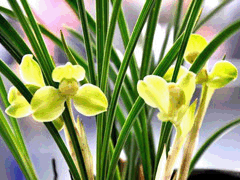 Orchid leaf tip burn affects the ornamental value. I believe every orchid grower has more or less encountered leaf tip burn on orchids. Regarding the phenomenon of orchid leaf tip burn, orchid books generally cite two causes: first, physical disorders such as excessive nitrogen fertilizer, heavy pesticide application, overly strong light, inadequate frost protection, dry air and external force damage; second, physiological damage caused by viruses, pathogens and pests, such as infection by rust disease, brown rust disease, tip blight, root rot, phytophthora disease and so on. Inorchid growingthe process, through observation it can be found that: in the same orchid room under identical conditions groworchids, some have severe tip burn and leaf burn, while some orchid plants and leaves do not suffer tip burn. There are also someorchid plantsthat have never experienced tip burn since being collected from the wild. Even diseased plants with the chronic ailment of tip burn, if not infected by disease, require three to five years of growing into strong plants before improving. It can be seen that thoseorchidswithout tip burn all have well-developed root systems, abundant leaves and lush roots, and possess strong vitality and vigor asorchids, whether kept indoors or outdoors, whether grown through the unbearably hot summer or the bitterly cold winter, they will not suffer tip burn. Therefore, the conclusion is: to prevent orchid leaves from tip burn, one must improve the quality of theorchidflowers and select good wild-collected orchids. Good flowers produce good seedlings, and with careful cultivation one will obtain strong, large plants free of tip burn. Of course, creating a cultivation environment suited to orchid growth conditions, careful tending, accurately identifying the cause of tip burn, and through comprehensive prevention and control, will also keep orchids ever beautiful and enable some weak plants with tip burn symptoms to improve and be cured. In the off-season for orchids before autumn, I write a few words to "cast a brick to attract jade." I hope orchid friends with research and experience on orchid leaf tip burn, withering and disease will help push this forward. Let us all analyze the causes and seek countermeasures, so that the orchids grown by friends of the Siming Orchid Network become stronger and more beautiful! 1. Entire pot oforchid plantsshows tip burn and leaf burn on both old plants and new shoots: this situation is mostly "wet burn," beginning with the leaf tips turning yellow and chlorophyll decreasing, then turning black and developing spots, gradually spreading to the whole leaf and whole plant, and the foot sheaths near the pseudobulbs of new plants also begin to turn black, with the leaf stems becoming weak. Finally everything withers and burns (when short of water, it dries yellow and withers; when watered heavily, it rots black and withers). When encountering this situation, regardless of severe winter, scorching summer, plum rain season or autumn drought, immediately unpot! After the potting medium and flower pot have been disinfected for more than half an hour (potassium permanganate 1:3000), place them in the sun to bake.Orchid plantsare best discarded; if it is a fine-flowered named variety, then after trimming leaves (tear off completely burned orchid leaves, trim tip-burned orchid leaves into rounded heads) and trimming roots (cut off all dead roots, broken roots and rotten roots at the base, also cut off rotten pseudobulbs, retain firm pseudobulbs without leaves), after disinfection and drying, wrap the orchid leaves with a towel so that the orchid roots are exposed to the sun for half an hour. Finally, repot with a new pot and new potting medium (granular medium, mixed medium, do not use orchid mud). Absolutely keep it in a cool, ventilated place with plain care (fertilizing will surely kill it). After one or two months of plain care, once new leaves grow out without tip burn, it can be placed on the shelf for maintenance, but still insist on plain care for the first year. Although this kind of "rescue" can "bring the dying back to life," it is not easy to see flowers within three to five years. So it is only effective for fine-flowered named varieties; for ordinary flowering varieties, one can only reluctantly part with them and give up early, to avoid infecting other orchids. 2. The third-generation new shoots are thick and strong, and the second-generation mature plants are also normal (only the color is somewhat dark green). Only the first generation or earlier generations show tip burn: because only a few leaves have dry tip burn, the possibility of viral or bacterial infection can be completely ruled out. This phenomenon is mostly caused by improper care. If the light is too strong, the leaf tips burn and the color resembles dried bamboo leaves fallen on the ground; the amount of watering does not affect the color of the tip burn. This type of "tip burn" need not be treated; simply move the orchid to a place without strong direct sunlight. After returning to normal, the burned tip parts shrink and dry out completely, and can be trimmed off, or left untreated to dry completely and fall off naturally. (A fall into a pit, a gain in your wit; just pay more attention in the future. Tip burn always affects the ornamental value.) 3. Problems appear on the edge leaves of orchid plants, first turning somewhat yellow, then green decreasing and yellow increasing with a few fine dense black spots appearing. Finally they gradually wither and burn, breaking with a light snap (when watered heavily, they wither black and are tough, not easily broken): this is the "inevitable path" of orchid plants, a normal manifestation of metabolism, especially obvious on wild-collected orchids. As long as care is proper, the aging of orchid plants can be slowed, but the natural decline and death of old-generation orchid plants cannot be avoided. As long as one does one's best, it should be satisfying enough if orchid plants can live four or five years without disease or disaster. When encountering aging and withering orchid plants, first cut two cun above the soil, and after drying completely cut further down. When repotting, clean up, peel off decayed leaves, retain the pseudobulbs, and twist the pseudobulbs a few times to encourage old pseudobulbs to sprout new shoots. 4. Orchids bought (or repotted) in autumn and winter grow normally through the winter, and in spring the dormant flower buds and new shoots develop well, but after the plum rain season they gradually show tip burn and head shrinkage. This manifests initially as a thin dark tinge at the leaf tips, then the tips turn black. When dry, they contract, with black leaves and yellow veins; when wet, the black areas appear moist, with yellow water marks at the boundary between black and green, and the boundary is fairly distinct: this is a break in the water and nutrient supply to the orchid plant, with physiological lesions in the orchid roots, which when reflected on the orchid leaves produce tip burn and head shrinkage. Commonly called "cramping." The causes of orchid tip burn and head shrinkage are many,cultivationmanagement problems, such as overwatering, excessive fertilizing, poor air permeability and drainage of the potting medium,orchid growingsite with poor ventilation, stuffy and steamed, relative air humidity too high or too low, direct sunlight too strong, etc. In prevention and control, one should follow the principle of treating both symptoms and root causes, with emphasis on treating the root cause, and prescribe the right remedy. Observe and understand more about one's ownorchid growingenvironment and the application of wind, water, light and fertilizer. There is also the situation where flowering and sprouting are abnormal and tip burn and head shrinkage appear and infect the whole pot, which belongs to the category of "disease" and must be treated with "the right remedy." 5. Prevention first, treating both surface and interior: what troubles orchid growers most is bacterial tip burn and head shrinkage; in fact, tip burn and head shrinkage are only symptoms, and the source of the disease lies deep in the roots. Cutting off the burned tips cannot solve the problem. One must thoroughly unpot and clean up, disinfect the roots, eliminate the source of disease, and apply fungicidal and preservative agents such as carbendazim powder to the wounds, following the "standard repotting method," in order to treat both symptoms and root causes. In short, waiting until orchid plants have tip burn and head shrinkage before attempting rescue is passive and helpless, and the results are generally not very good. Therefore, active prevention should be advocated, treating both surface and interior, strengthening dailycultivationmanagement, and preventing trouble before it occurs. In fact, many orchid growers online have selflessly posted their experiences. We can learn a great deal of knowledge. Browsing old online posts is one of my learning methods. 6. "To grow orchids, first grow the roots" is an ancient teaching that every orchid friend knows. But the roots are in the pot, buried deep in the potting medium, and even by digging open the surface medium one can only see newly sprouted root tips. So judging root quality through orchid leaves and shoots is a basic skill for us orchid growers. In fact, tip burn and withered leaves are not frightening; what is frightening is being at a loss about tip burn and withered leaves, letting them be, or considering them "unavoidable." Orchid leaf withering, arranged by probability of occurrence, is generally caused by several conditions: 1. improper application of fertilizer, water or pesticides 2. natural aging 3. poor root system 4. pathogen infection 5. external force damage, etc. So it is unnecessary to shout BLS as soon as one sees burned leaves. As long as the right remedy is applied according to different situations, tip burn can be completely cured and avoided. The above is my personal view on "tip burn and rotten leaves," truly meant to cast a brick to attract jade. I hope experts will correct me. Since this only involves analysis and does not provide a "prescription," I hope orchid friends with experience in this area will continue the "chain" and share their own handling experience for various types of tip burn and withered leaves.