How to Fertilize Orchids? A Detailed Guide to Fertilizer Selection and Application
Orchids and Fertilizer
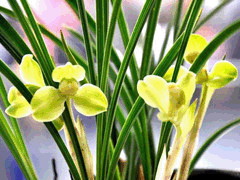 OrchidsFrom germination to growth to floweringthe entiredevelopmental process, the types, amounts and ratios of nutrients required differ. Fertilizing is meant to satisfy the nutrient needs of the orchid plant to the greatest extent. If fertilizing is done improperly, if a certain nutrient element is supplied insufficiently or excessively, or if the ratios among various nutrients are unbalanced, the normal growth and development of the orchid plant will be affected. To meet the plant's requirements for various nutrient elements, one must first understandorchids'nutritional characteristics and the roles of various nutrients, and apply fertilizer reasonably to regulate the nutrients needed at each growth stage of the orchid plant, so that healthy growth can be achieved.The nutrient elements essential to orchidsare the same as those of other plants, mainly including: carbon, hydrogen, oxygen, nitrogen, phosphorus, potassium, calcium, magnesium, sulfur, iron, manganese, zinc, copper, boron, molybdenum, chlorine and other sixteen nutrient elements, with great differences in required amounts. For example, carbon, hydrogen, oxygen, nitrogen, phosphorus, potassium, calcium, magnesium, sulfur and other elements are essential for orchid growth and are needed in relatively large amounts, so they are called macronutrients; while manganese, boron, zinc, copper, molybdenum, iron, chlorine and other elements are also essential for orchid plant growth, but are needed in extremely small amounts, so they are called micronutrients. Among these elements, carbon, hydrogen and oxygen mostly come from air and water. Calcium, magnesium, sulfur, iron and other trace elements are present in relatively large amounts in soil, so deficiencies generally do not occur. If artificial coarse potting media are used for cultivation, in addition to supplying nitrogen, phosphorus and potassium, trace elements also need to be supplemented. Although orchids differ greatly in their requirements for various nutrient elements, none is dispensable, and none can be substituted. The three needed in the greatest amounts are nitrogen, phosphorus and potassium, often called the "three elements of fertilizer." To reasonably apply the three elements nitrogen, phosphorus and potassium, one must first understand what nutritional roles they play for orchids. Simply put: nitrogen fertilizer can promote the formation of chlorophyll and protein, deepen leaf color, enlarge leaf surface, and benefit photosynthesis. During the growth period, applying more nitrogen fertilizer can make the plant grow robustly. Conversely, insufficient nitrogen fertilizer leads to weak growth, short plants, reduced chlorophyll content, weakened photosynthesis, and therefore slow plant growth with thin and small leaves. Of course, it must not be excessive either, especially when phosphorus and potassium supply is insufficient, it will cause excessive leaf growth, easy lodging, and susceptibility topests and diseases. In particular, applying too much at one time will cause fertilizer burn to the seedlings, so reasonable application must be kept in mind. Phosphorus fertilizer can promote cell division in orchid plants, promote root respiration, increase nutrient absorption, provide energy for various metabolic processes, and benefit growth and development. Sufficient phosphorus nutrition can directly participate in the plant's photosynthesis, accelerate the transport of photosynthetic products to the roots, promote well-developed root systems, and benefit flower bud differentiation and flowering. Especially applying phosphorus fertilizer at the seedling stage can promote root development, enabling the root system to emerge early and grow quickly. It can also enhance resistance and improve drought resistance, cold resistance, pest and disease resistance, and lodging resistance. Also, because phosphorus can maintain and regulate the metabolic processes in the plant, when phosphorus is insufficient, the plant is short, and the leaves are gray and lack luster. The formation of new cells weakens, the growth of young buds and roots is inhibited, flowering is delayed, and flowers are small. Excessive phosphorus can also have adverse effects, such as increased ineffective tillering in cereal crops and short plants: premature development of reproductive organs, premature plant senescence and other phenomena. Potassium fertilizer is an indispensable nutrient element for orchid growth and development, and participates in part of the metabolic processes and regulatory functions. Potassium is usually distributed in the most vigorously growing parts, such as young buds, tender leaves, root tips, etc. When potassium fertilizer is sufficient, it can promote photosynthesis, promote the plant's absorption of nitrogen and phosphorus, benefit protein formation, and enhance the plant's resistance to pests and diseases, lodging, drought and cold. When potassium is deficient, metabolism in the plant becomes disordered, photosynthesis declines significantly, root growth is inhibited, orchid leaves are thin and soft, stress resistance is poor, and they are susceptible topests and diseases. After understanding the roles of the above three elements, how to apply them must also be combined with the different growth and development stages of variousorchids, for example:Cymbidium goeringiiin the Jiangsu and Zhejiang region blooms at the end of February and early March, with new shoot growth from April to June. When the temperature rises above 15°C, nutrient elements mainly of nitrogen and phosphorus can be applied. At the beginning it should be lighter and more dilute, which can promote early root emergence, rapid development, and rapid growth of new shoots. After June, some plants' orchid shoots have turned into the new leaf growth stage; at this time, nitrogen fertilizer should be increased as the main component, which can make the plant grow quickly and make orchid leaves broad and thick. September to October is the key period; at this time the temperature difference between day and night is large, which benefits the orchid's late growth. If a balanced fertilizer of nitrogen, phosphorus and potassium was applied in the earlier stage, it can promote robust growth of the orchid plant and the sprouting of overwintering buds, and can make flower buds grow quickly. In the later stage, switching to phosphorus and potassium fertilizer can make the pseudobulbs plump and the plant mature, increase the sprouting rate and flowering next spring, and also enhance cold resistance at low temperatures. When the temperature drops below 10°C, it enters dormancy.Cymbidium goeringiigenerally has an optimal growth temperature of 18-28°C; at this time fertilizer is easily absorbed. When the temperature is below 15°C or above 35°C, orchids enter a semi-dormant state, and fertilizer is not easily absorbed; at this time it is best not to fertilize. In short, in daily cultivation, fertilizer is quite important, and it must not be applied blindly. First understand the content of various nutrient elements in the fertilizer and the dilution ratio. Better dilute and frequent; when applying fertilizer water of the same concentration, the robust state of the orchid plant should be considered. For example, weak-growing orchid plants and varieties that do not tolerate fertilizer should use more dilute fertilizer water and be applied in moderation, so as to achieve good results. Growing orchids well not only requires a reasonable combination of nitrogen, phosphorus, potassium and other nutrient elements, but also requires integrating the management of each link, which is crucial. In practice, one must gradually explore and analyze on one's own to truly understand thecultivationtechniques and experience of each link.