Four-season management mnemonic: protect buds in spring, guard seedlings in summer, strengthen grass in autumn, preserve buds in winter
Protect buds in spring, guard seedlings in summer, strengthen grass in autumn, preserve buds in winter
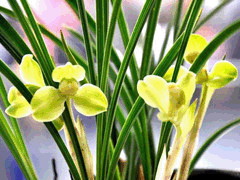 After the Start of Autumn, if a few thunderstorms come, the intense heat will be somewhat suppressed, but the might of the autumn tiger often shows itself to the fullest, and this period lasts about a month. After White Dew, as the north wind steadily strengthens, temperatures above thirty degrees generally become rare, and at this time the temperature stays below thirty degrees down to around twenty-five degrees, with little difference between day and night, and summer and autumn alternate just like that. After the Autumn Equinox, autumn in the true sense arrives. Around the Autumn Equinox, the temperature is often between twenty-seven and seventeen degrees, the day-night temperature difference begins to widen, and the season of high skies, light clouds and refreshing briskness arrives. At this time you will find that the orchids in the orchid garden are undergoing great changes: the small shoots that broke through the soil during the moldy rain season are basically all large plants now, swaying in the breezeorchid grassdelicate and light, charming yet carrying an air of unrestrained elegance and lofty purity; savor it closely, and much hazy poetic and painterly feeling arises. Still in late summer, as long as the temperature drops slightly (daytime temperature below thirty degrees), people will seize this rare opportunity to hurry and giveorchid grassa very light application of fertilizer to replenish its vitality, the better to contend with the autumn tiger. After the Autumn Equinox, it is exactlyorchid grassthe second best growing period of the year; at this time the day-night temperature difference is often above ten degrees, and the nutrients accumulated during the day are partly consumed in an orderly way at night, with most of the nutrients going to the grass, into the flower buds, and strengthening the pseudobulbs. The biggest feature of autumn is dry climate; at this time the humidity in the orchid garden is often below 30%, which is extremely unfavorable to the growth of the orchid grass in the orchid garden. If not improved, the growth of the orchid grass will be restricted and the leaf surface will lose its luster. At this time most of the shade netting in the orchid garden has been taken down, and the sunlight illumination is much greater than usual, further worsening the dryness of the environment. Of the whole year, autumn water is the easiest to apply. Orchid friends who did not dare to water overhead in spring and summer can now boldly water overhead to their heart's content, washing away the accumulated dust and dirt on the orchid grass, letting the stomata on the undersides and surfaces of the orchid leaves breathe fresh air freely. In autumn, if one does not pay attention to watering thoroughly, dryness can easily start from the bottom of the pot and harm the orchid roots at the bottom. Remote watering uses the two-pass method, that is, after the first water, wait a while and then water again; the benefit of the return water is that it can change the water path of the first water, letting the return water take a new path, and at the same time the planting medium that has not absorbed enough water can be replenished again, and at this time the excess water will slowly seep downward, from the surface to the interior, not missing a bit. In autumn, strengthening the grass is the primary goal; as long as the grass is strong, the pseudobulbs will also become strong along with it, thus laying a good foundation for early sprouting, more sprouting and strong sprouts next spring. To strengthen grass in autumn, the following points can be done well: 1. Increase environmental humidity. Remote uses a small water pump for fish keeping to start the PPC pipe circulating sprinkler system under the orchid rack, and at this time the environmental humidity can be noticeably raised by more than 20%; 2. Horizontally enclose one half of the balcony orchid garden, so that moist air fills the spaces between the orchid leaves, while also increasing morning and evening misting; 3. Timely apply light fertilizer based mainly on monopotassium phosphate to strengthen buds and pseudobulbs; 4. Pay attention to environmental disinfection and the disinfection of the plants themselves; 5. Increase the light factor to promote photosynthesis and benefitorchidgrowth; 6. Timely thin out excess flower buds or those one does not want to keep, so as to concentrate and accumulate nutrients. ------Author: Remote The Autumn Equinox is also a good time for introduction and repotting. When introducing, one should mainly introduce strong grass and carefully carry out disease prevention and disinfection of the seedlings. Repotting can also be done at this time, but Remote believes that unless repotting is unavoidable, large-scale repotting is better around the Spring Equinox. The reasons are: autumn is exactly when the orchid grass grows vigorously, and at this time the new grass is growing strong, growing solid, and strengthening the pseudobulbs; repotting would affect the growth cycle by twenty to thirty days, and if these precious twenty or thirty days are lost, the temperature will soon drop below fifteen degrees (referring only to the Jiangsu and Zhejiang regions), and at this time the orchid should also enter its main dormancy period. In addition, because repotting in autumn combines the planting medium and orchid roots rather loosely, it is unfavorable for freeze prevention and freeze resistance, which orchid friends must also note.