What are the key points for orchid care and management in early autumn?
Orchid tasks in early autumn
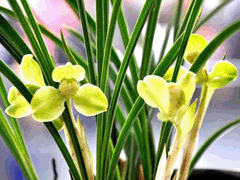 Early autumn has just arrived. In most areas of the six provinces and one municipality of East China, high temperatures still prevail. A truly cool autumn will not come for about another month, when the breeze is fresh and the moon is bright, and the climate suits orchids. For this reason, this period is still a busy time for orchid growers. A moment of carelessness will cause losses; only with careful management can orchids and cymbidiums achieve a good harvest. Guarding against the autumn tiger is the top priority. At the start of this autumn, the temperature has remained high, with high temperatures of 35-38 degrees raging in various places, truly unbearably hot. Orchids and cymbidiums grow on high mountains and steep ridges, where cool breezes blow; when they reach our orchid rooms, it is stiflingly stuffy. Ventilation and cooling must not be neglected. Fans must be kept running normally during the day. If conditions allow, orchid friends can turn on the air conditioning and water curtain at noon, and the orchids and cymbidiums will surely be very comfortable. Creating an artificial climate is the key to conquering the autumn tiger. Increase humidity to prevent dryness. Early autumn has little rain, and low air humidity will seriously affect the normal growth of orchids and cymbidiums. You can increase humidity by sprinkling water, misting, and watering the ground. But note: after sprinkling water, you must use a small fan to blow it dry. Otherwisesoft rotdisease, erwinia disease and other bacterial diseases will follow one after another, bringing disaster to the orchids and cymbidiums that are about to grow up, and the loss will outweigh the gain. Water the pots a little more than usual, because in autumn the water in the pots dries from the bottom upward; once the pot surface is dry, the orchids and cymbidiums will be affected. In mild cases the tips scorch, in severe cases the buds become stunted. Never take it lightly. Doing a good job of typhoon prevention is very necessary. There are many coastal cities in East China, and early autumn is the period of danger from typhoons and tropical storms. If careless, the orchids and cymbidiums may suffer catastrophic damage. Therefore, pay close attention to weather forecasts and prepare preventive measures in advance. The orchid shed must be reinforced, the orchid shelves must be stable, the doors and windows must be flexible, and the shade net must be able to be rolled and unrolled freely. In this way, when a typhoon comes, it can be withstood at any time and place. With the temperature difference between morning and evening, fertilize appropriately. After a summer, orchids and cymbidiums are about to enter the next golden growth period. There is very little fertilizer left in the pots, and nutrients urgently need to be replenished. We can take advantage of the relatively low temperatures in the morning and evening to appropriately irrigate with some dilute organic fertilizer. At ordinary times, spray a little inorganic fertilizer every few days. After fertilizing, be sure to water back. This will make the new shoots strong and the flower buds beautiful. Fertilizing at this time should focus mainly on phosphorus and potassium fertilizers, with a small amount of nitrogen fertilizer as well. For orchids and cymbidiums, it has a hundred benefits and no harm. Preventpests and diseases, and still persist. In early autumn, because the temperature is high,pests and diseasesare still rampant. Strengthening prevention as the main approach can stabilize the growth of orchids and cymbidiums. For sterilization, you can use some lime sulfur mixture, carbendazim, and thiophanate-methyl compound medicines. For insect prevention, you can use some pyrethroid medicines, which are relatively environmentally friendly. According to whether the orchids and cymbidiums are strong or weak, prevent them separately. Consider factors such as temperature and seedling quality, and use slightly weaker concentrations. This can be effective while also preventing pesticide damage. When unsure about the dosage, you can first test with several pots of ordinary flowers using different dosages to ensure there is no mistake. Basic preparations should be made in advance. Considering that repotting will begin at the autumn equinox, buy pots, potting media and so on in advance, soak them in water and disinfect them. When the autumn sky is high and the air is crisp, you can calmly take stock of the year'sorchid growingresults and summarize the experiences and lessons. That is where thejoy of growing orchidslies.