How are orchids cultivated in the Beijing area? The answer is in "Dumen Yilan Ji"
"Dumen Yilan Ji": The Classic of Orchid Cultivation in the Beijing Area
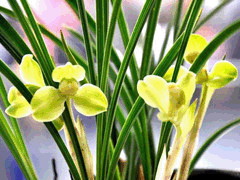 "Dumen Yilan Ji" is the orchid-growing experience of the Beijing area. The watering methods it proposes are treated separately according to the 24 solar terms within a year:
(1) Beginning of Spring, Rain Water:Spring orchidshave already come into flower, so the soil should not be too dry; moisten it slightly along the edge of the pot. If the soil in an autumn orchid pot has not dried all the way to the bottom, then do not water.
(2) Awakening of Insects: When the soil in a spring orchid pot has dried to the orchid pot (empty above, solid below), it may be given a weeping watering, but not too much; for autumn orchids, the same as above.
(3) Spring Equinox: Spring orchids have finished flowering and should avoid dampness; when the soil in the pot is half dry, it may be moistened with water.
(4) Pure Brightness, Grain Rain: Do not let the soil in the pot become too dry; moisten with water once every 5 days.
(5) Beginning of Summer: Orchids begin to be brought out of the room, and should be given one thorough watering.
(6) Grain Full: Do not let the soil in the pot become too dry or too wet. Spots appearing on the leaves mean it is too wet; withered tips on new shoots mean it is too dry. Water once every 4 days with 1 sheng so that the lower 2/3 of the soil in the pot is moistened from bottom to top.
(7) Grain in Ear: Beijing's air is dry, so even more attention should be paid to avoiding both excessive dryness and excessive wetness.
(8) Summer Solstice: The soil in the pot must not be too dry. If there is heavy rain, it can only endure it for one day; if there is continuous overcast rain for several days, the pot must be moved to a ventilated place.
(9) Minor Heat: At this time the air is too humid, so there is no worry about dryness but rather about excessive dampness; the pot should be placed in a ventilated place. If it is dry and hot with little rain, water with 1 sheng every 2 days. After one heavy rain or one heavy wetting, you must wait until the soil in the pot has dried to 2/3; otherwise, do not water again.
(10) Major Heat: The soil in the pot easily dries all the way through, so note that only one heavy rain or one heavy wetting per day is appropriate.
(11) Beginning of Autumn: Orchids need moisture at this time, so 2 sheng of water must be given every 3 days, and they should be slightly sheltered from the wind.
(12) End of Heat: Water once every 5 days; apart from continuous days of excessive rain, they may be allowed to receive rain and dew.
(13) White Dew: Autumn orchids need frequent watering even more than spring orchids, but after heavy wetting they must dry out heavily before they can be watered again.
(14) Autumn Equinox: If autumn orchids have already produced flowers, watering should be slightly reduced; if they have not produced flowers, watering should be slightly increased.
(15) Cold Dew: Autumn orchids should be given thorough watering, while spring orchids should not be given thorough watering but should be kept moist.
(16) Frost's Descent: Orchids should be brought indoors, and the watering time should be changed to midday; after watering, they must be placed in the midday sun for 1-2 hours.
(17) Beginning of Winter: Only moistening with water is appropriate, about half a sheng every 5 days.
(18) Minor Snow: The flower room should avoid warmth; it should not be too damp. If it is too damp, it can cause root rot, scarred leaves, and even withering. If the soil in the pot has not dried all the way to the bottom, only slightly moisten the surface of the soil.
(19) Major Snow: Autumn orchids do not need water; spring orchids should be kept slightly moist.
(20) Winter Solstice: Neither should be irrigated.
(21) Minor Cold: Watering is taboo for both.
(22) Major Cold: Autumn orchids still do not need water; spring orchids may be kept slightly moist.