Fertilizing Techniques and Precautions for Cymbidium faberi in Early Summer
A Brief Discussion on Fertilizing Cymbidium faberi in Early Summer
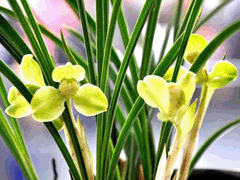 A Brief Discussion on Early SummerCymbidium faberiFertilizing
Early summer is an important season for the growth of Cymbidium faberi. At this time, temperatures gradually rise, rainfall increases,orchidsgrow vigorously, and their fertilizer demand increases. Correct fertilizer application affects the normal growth of both new and old orchid pseudobulbs, and also lays the foundation for bud formation in autumn.
In the native habitats of orchids and cymbidiums, air humidity is generally high, and nitrogen in the air is extremely easily dissolved in water and then absorbed by roots and leaves. After being collected from the mountains, they lose this uniquely favorable living environment. Moreover, the vast majority of orchid growers emphasize permeability when cultivating orchids and cymbidiums, using large amounts of brick granules, orchid stone, fairy soil, and the like. These substrates have very poor fertilizer-retention capacity, and the fertilizer they themselves contain is limited. As the flower-growing proverb says: survival depends on water, growth depends on fertilizer. This shows the importance of fertilizing. Therefore, in daily cultivation, fertilizer is extremely important. Fertilizing is meant to satisfy the nutrient demands of orchid plants to the greatest extent possible.
One: Summer fertilizing must adhere to placing equal emphasis on the "three elements."
The essential nutrient elements for orchids mainly include 16 nutrient elements such as carbon, hydrogen, oxygen, nitrogen, phosphorus, potassium, calcium, magnesium, sulfur, iron, manganese, zinc, copper, molybdenum, and chlorine. Among them, the three elements required in larger amounts are nitrogen, phosphorus, and potassium. Other elements are also needed for orchid plant growth, but only in extremely small amounts. If trace elements increase, they can also cause relatively great harm to orchid plants. Nitrogen can promote the formation of chlorophyll and protein in plants and is the "life element" of the metabolic process. If nitrogen fertilizer is increased during the growth period, it can make the plants robust, increase carbohydrate output, and benefit photosynthesis. Phosphorus promotes plant cell division and growth, especially promotes root growth, increases nutrient absorption, directly participates in plant photosynthesis, accelerates the movement of photosynthetic products to the roots, promotes well-developed roots, and benefits flower bud differentiation. Potassium fertilizer has a regulatory effect and participates in part of the metabolic process. Potassium is usually distributed in the most vigorous parts, such as young buds, tender leaves, and root tips. Potassium deficiency can lead to poor stress resistance in orchid plants, making them susceptible topests and diseases. Therefore, adhering to equal emphasis on the three elements plays an important role in the emergence of Cymbidium faberi buds and the sprouting of new roots. There must be sufficient nitrogen, phosphorus, and potassium to meet the growth needs of Cymbidium faberi, accelerate the growth of new buds and new roots, and promote cell division. Otherwise, in order to reproduce and carry out the alternation of old and new generations, Cymbidium faberi will transfer nutrients from old plants to offspring seedlings, resulting in the phenomenon of "plant collapse," with old plants gradually turning yellow and dying. If fertilizer is lacking during the growth period of Cymbidium faberi, new seedlings will be thin and weak, prone to disease, and difficult to grow strong.
Two: Use organic fertilizer and inorganic fertilizer together.
Inorganic fertilizers include urea, compound fertilizer, monopotassium phosphate, Huabao, and so on. These inorganic fertilizers are referred to as inorganic fertilizers for short. Organic fertilizers include cow manure, rapeseed cake, soybean cake, and so on. Inorganic fertilizers must first dissolve in water into an ionic state before they can be absorbed. Organic fertilizers must be fully fermented and, through the action of microorganisms, decomposed into inorganic substances and dissolved before they can be absorbed by the roots. Inorganic fertilizers take effect quickly, while organic fertilizers take effect slowly but last a long time. The ancients who cultivated orchids used special organic fertilizers, and the floral fragrance was mellow and rich. When I grow Cymbidium faberi, I wrap fully fermented organic fertilizers such as cow manure in wet loess, shape them into round balls, dry them in the sun, and place them at the edge of the pot so that the orchid plants can absorb them slowly, while inorganic fertilizer is applied as a foliar spray. Using both together gives very good results. In my personal experience, orchid plants given only inorganic fertilizer have a slightly inferior fragrance compared with orchid plants given organic fertilizer.
Some organic fertilizers and inorganic fertilizers cannot be mixed for use, and orchid growers need to pay attention to this. 1. Farmyard manures such as human and livestock excrement and urine cannot be mixed with alkaline fertilizers such as plant ash, lime, and calcium magnesium phosphate. The main component of human and livestock excrement and urine is nitrogen. If mixed with strongly alkaline fertilizers, it will become ineffective due to neutralization. 2. Superphosphate cannot be mixed with strongly alkaline fertilizers such as plant ash and lime, otherwise the effectiveness of phosphorus will be reduced. Sparingly soluble phosphate fertilizers such as phosphate rock powder and bone meal cannot be mixed with alkaline fertilizers such as plant ash and lime, otherwise they will neutralize the organic acids in the soil, making the sparingly soluble phosphate fertilizers even harder to dissolve, and crops will be unable to absorb and utilize them. 3. Chemical fertilizers cannot be mixed with bacterial fertilizers. Because chemical fertilizers have relatively strong corrosiveness, volatility, and water absorbency, if mixed with bacterial fertilizers such as rhizobia, they will kill or inhibit the living bacteria and make the bacterial fertilizers ineffective.
Three: In July, fertilizer application should appropriately increase potassium fertilizer.
Potassium mainly exists in the cell sap of plants in an ionic state and does not participate in the composition of important organic substances in Cymbidium faberi. Potassium has relatively great mobility within the plant, continuously transferring from aging tissues to new tissues, and its reuse rate is high. Potassium can promote the activation of enzymes in the body. It can promote the absorption of nitrogen and benefits protein formation and nucleic acid metabolism. It plays a great role in increasing the content of lignin and cellulose in the body and enhancing the toughness of leaves and stems.
July is precisely the leaf elongation period of Cymbidium faberi. Because the leaves of Cymbidium faberi are ribbon-shaped, some reaching more than 50 cm long, if the leaves of Cymbidium faberi are to remain tough, upright, and gracefully varied, July is a foundational period. Only by increasing the application amount of potassium fertilizer in July and raising the content of lignin and cellulose in Cymbidium faberi during the leaf elongation period, so that the cell walls of the leaves thicken and have well-developed mechanical tissue, can the inherent characteristics of Cymbidium faberi leaves with the bearing of a scholar-official be demonstrated.
Four: Apply thin fertilizer frequently.
Cymbidium faberi plants are relatively tall, but their pseudobulbs are the smallest among terrestrial orchids. Because pseudobulbs are warehouses for storing nutrients and water, small pseudobulbs mean small storage capacity. Under wild conditions, Cymbidium faberi relies on a well-developed root mass and strong underground absorption capacity to meet the growth needs of the aboveground parts. Only in this way can it compensate for the insufficiency caused by small pseudobulbs and low storage capacity. However, under artificialcultivationconditions, due to the limitation of pot capacity, the advantage of Cymbidium faberi's well-developed root mass cannot be brought into play, and the nutrients absorbed by the roots often cannot meet the needs of aboveground growth and development. It must rely on many sufficient supplements of various elements to meet those needs.
Because Cymbidium faberi has no pseudobulb neck, but has many leaves and high consumption, it likes fertilizer more than other terrestrial orchids. Therefore, fertilizing should be frequent, but thin fertilizer should be applied frequently. It is best to apply dilute liquid fertilizer. From early March to early October each year, water once with diluted decomposed organic fertilizer. During the growth period, spray with Lanjunwang once every 10 days. From August to November, spray with Huabao No. 3 or monopotassium phosphate once every 15 days, used alternately, to promote flower buds.
Five: Foliar fertilizing and root fertilizing. Foliar fertilizing,
is a fertilizing method in which fertilizer is prepared into a certain concentration and sprayed onto the leaves, entering the interior of the leaves through leaf stomata and the cuticle. It is mainly a fertilizing measure for strengthening crop nutrition and preventing certain element deficiency symptoms in crops, and it is also an important way to improve fertilizer utilization efficiency. When plants absorb external nutrients, their absorption pathways are mainly: nutrients --- cell wall water film --- plasma membrane --- cell interior. Nutrients absorbed through the leaves mainly move toward the growth center and, during reproductive growth, move toward the main organs. According to experiments, the speed and effect of foliar fertilizing are 1 time faster than root topdressing. Generally, it is not limited by fertilizer variety (referring to inorganic fertilizers). Attention should be paid to the scientific combination of various elements, and the ratio of water for dilution should be strictly controlled. Better thin than concentrated, and eat small meals more often. On the second day after each foliar fertilizer application, spray water on the leaves once. In this way, it can both improve fertilizer efficiency and keep the leaf surface clean, allowing leaf stomata to open and close freely.
It should be noted that foliar fertilizing can only serve as a supplement to root fertilizing and cannot completely replace root fertilizing. The effects of foliar fertilizing vary greatly, especially for some major elements such as nitrogen, phosphorus, and potassium fertilizers. According to experimental results, more than 10 foliar fertilizer applications can only reach the total amount of one root fertilizer application. Therefore, foliar fertilizing can only be carried out on the basis of root fertilizing and can only serve as a supplement to root nutrition.
Botanically speaking, the part of the Cymbidium faberi root that absorbs inorganic salts is the non-suberized root tip. This mainly occurs through ion exchange, generally through the soil solution. After ion exchange, ions of inorganic salts are adsorbed on the surface layer of the root cell protoplasm. The key to ion exchange lies in whether the concentration of the root cell sap and the concentration of fertilizer in the soil are balanced and consistent. If the fertilizer concentration is higher than the concentration of the root cell sap, root water will flow toward the fertilizer, causing root damage. Nowadays, everyone mostly uses coarse granular substrate for cultivation, and the water content of the substrate in the pot is often insufficient. Therefore, adding enough water to dilute the fertilizer is what ensures that Cymbidium faberi can safely absorb fertilizer without causing harm to the roots. Once ions outside the Cymbidium faberi roots enter the root cells, after transmission through a series of living cells in the root, they finally enter the vessels and are transported along with the water flow in the vessels to the pseudobulbs, and then transported to the chlorophyll in the leaves for photosynthesis. Finally, the organic matter produced by photosynthesis is transmitted and distributed through the sieve tubes to the growth centers and other parts that need it most.