Key Points for Orchid Cultivation and Management Techniques in April
Key Points for Orchid Cultivation and Management Techniques in April
 AprilOrchidsCultivationManagement Techniques Key Points
(1) Open windows for ventilation, be cautious about moving plants outdoors. This month has two solar terms: Qingming (the 5th or 6th) and Guyu (the 20th or 21st). The earth returns to spring, and frost and snow basically stop. Except for extreme cold wave weather, all potted flowers can be moved outdoors for maintenance. Since temperatures rise fairly quickly, in enclosed orchid roomsfor growing orchidswindows should be opened appropriately to facilitate ventilation and air exchange.
(2) Plan ahead, sterilize and eliminate pests. This month orchids can receive full sunlight, and generally no shading is needed. However, as temperatures gradually rise,pests and diseasesbegin to breed. Promptly use fungicides and insecticides to sterilize and eliminate pests in the orchid room and on orchid plants, doing the utmost to stranglepests and diseasesin the “cradle.”
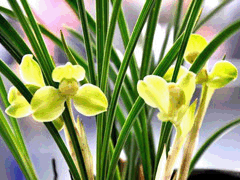
(3) This monthCymbidium faberibegins to bloom profusely. During the blooming period, shading is advisable; otherwise the flower color will be poor and the bloom quality will be affected.Cymbidium faberiWhen in bloom, Cymbidium faberi requires relatively high air humidity, but the potting soil should be slightly drier than usual. Generally, when standard petal-type flowers are in bloom, if the potting soil is too moist, the flowers tend to droop at the shoulders and the outer three petals tend to lean backward, affecting bloom quality. Therefore, before Cymbidium faberi blooms, watering should be controlled to keep the potting soil appropriately dry, so the flowers bloom with more vitality.
(4) This month isCymbidium goeringii's late blooming period and Cymbidium faberi's peak blooming period. Orchids consume the most nutrients during this time. To facilitate the growth of orchid seedlings after blooming, the flower scapes should be cut off in a timely manner after Cymbidium goeringii and Cymbidium faberi finish blooming. Generally, forCymbidium goeringii, the flower scape should be cut off half a month after blooming, and for Cymbidium faberi, it should be cut off one week after the top flower has fully opened. Otherwise, it is unfavorable for producing more and strong new shoots after blooming and affects blooming the following year.
(5) Repot and divide, promote growth. This month is one of the best periods for repotting and dividing orchids. For potted orchids, if the orchid seedlings have filled the pot or the potting soil has not been changed for more than two years, repotting or division should be carried out promptly during the Qingming and Guyu periods. Before repotting and dividing, watering should be appropriately withheld to facilitate removing the orchid from the pot and to prevent damaging the orchid roots. Take advantage of repotting and division to prune and disinfect the orchid plants: cut off hollow roots, rotten roots, and diseased or damaged leaves, and promptly sterilize and disinfect the cut surfaces of divided sections. After potting, orchid seedlings should be placed in a cool, ventilated spot for 1 week before returning to normal care.
(6) Withhold water and fertilize to promote strong shoots. For potted orchids that have not produced flower buds, apply a light fertilizer once around Qingming. For potted orchids that have finishedblooming, fertilizer must be applied after a post-bloom rest and recovery period of about ten days. Whether fertilizing potted orchids that have notbloomedor potted orchids after blooming, it is best to choose clear, sunny weather. Before fertilizing, water should be appropriately withheld once; fertilizing when the potting soil is on the dry side gives the best results. On one hand, the orchid roots and potting soil absorb the fertilizer fully; on the other hand, it also stimulates the orchid plants to sprout strong shoots, with excellent results.