Key points of orchid cultivation and management techniques for February
Monthly orchid cultivation and management technique key points (February)
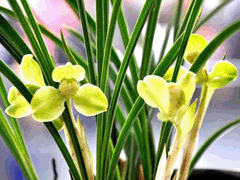 OrchidsBy monthCultivationManagement technique key points (February)
(1) Pay attention to the weather and guard against frost damage. This month has two solar terms: Beginning of Spring (the 4th or 5th) and Rain Water (the 19th or 20th). Although the average temperature this month is about 2-3 degrees higher than January, except for the tropical and subtropical regions of our country, the daily minimum temperature is below zero, cold waves occasionally strike, and the weather is still very cold.OrchidsMaintenance is still mainly focused on preventing freezing, and windows should be closed in time at night to prevent frost damage. However, on clear days from 10 a.m. to 4 p.m., some windows must be opened appropriately for ventilation, to preventorchidsfrom becoming stuffy and developing spots on the leaves.
(2) Remove the weak and keep the strong, and thin the buds appropriately. After a winter of dormancy, flower buds begin to grow faster. Orchid growers should, according to the strength or weakness of the potted orchids and following the principle of removing the weak and keeping the strong, promptly thin the buds on newly emerged flower buds after the Beginning of Winter and on flower buds emerging from back pseudobulbs (old pseudobulbs). Generally, for a full pot of strong plants,Cymbidium goeringiikeep 2-3 flower buds,Cymbidium faberikeeping one flower bud is enough. This can concentrate nutrients and help the orchids bloom to standard.
(3) Appropriately spray foliar fertilizer. As spring returns to the earth, orchid buds begin to sprout, and extremely dilute fertilizer can be applied, but generally do not apply organic or inorganic fertilizer to the roots. Focus mainly on applying inorganic fertilizer or biological bacterial fertilizer to the leaves, to promote the vitality of new buds and ensure the nutritional needs of new bud growth.
(4) Clean the orchid room, kill insects, and sterilize. As the temperature rises,pests and diseasesbegin to slowly revive and are in a "budding" state.Orchid growersshould take preventive measures in advance. Yellow leaves, diseased-spot leaves, and scorched leaf tips should be cut off in time, andorchid growingtools and sites should undergo a comprehensive insecticidal disinfection. However, when spraying chemicals, note that spraying should be done on a clear morning, the solution must not be too concentrated, so as not to harm orchid buds; the amount of pesticide should not be sprayed too much, so as not to pour into the leaves and flower buds and cause rotten hearts and rotten buds.
(5) This monthCymbidium sinense、Cymbidium tortisepalumand Chun Jian bloom one after another. These orchids should be kept in an environment with higher air humidity and temperature. Generally, humidity should be controlled above 50% during the day, and the average temperature is best at 10-22 degrees. Such an environment is conducive to the orchids blooming to standard and enhances their ornamental value.
(6) This month the flower buds of Cymbidium goeringii gradually rise higher, and the potting soil should be kept moist. Pay attention to the changes in depth, thickness, and intensity of the vein patterns, sand halo, and color on each layer of bud sheaths during the growth of famous-variety flower buds, so as to gain experience in identifying famous varieties among wild-collected plants.