Detailed Explanation of Key Orchid Cultivation and Management Techniques for March
Key Orchid Cultivation and Management Techniques for March
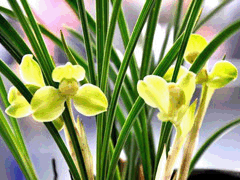 MarchOrchidCultivationKey Management Techniques
(1) Before the flower spike emerges and blooms, full light is appropriate; shade when the flowers open. This month has two solar terms: Awakening of Insects (the 5th or 6th) and Spring Equinox (the 20th or 21st). Except for a few areas such as Heilongjiang Province, average temperatures across our country are above zero. The weather gradually warms and sunlight is soft. Any orchid or cymbidium that has started to form flower buds should be placed in a sunny spot to receive full light before blooming, but once the buds are about to open, appropriate shading is necessary. Otherwise the petals easily turn yellow in color, and the lip of plain-hearted (solid-color) petals turns white or slightly yellow, damaging the flower's appearance and affecting its quality.
(2) Keep moisture appropriate, water cautiously; when the flowers are open, the potting medium should be somewhat dry and the air humidity should be high. This monthCymbidium goeringiiis in full bloom, and air humidity should be somewhat higher. Relatively high air humidity is very beneficial forCymbidium goeringiiflower spikes to grow taller, especially for lotus-petalCymbidium goeringiiwhere this is particularly evident. If humidity is insufficient, Cymbidium goeringii flower spikes often rise only slightly above the pot surface, greatly reducing their ornamental value. Although air humidity should be high during orchid blooming, the potting medium humidity should not be too high and should be kept somewhat dry. For all standard-petal-type flowers, just before the buds open and the petals begin to rise, the potting medium should be properly controlled with less watering so it stays slightly dry. But for odd-flower-type orchids and cymbidiums, when the flowers are open the potting medium must not be too dry; on the contrary, it should be kept a bit more moist, so the charm of the oddflowers'elegance can be fully displayed.
(3) Cut flowers appropriately to avoid excessive nutrient consumption. Orchids consume the most nutrients while blooming. If the flowers are left to bloom and fade freely, it harms the orchid's later growth, so flowers should be cut at the right time. After Cymbidium goeringii is in full bloom, generally it should be cut after half a month. If it is a rare and precious named variety or there are not many plants in the pot, it should be cut immediately two to three days after blooming, to avoid affecting sprouting and next year's flowering.
(4) After the Spring Equinox, temperatures rise relatively quickly.Cymbidium faberican be placed outdoors for cultivation. ThoseCymbidium faberiwith flower buds begin to push up their spikes and grow rapidly; at this time they are most afraid of freezing. If extreme low-temperature weather occurs, they should be moved indoors promptly, otherwise the buds easily become stunted.
(5) In late this month, apply one application of dilute sprout-promoting fertilizer to orchids without flowers; this greatly helps promote strong sprouts.