How to Grow White Magnolia? A Detailed Guide to Home Cultivation Methods
White Magnolia Cultivation Methods_Home Flower Growing
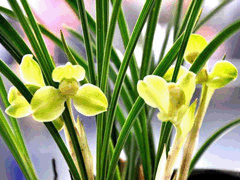 White magnolia, also known as white orchid, yellow-angle magnolia, is an evergreen tree and a strongly fragrant flowering plant. Its leaves are jade-green, its flowers are white as jade, and its fragrance resembles that of an orchid. Its flowering period is long, and when environmental conditions are suitable, it can bloom continuously all year round. However, it is afraid of drought, waterlogging, cold, and alkalinity, and in northern regions it is regarded as a rather delicate and difficult flower to grow. Cultivation requirements:
1. It requires fertile, loose, well-drained growing soil. It can be prepared with 5 parts pine needle leaf mold, 2 parts coarse chaff ash, 2 parts coarse sand, and 1 part rotted manure. Avoid fine sandy soil or heavy clay soil with poor air permeability. For potting, use a tile pot (unglazed clay pot) with good ventilation and air permeability. Avoid glazed pots, porcelain pots, purple clay pots, etc. It is best to use a relatively deep cylindrical flower pot, place an empty flower pot upside down under the pot, and elevate it with bricks to prevent poor drainage; line the bottom of the pot with about 5 cm of cinders and crushed stone.
2. Moisture must be appropriate. White magnolia has fleshy roots. If the potting soil is too wet, the leaves will turn yellow and fall off, and the roots may even rot and cause death. If it is too dry, the tips will wither and the leaves will curl. It is a flower that fears both waterlogging and drought. During the flowering period, if the petals open outward excessively, it indicates insufficient water; when moisture is appropriate, the flowers remain in a bud-like state. When the surface of the potting soil looks dry and the soil is hard and cracked, water immediately. When watering, the water temperature and soil temperature must be consistent; do not suddenly water with cold or hot water. Watering must be thorough. Frequently giving half-watering will cause shallow roots. In spring and autumn, white magnolia should not be watered too much. In midsummer, water daily and only in the evening. From late autumn, begin to reduce the amount of watering. In winter, water once every 10 days. During rainy seasons, move it to a place sheltered from rain.
3. It fears alkalinity. White magnolia prefers acidic soil, with a soil pH requirement of 5.5-6.3. In northern regions, white magnolia is difficult to grow precisely because most of the water and soil there tend to be alkaline, which dissolves the protoplasm of white magnolia cells, causing delayed development and poor growth. Frequently watering with fermented rice washing water gives better results.
4. It fears concentrated fertilizer. White magnolia likes phosphorus and potassium fertilizers, but avoid excessively high concentrations, otherwise reverse osmosis will occur and cause "physiological drought" in the plant, ranging from wilting in mild cases to being burned to death in severe cases. White magnolia'sfertilization principle is: "apply diluted, apply often, apply in the evening." Practice has shown that using dilute human waste, bean cake water, mixed with smashed fish scraps, rotten shrimp, chicken innards, etc., after composting, at a ratio of 1:9 fertilizer to water, applying once every 3-5 days, and then mixing in calcium sulfate at application, gives better results and can make the white magnolia's fragrance stronger.
Other: Leaf removal and pinching. The white magnolia I grow is taken out of the shed from the Spring Equinox to Qingming, choosing overcast or cloudy weather. After being taken out, let the potted flower adapt to the outdoor environment for 2-3 days, then remove old leaves, leaving only a few tender leaves at the branch tips to encourage new shoots. Afterward, each time a batch of flowers finishes blooming, also remove a small number of old leaves to promote new branch growth and flower bud formation. During the growth period, pinch frequently to control apical dominance and encourage more side branches.
Suitable light. White magnolia is a sun-loving flower and needs ample sunlight. During the growth period, it should be cared for in a sunny place with long sunshine hours and strong light, especially during the flowering period. Daily light must not be less than 6 hours. If it is kept in a shaded place, it will only grow leaves and not bloom, or bloom very little, with slender branches, pale leaf color, thin leaves, and no luster, which is unfavorable for growth. However, during the hot, high-temperature "dog days," it should also be moderately shaded. From 12:00 to 16:00 each day, avoid scorching sun exposure, and also avoid high-temperature radiation from brick walls or cement ground. At this time, not only should water be sprayed on the plant to cool it down, but the ground should also be watered or sprayed to cool and dissipate heat and increase air humidity.