Causes of Blackened Orchid Leaf Tips and How to Prevent and Treat Them
Causes of Blackened Orchid Leaf Tips and Prevention and Treatment_Flower Clinic
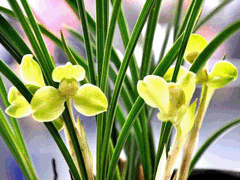 OrchidsTip scorch is one of the most common and frequently occurring diseases. It not only damages the integrity of the orchid leaves and lowers their ornamental value, but also seriously affects the health and growth of the orchid plant; in some cases it can also lead to premature decline and early death of the plant. It is one of the most frustrating disappointments for orchid lovers andorchid growers. There are three causes: Article from: http://www.yuhuagu.com
(1) Root growth is impeded
The vast majority of cases of tip scorch are accompanied by varying degrees of impeded orchid root growth. The reasons for the impeded root growth and abnormal symptoms are complex. For example, the substrate is too acidic or too alkaline; the substrate has poor drainage and aeration; the substrate composition is unsuitable for orchid root growth; the substrate carries contamination; there is also waterlogging damage, drought damage, freezing damage, high temperature damage, fertilizer damage, chemical damage, nutrient deficiency damage, viralpests and diseases, etc., all of which can cause impeded orchid root growth and result in tip scorch.
(2) Leaf tip growth is impeded
Once the physiological function of the leaf blade is disrupted, the growth vigor of the leaf tip is impeded. The reasons for the disruption of leaf physiological function are likewise complex, and the vast majority are closely related to impeded root growth.
① The variety and concentration of sprayed fertilizers and pesticides are wrong. For example, fertilizers with too high a content of zinc, copper and calcium and pesticides containing copper preparations applied under strong light are prone to cause fertilizer and chemical damage; too large a spray volume, with a large amount of residue accumulating at the leaf tip, can also cause fertilizer and chemical damage.
② Unsuitable environmental conditions. Air humidity too high or too low; temperature too high or too low; light too strong or completely absent; air circulation poor or completely blocked; insufficient carbon dioxide and potassium; severe air pollution, etc., can all disrupt leaf physiological function and cause dry tip scorch.
In addition, if the leaf tip is in long-term contact with the pot wall or substrate, it is prone to abrasion and soak damage, and accidental interference and damage from external forces can likewise disrupt leaf physiological function and cause tip scorch.
(3) Damage from infectious pathogens
The pathogens that commonly and directly harm leaf tips include sand spot disease, brown rust disease, tip scorch disease, leaf spot disease and blight. Other pathogens and viruses can also directly or indirectly harm leaf tips and cause scorch.
From this it can be seen that every matter in the planting andmanagement oforchids, if there is any deviation and it is not corrected or handled in time, or if the measures are not effective, may lead to tip scorch. To truly prevent tip scorch requires highly skilled care, and it must be done very meticulously. Beginners need only study diligently, ask diligently, explore its causes more, experiment more, continuously improve their orchid-growing skills and always pay attention and stay vigilant, creating ecological conditions basically suited to the orchid plant's growth, in order to truly prevent leaf tip scorch.