Practical Methods and Tips for Growing Orchids in Northern Homes
Methods for Growing Orchids in the North_Home Flower Growing
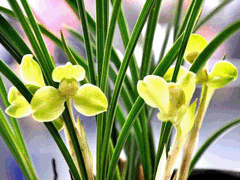 To groworchids well in northern regions, you should create environmental conditions suited to their growth and development as much as possible and meet the requirements oforchids' biological characteristics, so that they can grow and bloom well. The following tasks should be done well specifically.
I. Choose good pots and growing soil
For ordinary householdorchid growing, it is better to choose clay pots. If you want to increase the decorative effect and beauty, you can place a colored-glaze porcelain pot outside the clay pot. The size of the pot should be suitable for the orchid roots to spread out completely inside the pot. For the potting soil, orchid soil is best. You can also mix it yourself. You can use 6 parts leaf mold or peat soil, 3 parts sandy soil, and 1 part cake fertilizer, or mix 5 parts leaf mold, 3 parts compost soil, and 2 parts coarse sand evenly. For the potting method, see: Common Knowledge for BuyingOrchids andCultivation Techniques.
II. Watering should be moderate
Wateringorchids is a regular task, and it is also an important part of whetherorchid cultivation succeeds. The potting soil fororchids should be kept moist often, but excessive water content should be avoided. Incultivation, the amount of watering should be determined according to different seasons and different growth stages of the orchids. Generally starting in spring, as the temperature rises, orchids enter a vigorous growth period, and the amount of watering should be gradually increased, watering once every 1-2 days; in summer, the temperature is high and it is also a peak growth period for orchids, so it is usually suitable to water once each in the early morning and in the evening, and watering at noon should be strictly avoided. When the rainy season comes, the amount of watering should be flexibly controlled according to the amount of rain and the degree of moisture in the potting soil, and water accumulation in the pot should be strictly avoided because it can cause root rot; in late autumn, when the temperature begins to drop, the amount of watering should be gradually reduced, and watering once every 2-3 days is enough; in winter, when the temperature is low, most orchids enter dormancy, and watering should be controlled at this time, with watering once every 5-7 days, except that in winter the floweringCymbidium sinense andCymbidium kanran should be watered somewhat more.
III. Light fertilizer should be applied skillfully
When fertilizing orchids, apply light fertilizer, and strictly avoid concentrated fertilizer. There is a saying, “Clear orchids, cloudy jasmine.” Generally speaking, newly planted orchid plants should not be fertilized in the first year; start fertilizing after Qingming in the second year, until the beginning of autumn. You can apply fully decomposed dilute cake fertilizer water 1-2 times a month. Because orchids have fleshy roots, never apply undecomposed fertilizer, so as to avoid root rot. Before each fertilization, control water for 1-2 days, and apply only after the potting soil is slightly dry. On the morning of the second day after application, water once to prevent unclean matter in the fertilizer liquid from contaminating the root system and harming the orchid roots. When applying liquid fertilizer, be careful to avoid splashing and staining the leaves. For orchid plants that have been cultivated for several years and have reached flowering age, nitrogen fertilizer should be the main type in the early stage to promote new bud sprouting and rapid growth; in the later stage, phosphorus and potassium fertilizer should be the main type, which helps the pseudobulbs enlarge, the leaves become wide and thick, and provides sufficient nutrients for flower bud differentiation. Specifically, before flower bud differentiation each autumn, it is suitable to apply two consecutive liquid fertilizers mainly based on phosphorus and potassium fertilizer; during the bud stage, on a clear evening first wash the leaves with clean water, and after they dry, use a small sprayer to spray a 0.2% potassium dihydrogen phosphate solution on the leaf surfaces and undersides, or apply wood ash water to the roots. Fertilizing outside the roots at this time is beneficial for promoting the development of orchid roots, stems, and flowers. About 20 days after the flowers fade, apply two more liquid fertilizers mainly based on nitrogen fertilizer or compound chemical fertilizer, which can promote plant growth. Do not fertilize on rainy days, and stop fertilizing during the winter dormancy period as well.