How to Control an Early Blooming Period in Cymbidium_Other Flowers
How to Control an Early Blooming Period in Cymbidium_Other Flowers
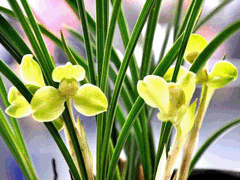 When the blooming period falls outside the main sales season, not only does it fail to fetch a good price, but sales volume is also very limited. What factors cause the cymbidium orchidblooming period to come early? When an early blooming period is discovered, how should growers respond and remedy it? On this, Mr. Tomohiko Sakuruma, who has worked on cymbidiumorchidrelated work for 32 years at Kono MERICLONE Co., Ltd. in Japan, shared his experience.
Cymbidium
Choose good varieties and keep good production records
To regulate the early blooming phenomenon, one must first understand the causes of early blooming. Sakuruma Tomohiko analyzed that there are many reasons for early blooming in cymbidium, including variety characteristics, weather conditions, the time of retaining flower buds, and the temperature, light and fertilizer conditions inside the facility. Regarding varieties, this involves the source of the varieties; at present, China mainly plants Japanese seedlings, generally obtained through tissue culture. Most of these varieties were obtained by crossing large-flowered European types with local Japanese varieties, and the breeding goal for the blooming period was to meet use around New Year in Japan. Therefore, for Spring Festival production in China, early blooming often occurs. For this reason, Sakuruma Tomohiko suggested that growers should first choose different varieties with early, middle and late blooming periods according to their own base's climate conditions and existing facility conditions.
Weather conditions and facility environment are also important factors affecting the blooming period of cymbidium. In the second half of this year, Kunming, Yuxi and other places in Yunnan had many sunny days, flower buds grew faster, and most growers used simple greenhouse temperature control equipment, leading to an earlier blooming period. Sakuruma Tomohiko told reporters that some growers in Yunnan used greenhouses originally for producing herbaceous flowers or cutflowersfor cymbidium production. Although they were renovated, they still could not well meet the temperature and light requirements for cymbidium blooming period regulation. Professional facilities are a guarantee for effective blooming period regulation.
The time of retaining flower buds has a direct impact on the blooming period. Growers generally calculate the bud-retention time backward from the optimal sales period. For example, large varieties generally need four to five months from flower bud appearance to market, and about forty to fifty days from the beginning of bud emergence to the opening of the first flower bud. If the target is January market, August flower buds are suitable; this is a common rule. But growers, considering factors such as weather and pot diameter, and fearing that the plants will not bloom by the sales season, usually retain buds a bit earlier. In addition, 4-year-old plants of the same variety grow vigorously and, with the same bud-retention time, often bloom earlier than 3-year-old plants. This is also one reason why some cymbidiums bloomed early this year.
In this regard, Sakuruma Tomohiko said that data is the best basis for production operations. Growers need to arrange operations according to their own actual conditions, master the regional climate and greenhouse characteristics, and record various data on the blooming conditions of different varieties observed each year, such as which day buds were removed and how many times buds were removed, for reference the following year. Only by accumulating experience year by year can the blooming period be well controlled in a region.
Shade and cool down during the blooming season to control the blooming period
By the end of November this year, many cymbidium flower buds in Yunnan had already opened. Yunnan Kono Kyodai Agricultural Technology Co., Ltd. has always controlled flowering from two aspects: first, pulling up shade nets, with one layer of 50% external shading and two layers of 30% internal shading; from October to November, all 3 layers of shade nets were pulled up. In early December, the light intensity in Kunming is about 90,000 lux. After shading by 3 layers, in some areas the light can drop to two thousand to three thousand lux, which is quite suitable for controlling very early-blooming varieties; second, ventilating and cooling, opening both sides of the greenhouse and ventilating for 24 hours so that the cold air at night enters the greenhouse. If the daytime temperature inside the greenhouse is kept below 20°C and nighttime at 4°C, the blooming period can be effectively controlled. “We did experiments: in a room at 5°C to 7°C with no light, cymbidium basically goes dormant and does not grow, and the flower buds do not change color. Based on this phenomenon, different degrees of early blooming symptoms can be treated with different degrees of shading and temperature control.” Sakuruma Tomohiko said.
Some growers worry that low temperature is unfavorable for ensuring cymbidium quality. Sakuruma Tomohiko said that as long as the temperature is not too low, there is generally no impact, and it can even improve the quality of some varieties, such as pink-flowered varieties; low temperature is beneficial for coloring and makes the flower color better. Some varieties have already colored before shading. If only shading is used and the temperature cannot drop, the flower color may gradually become lighter. Only with a lower temperature can the flower color be ensured and the purpose of controlling flowering also be achieved. During the shading and flowering-control period, water only when the pot is very dry. In the current season, the Kono Yunnan base generally waters once every three to four days; too much water can cause rot at the base of the flower stalk.
When the blooming season is needed, the light exposure rate should be increased step by step. Kono Kyodai's approach is: first remove the two internal shade layers to increase part of the light, and after the temperature rises somewhat, pull back the external shade; watering also gradually transitions from once every three to four days to once every two days, and then to once a day. If all shade nets are opened at once and the flowers are directly exposed to the sun, dry buds are easily caused.
During the shading and flowering-control period, some varieties also perform differently from the normal blooming period. For example, under shading conditions, ‘Pianist’ has relatively soft flower stems, and if not supported in time, they easily bend. Sakuruma Tomohiko suggested using flower stem guiding hooks, which can adjust the position of the flower stems at any time and keep the finished flower stems upright and straight.