How can orchid leaves be kept fully sealed at the tips when grown on a balcony?
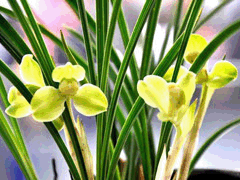 Balconyorchid growing, how to achieve fully sealed tips
http://www.dfac.cc/showtopic-116-381363-0-0-1.htm
One: Potting medium. The requirements for the potting medium are water retention, air permeability, and richness in organic matter and minerals. The potting medium can be localized; weathered stone mixed with about 30% willow bark is quite good.
The potting medium used as the pot surface, that is, the medium above and below the pseudobulb, must be clean and water-retentive, and when watering, no fine particles should splash up. Fine-grained Kanuma soil is good.
Two: Watering. For watering, connect a pipe to the tap water supply and use a large-volume spray method to wash dust off the leaf surface. For leaves that already have dust, you can use a cotton swab dipped in water to carefully wipe them clean, and after wiping, rinse with water. The leaf center is not afraid of water entering; what it fears is prolonged water accumulation after water enters and strong light. In nature, dew on the tips of small grass blades flows to the leaf center. The leaves themselves very much need the nourishment of rain and dew. Only when the leaves are clean and respiration and transpiration are smooth can they grow healthily.
Three: Light. Sunlight is a very good disinfectant. It not only sterilizes but also makes the plant grow short and sturdy. Do not try to use fungicides to keep the leaves from developing spots. This year I did an experiment: a pot given by the sellerCymbidium goeringiiwas left without shading all year, and the tips were still fully sealed. Of course, orchids grown in shade need to be careful; you must proceed step by step and not expose them to sudden intense sun. Onlyorchidsthat receive uninterrupted sunlight from the time they sprout are not afraid of sun exposure.
Four: Ventilation. The balcony should havefour seasonswindows open for ventilation. In winter, the windows can be opened a little less. Humidity has very little effect on orchid growth. You must not seal the balcony completely just to add humidity artificially. Wind from a fan does not count as ventilation.
Five: Fertilizing. When potting, you can evenly place a dozen or so grains of Magamp as base fertilizer. Base fertilizer does not mean putting it at the bottom of the flowerpot; that way it is almost useless. Except during the hot summer weather, apply a dilute liquid fertilizer once between every two waterings. Apply the liquid fertilizer directly as water, being careful not to pour it into the leaf center. After applying, immediately spray the leaf surface with tap water to wash off any fertilizer water accidentally splashed onto the leaves.
Six: Division. Divide during the growing season; do not dry the roots. You can use the method of searing the wound. Divide the pot, pot it up, and water it right away. Old plants without roots should be divided off as early as possible; they can still sprout and grow roots and will not hold back the strong plants.