A Brief Discussion of Orchid Fertilization Methods: Master the Correct Fertilization Techniques
Repost: A Brief Discussion of Orchid Fertilization
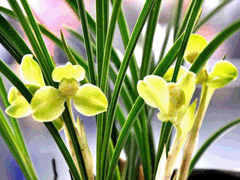 Repost: A Brief Discussion ofOrchidFertilization
OrchidsWhat fertilizers are needed during the growing season
OrchidsDuring the growing season of a year, the fertilizers needed are: 1. Dormancy-breaking fertilizer, applied to break dormancy, promote early sprouting, and gain a longer growing season. When the daytime temperature reaches above 15c and the nighttime temperature is not lower than 5c, it can be applied; foliar spraying of inorganic fertilizers (such as urea, monopotassium phosphate) and biological bacterial fertilizer is preferable. 2. Sprouting-promoting fertilizer, applied to promote early sprouting and more sprouts, and to gain effective shoots in early autumn. It can be applied 7--10 days after applying the dormancy-breaking fertilizer. 3. Root-promoting fertilizer, when the leaf buds extend about 3cm above the pot surface, there is a pause in growth, at which time new roots gradually grow and the plant enters the period of vegetative growth and reproductive growth; at this time more nitrogen, phosphorus, and potassium elements are needed to promote rapid growth of new roots. 4. Growth-promoting fertilizer, applied to satisfy the orchid plant's need for new shoots to develop quickly, grow quickly, and mature quickly, and to enable a second sprouting in late summer and early autumn, so as to gain early sprouting and early maturity of the second crop of shoots; it is the type applied for the longest period and the greatest number of times in a year. It is preferable to alternate organic fertilizers, inorganic fertilizers, and biological bacterial fertilizers, and to alternate root application and foliar application. 5. Flower-promoting fertilizer, applied to promote flower bud development and growth, achieving the goals of more flowers, larger flowers, brighter colors, and fragrant scent. 6. Cold-resistance fertilizer, 30 days before the orchid plants overwinter, stop applying nitrogen fertilizer and apply more phosphorus and potassium fertilizer to benefit overwintering, because phosphorus can lower the freezing point of plant cells, and potassium can increase plant cellulose, making the stem and leaf cortex tough; choose monopotassium phosphate for root watering or foliar application. According to Mr. Shen Yuanru: after potted orchids are brought out in early spring, apply fertilizer twice around Qingming, with an interval of half a month each time; during the period when young buds and new roots sprout, more nutrients are needed, so strong-plant fertilizer should be applied; during the plum rain period, daughter plants grow very fast, so choose sunny days to apply fertilizer 1--2 times; at Minor Heat, if the orchid plants are thin and weak, apply a light fertilizer once; from White Dew to Autumn Equinox, apply the last light fertilizer; after Cold Dew, if there are autumn stems, apply another light fertilizer once. 4. Basic methods of fertilizing orchids
The basic methods of fertilization include base fertilizer and topdressing. Fertilizer directly added and mixed into the growing medium is called base fertilizer. Because adding fertilizer to the growing medium is difficult to control, and it easily breedspests and diseases, and also easily burns roots and harms orchids, in recent years generallyorchid growersno longer adopt it.